Browse audiobooks narrated by Douglas Harvey, listen to samples and when you're ready head over to Audiobooks.com where you can get 3 FREE audiobooks on us
Fascism: What It Is and How to Fight It
"Fascism: What It Is and How to Fight It, written by Leon Trotsky in 1933, is a critical analysis of the rise of fascist movements in Europe, particularly focusing on Nazi Germany under Adolf Hitler. Trotsky argues that fascism is not a sudden, irrational outburst of violence but rather the result of deep structural crises in capitalist society, which the ruling class seeks to resolve through authoritarian means. He explains that fascism arises when the traditional political establishment is unable to suppress revolutionary movements from below (such as workers' uprisings or socialist revolutions) and when the capitalist system is threatened by economic collapse. Trotsky highlights that fascism is a tool of the bourgeoisie, aimed at preserving the existing social order through terror, militarism, and the suppression of democratic freedoms. However, it is not simply a reactionary force; it has its own set of internal contradictions, as fascists simultaneously defend capitalist interests while attacking the political establishment and the working class. Trotsky warns of the dangers of fascism's rise and stresses the importance of building a united front of the working class and the Left to prevent its spread. He critiques both Stalinism and social democracy for their failures to adequately respond to the fascist threat, emphasizing the need for a revolutionary approach to combat the fascist menace."
Leon Trotsky (Author), Douglas Harvey (Narrator)
Audiobook
"'Beware the Cat' is an English novel written by William Baldwin in 1553, making it one of the earliest examples of English fiction. The novel is a satirical and fantastical work that blends elements of folklore, social commentary, and the supernatural. The story is framed as a narrative within a narrative, with the protagonist, Mr. Streamer, recounting his experiences to a group of friends. Streamer, a curious and skeptical man, stumbles upon a hidden chamber where he witnesses a group of cats engaging in a secret assembly. To his surprise, the cats are not only intelligent but also capable of speech. As Streamer eavesdrops on the feline conversations, he discovers that the cats possess a complex society with its own set of rules and beliefs. The novel takes a satirical approach to criticize human behavior, using the cat society as a mirror to reflect societal issues of the time. One of the notable aspects of 'Beware the Cat' is its exploration of the supernatural, blending folklore and superstition with a fictional narrative. The novel incorporates elements of witchcraft, shape-shifting, and other mystical occurrences, adding a layer of intrigue and fantasy to the story. Overall, 'Beware the Cat' is a unique and innovative work that offers a blend of social satire, fantasy, and early English fiction, making it a significant contribution to the literary landscape of its time."
William Baldwin (Author), Douglas Harvey (Narrator)
Audiobook
The Oldest Code of Laws in the World
"The Code of Hammurabi is a codification of the laws enacted by Hammurabi, the king of Babylonia and is one of mankind’s oldest known writings. It was inscribed on a stone stele, or monument, in approximately 1754 B. C. and was discovered by archeologists in 1901. The code was inscribed using cuneiform script in the Akkadian languages into a diorite stele that stands 7.4 feet tall. A small portion of the code is considered missing. Famous for the concept of “an eye for an eye and a tooth for a tooth” the code itself consists of 282 laws. Criminal offenses are described in detail with associated physical punishments that are quite harsh and vary according to gender and social and economic status. It was one of the first code of law to emphasize physical punishment of the perpetrator as well as among the first to establish a presumption of innocence. Previous codes had focused on compensation to victims. Nearly half the code addresses contract issues such as prices for services and liabilities for damages or non-performance. About a third of the code consists of matters relating to household and family relationships such as marriage, divorce, paternity, inheritance, and reproduction. Several pertain to military service. Only one pertains to judicial conduct. The monument is on display in the Louvre in Paris; replicas are displayed in numerous institutions throughout the world."
Hammurabi, King Of Babylon. Translated By C. H. W. Johns. (Author), Douglas Harvey (Narrator)
Audiobook
Seven Sermons to the Dead: Septem Sermones ad Mortuos
"In late 1913, Carl Jung set out on an exploration of his psyche, a quest he called his 'confrontation with the unconscious'. In doing so, he would enter an imaginative state of consciousness and experience visions, a process that continued with varying intensity for the next ten years. He recorded his visions in six black-covered journals that he referred to as the “Black Books”, which provided a chronological record of his visions and dialogues with his soul. Along the way he used this material to begin drafting the manuscript of his legendary Red Book, a red leather-bound illustrated volume that was the formal document of this journey and which he kept private during his lifetime. He maintained that the visions recorded in the Red Book represented the nucleus of all his later work. The “Seven Sermons to the Dead”, or Septem Sermones ad Mortuos, is the only portion of the Red Book manuscript that Jung shared during his lifetime. He had the Septem Sermones privately printed as a small book in 1916 and occasionally gave copies to friends and students; it was never published and was only available as a gift from Jung himself. Jung’s heirs denied access to the Red Book after his death in 1961 until 2009, when it finally published, and it was discovered that the Septem Sermones was the closing section of the book. This context, combined with the tone and content, led one Jungian scholar to consider them as the 'summary revelation of the Redbook'. The Sermones ad Mortuos was included as an appendix to Jung's autobiographical memoir Memories, Dreams, Reflections when it was published in 1962."
C. G. Jung (Author), Douglas Harvey (Narrator)
Audiobook
"“A Madman’s Diary” is a short story by Lu Xun first published in 1918. Written in vernacular Chinese, it is considered “China’s first modern short story” and the most influential modern work in the republican era. Lu was inspired by “Diary of a Madman' by Nicolai Gogol, both in the use of the diary form and in the idea that the madman sees things more clearly than others. The story comes about when the narrator decides to visit two friends with whom he has lost touch when he learns that one of them has fallen ill. When he arrives, he is met by the brother, who informs him that his brother is no longer ill and hands him a copy of his brother’s diary. It is immediately apparent that the diarist is indeed mad. He believes he is surrounded by cannibals and that everyone has cannibalistic designs on him. His paranoia grows and he begins to see threats everywhere. He even sees the words “Eat People” between the lines of classic Confucian texts. He eventually suspects that his late sister had been eaten by his brother, and that he himself may have unknowingly done so. He ardently hopes that everyone will have a change of heart and change their ways. The story ends with a plea to “save the children”. The story is not readily comprehensible, and it took several years for it to be recognized as important. Gradually the madman is seen as a revolutionary contemptuous of Chinese tradition and its feudal society that “eats people”, people who themselves are corrupted by traditions they cannot escape."
Lu Xun (Author), Douglas Harvey (Narrator)
Audiobook
"This essay is based upon a speech given at Stanford University in 1906, William James’ last public utterance and is the original expression of the idea of non-military national service. While acknowledging the horrors of war and its motives, he also acknowledges the benefits that accrue when groups of people address themselves to a common purpose evident in military behavior. The modern reader will no doubt find certain attitudes regarding sex, race, and conquest of nature outdated. Nonetheless, one can’t help but admire the enlightened principles that have led to the establishment of the Civilian Conservation Corps, the Peace Corps, VISTA, and AmeriCorps, and will likely be part of the effort to deal with global warming and climate change. The following from the essay is the gist of James’ thesis: “If now -- and this is my idea -- there were, instead of military conscription, a conscription of the whole youthful population to form for a certain number of years a part of the army enlisted against Nature, the injustice would tend to be evened out, and numerous other goods to the commonwealth would remain blind as the luxurious classes now are blind, to man’s relations to the globe he lives on, and to the permanently sour and hard foundations of his higher life. To coal and iron mines, to freight trains, to fishing fleets in December, to dishwashing, clotheswashing, and windowwashing, to road-building and tunnel-making, to foundries and stoke-holes, and to the frames of skyscrapers, would our gilded youths be drafted off, according to their choice, to get the childishness knocked out of them, and to come back into society with healthier sympathies and soberer ideas.”"
William James (Author), Douglas Harvey (Narrator)
Audiobook
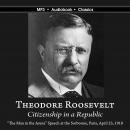
"“Citizenship in a Republic” is the title of a speech given by Theodore Roosevelt at the Sorbonne in Paris, France, on April 23, 1910. In the speech Roosevelt discusses the attributes required of its citizens and leaders to sustain a thriving national character, not least of which are a high moral character and energetic engagement. He has harsh words for those who act purely in self-interest, who cause division, and who sit on the sidelines while others do the heavy lifting. The address is also known as “The Man in the Arena” speech owing to a notable passage that is often quoted: “It is not the critic who counts; not the man who points out how the strong man stumbles, or where the doer of deeds could have done them better. The credit belongs to the man who is actually in the arena, whose face is marred by dust and sweat and blood; who strives valiantly; who errs, who comes short again and again, because there is no effort without error and shortcoming; but who does actually strive to do the deeds; who knows great enthusiasms, the great devotions; who spends himself in a worthy cause; who at the best knows in the end the triumph of high achievement, and who at the worst, if he fails, at least fails while daring greatly, so that his place shall never be with those cold and timid souls who neither know victory nor defeat.” Numerous politicians, athletes, speakers and others have turned to the passage for inspiration. Incoming freshman at the U.S. Naval Academy are required to memorize the passage. NBA champion LeBron James has the “Man in the Arena” written on his shoes."
Theodore Roosevelt (Author), Douglas Harvey (Narrator)
Audiobook

"Since the beginning of time human beings have been seeking to understand the mystifying nature of dreams. A dream is a puzzle. I see objects but there is nothing there. I see people, I speak with them, yet there is no one there and I have not actually spoken. What is going on? In Dreams, first published in 1913, French philosopher Henri Bergson analyzes the phenomenon of dreaming as a product of the mind attempting to interpret what happens physiologically during sleep. Our eyes respond to light and shapes. We hear sounds. Our bodies move and we have the sensation of touch. Bergson explains that we relate these phenomena to the vast reservoir of experiences stored in our memory, which he believes stores each of our experiences in detail in perpetuity. The brain seeks to associate the perceptions in our dreams with those memories that most closely that data. The result may be disconnected, illogical, incoherent, and absurd, but that is likely because during sleep we have relaxed from the labor of making sense of connections when we are awake. In this short essay he manages to elucidate the profound metaphysics of dreaming and suggest new areas of inquiry in disciplines such as psychoanalysis that promise further understanding."
Henri Bergson (Author), Douglas Harvey (Narrator)
Audiobook
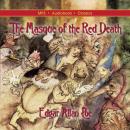
"First published in 1842, The Mask of the Red Death by Edgar Allan Poe is an allegorical short story in the Gothic horror vein. It is the 15th century. An unidentified country is infected with a contagion known as the Red Death. Half the population has succumbed to a quick, gory, and painful death. Prospero, the prince, deals with the situation by inviting a thousand of his to revel with him in a palace designed with seven rooms located in a secluded abbey. Each of the rooms, which are arranged east to west, are decorated with a monochromatic color scheme, and lit only by a brazier in the hallway which casts light through a stained-glass window. The last room to the west is decorated in black and contains a large clock that strikes heavily on the hour with a tone that stops the musicians from playing and the dancers in their tracks. As the midnight hour approaches a tall figure enters wearing a funeral shroud and a mask resembling the countenance of a corpse. All are terrified; some seek to fend off the intruder, to no avail. They discover there is nothing beneath his robes and mask. And then…"
Edgar Allan Poe (Author), Douglas Harvey (Narrator)
Audiobook

"These lectures are intended to give an outline of Yoga, in order to prepare the student to take up, for practical purposes, the Yoga sutras of Patanjali, the chief treatise on Yoga. I have on hand, with my friend Bhagavan Das as collaborateur, a translation of these Sutras, with Vyasa’s commentary, and a further commentary and elucidation written in the light of Theosophy. To prepare the student for the mastering of that more difficult task, these lectures were designed; hence the many references to Patanjali. They may, however, also serve to give to the ordinary lay reader some idea of the Science of sciences, and perhaps to allure a few towards its study."
Annie Besant (Author), Douglas Harvey (Narrator)
Audiobook
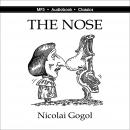
"In 1722 Peter the Great introduced a system of positions and ranks for the military, the government, and the Russian court which enabled commoners to gain a modicum of nobility through service to the state. He did so in order to diminish the power of the hereditary nobility with whom he was struggling. This led to large bureaucracies and an obsession with appearances and status, a situation ripe for the brilliant satire of “The Nose”. The story is an absurd, comic, surreal and sometimes grotesque send up of Major Kovalyov, who wakes up one morning to find his nose missing. The story has three parts. In part one, Kovalyov's barber finds his client's nose in his breakfast and is nabbed by the police when he tries to throw it off a bridge. In part two, Kovalyov awakes to find his nose gone. When he leaves to report the loss, runs into it on the street dressed in the uniform of an important official who outranks him. He chases it, but the nose eludes him until it is apprehended it is about to flee the city by coach. The nose is returned to Kovalyov, but it can't be re-attached, leading him to suspect that a curse has been placed on him. Meanwhile, the nose has become the talk of the town. In part three, the Major awakes with the nose fully intact. Things just drift back to normal. The story is a staple of Russian literature, has been staged and adapted numerous times, and has had a monument erected in its honor in St. Petersburg."
Nicolai Gogol (Author), Douglas Harvey (Narrator)
Audiobook
"Yakov Ivanov is an elderly coffin-maker in a small village with a population that doesn’t generate enough deaths for him to make any real money. He is also a fiddler who sometimes sits in with a Jewish klezmer orchestra in spite of his dislike of Jews and of the flutist, Rothchild, in particular. Marfa, his long-suffering and unloved wife, becomes mortally ill with a contagious illness. He struggles to recall their shared past as he builds her coffin and soon he, too, succumbs to mortal illness, provoking a self-searching meditation and a change of heart."
Anton Chekhov, Constance Garnett (Author), Douglas Harvey (Narrator)
Audiobook
©PTC International Ltd T/A LoveReading is registered in England. Company number: 10193437. VAT number: 270 4538 09. Registered address: 157 Shooters Hill, London, SE18 3HP.
Terms & Conditions | Privacy Policy | Disclaimer
Join our community for the latest bookish news, reading recommendations, exclusive opening extracts, author events and competitions. It\'s all free. And enter a monthly draw to win a £50 Gift Card. See past winners here
Join Our Community