Browse audiobooks by Marcus Tullius Cicero, listen to samples and when you're ready head over to Audiobooks.com where you can get 3 FREE audiobooks on us
History's Great Speeches: The Definitive Collection: 40 hours of historical highlights from Pericles
"This complete edition spans 2,400 years (431 BCE–1944) in 40 hours, 155 speeches, and 52 speakers, including foundational addresses by Gandhi and Mao—voices that shaped modern Asia. Begin in 431 BCE with Demosthenes, whose structural genius remains the DNA of modern expression. Traverse Athens’ zenith via Pericles’ Funeral Oration, Alexander’s volatile proclamations, and Rome’s crisis in Cicero’s showdown with Cataline—featuring Caesar’s sole surviving senate address and Mark Antony’s incendiary eulogy. Witness rhetoric’s rebirth after a millennium: from Prophet Mohammed’s Farewell and Pope Urban II’s Crusade call, to Pico della Mirandola’s Renaissance-sparking Oration and Milton’s defiant Satan. The Reformation ignites through Luther’s 95 Theses and Calvin’s satirical Treatise on Relics, while Enlightenment firebrands Pitt, Burke, and Robespierre (whose anti-death-penalty stance mirrors Cicero) fuel revolutions. The collection illuminates seismic shifts: Luther's 95 Theses and Calvin's Treatise on Relics defining the Reformation; the Enlightenment and Revolutionary fervor articulated by Pitt, Burke, and Robespierre's chilling discourses on Terror; the birth of American liberty through Patrick Henry and Washington; and the tumultuous End of Empire featuring Napoleon's legendary addresses, Daniel O'Connell, and Frederick Douglass' searing indictments of slavery. Delve into challenges to order with anarchists Proudhon and Bakunin. Witness the forging of modern polities through Bismarck's 'Blood and Iron', Lincoln's Gettysburg Address, Susan B. Anthony's suffrage plea, and Swami Vivekananda's groundbreaking Parliament address. Chart the Rise of Socialism with William Morris, Annie Besant, and Eugene Debs' heroic workers pleas from prison. We finish with transformative modern voices: Gandhi 's South African struggle and early activism and Mao Tse-Tung's defining wartime addresses Gandhi’s early and Mao’s revolutionary manifestos."
AM Sullivan, Abraham Lincoln, Albert Apponyi, Alexander the Great, Annie Besant, Caius Memmius, Caius Marius, Catiline, Cato The Younger, Charles Phillips, Chief Joseph, Daniel O'Connell, Demosthenes, Dinarchus, Edmund Burke, Eduard Bernstein, Edward Carpenter, Elizabeth I, Emilio Castelar, Eugene Debs, Frederick Douglass, Gaetano, George Graham Vest, Girolamo Savonarola, Giuseppe Garibaldi, Huldrych Zwingli, John Calvin, Julius Caesar, Louis Kossuth, Louis Lingg, Mao Tse-Tung, Marcus Tullius Cicero, Mark Anthony, Mark Twain, Martin Luther, Maximillian Robespierre, Mikhail Bakunin, Mohandas Gandhi, Muhammad, Napoleon Bonaparte, Otto von Bismarck, Pericles, Peter Kropotkin, Phillip Melanchthon, Pico della Mirandola, Pierre-Joseph Proudhon, Pope Urban II, Red Jacket, Robert Emmet, Susan B Anthony, Swami Vivekananda, William Lloyd Garrison, William Morris, William Pitt (Author), Charles Featherstone (Narrator)
Audiobook
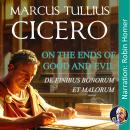
On the Ends of Good and Evil: De Finibus Bonorum Et Malorum
"Cicero sets out the three major Greek philosophies: Epicureanism, Stoicism and Aristotelianism (or Peripateticism), by recounting his conversations with Lucius Torquatus, Marcus Cato and Piso. He then provides his commentary and criticisms of each. The volume was written in the summer of the year 45 BC a few years before Cicero's assassination at the hands of Mark Antony's men. It is made up of five books: Book 1 - Exposition of Epicureanism Book 2 - Cicero's Arguments Against Epicureanism Book 3 - Cicero's Exposition of Stoicism Book 4 - Arguments Against Stoicism Book 5 - The New Academy and Cicero's View Narrated by Robin Homer of Vox Stoica. Translation by H. Harris Rackham."
Marcus Tullius Cicero (Author), Robin Homer (Narrator)
Audiobook
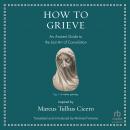
How to Grieve: An Ancient Guide to the Lost Art of Consolation
"An engaging new translation of a timeless masterpiece about coping with the death of a loved one In 45 BCE, the Roman statesman Cicero fell to pieces when his beloved daughter, Tullia, died from complications of childbirth. But from the depths of despair, Cicero fought his way back. In an effort to cope with his loss, he wrote a consolation speech—not for others, as had always been done, but for himself. And it worked. Cicero's Consolation was something new in literature, equal parts philosophy and motivational speech. Drawing on the full range of Greek philosophy and Roman history, Cicero convinced himself that death and loss are part of life, and that if others have survived them, we can, too; resilience, endurance, and fortitude are the way forward. Lost in antiquity, Cicero's Consolation was recreated in the Renaissance from hints in Cicero's other writings and the Greek and Latin consolatory tradition. The resulting masterpiece—translated here for the first time in 250 years—is infused throughout with Cicero's thought and spirit. Complete with an inviting introduction, Michael Fontaine's engaging translation makes this searching exploration of grief available to readers once again."
Marcus Tullius Cicero (Author), Gareth Richards (Narrator)
Audiobook
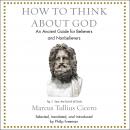
How to Think About God: An Ancient Guide for Believers and Nonbelievers
"A vivid and accessible new translation of Cicero's influential Stoic writings on the divine Most ancient Romans were deeply religious and their world was overflowing with gods—from Jupiter, Minerva, and Mars to countless local divinities, household gods, and ancestral spirits. One of the most influential Roman perspectives on religion came from a nonreligious belief system that is finding new adherents even today: Stoicism. How did the Stoics think about religion? In How to Think about God, Philip Freeman presents vivid new translations of Cicero's On the Nature of the Gods and The Dream of Scipio. In these brief works, Cicero offers a Stoic view of belief, divinity, and human immortality, giving eloquent expression to the religious ideas of one of the most popular schools of Roman and Greek philosophy. On the Nature of the Gods and The Dream of Scipio are Cicero's best-known and most important writings on religion, and they have profoundly shaped Christian and non-Christian thought for more than two thousand years, influencing such luminaries as Augustine, Thomas Aquinas, Dante, and Thomas Jefferson. These works reveal many of the religious aspects of Stoicism, including an understanding of the universe as a materialistic yet continuous and living whole in which both the gods and a supreme God are essential elements."
Marcus Tullius Cicero (Author), Shaun Grindell (Narrator)
Audiobook
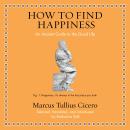
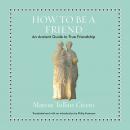
How to Be a Friend: An Ancient Guide to True Friendship
"In a world where social media, online relationships, and relentless self-absorption threaten the very idea of deep and lasting friendships, the search for true friends is more important than ever. In this short book, which is one of the greatest ever written on the subject, the famous Roman politician and philosopher Cicero offers a compelling guide to finding, keeping, and appreciating friends. With wit and wisdom, Cicero shows us not only how to build friendships but also why they must be a key part of our lives. For, as Cicero says, life without friends is not worth living. Filled with timeless advice and insights, Cicero's heartfelt and moving classic—written in 44 BC and originally titled De Amicitia—has inspired readers for more than two thousand years, from St. Augustine and Dante to Thomas Jefferson and John Adams. Presented here in a lively new translation and an inviting introduction, How to Be a Friend explores how to choose the right friends, how to avoid the pitfalls of friendship, and how to live with friends in good times and bad. Cicero also praises what he sees as the deepest kind of friendship—one in which two people find in each other 'another self' or a kindred soul."
Marcus Tullius Cicero (Author), Shaun Grindell (Narrator)
Audiobook
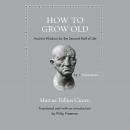
How to Grow Old: Ancient Wisdom for the Second Half of Life
"Worried that old age will inevitably mean losing your libido, your health, and possibly your marbles too? Well, Cicero has some good news for you. In How to Grow Old, the great Roman orator and statesman eloquently describes how you can make the second half of life the best part of all—and why you might discover that reading and gardening are actually far more pleasurable than sex ever was. Filled with timeless wisdom and practical guidance, Cicero's brief, charming classic—written in 44 BC and originally titled On Old Age—has delighted and inspired readers, from Saint Augustine to Thomas Jefferson, for more than two thousand years. Presented here in a lively new translation with an informative new introduction and the original Latin on facing pages, the book directly addresses the greatest fears of growing older and persuasively argues why these worries are greatly exaggerated—or altogether mistaken. Montaigne said Cicero's book 'gives one an appetite for growing old.' The American founding father John Adams read it repeatedly in his later years. And today its lessons are more relevant than ever in a world obsessed with the futile pursuit of youth."
Marcus Tullius Cicero (Author), Roger Clark (Narrator)
Audiobook
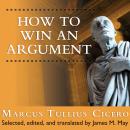
How to Win an Argument: An Ancient Guide to the Art of Persuasion
"All of us are faced countless times with the challenge of persuading others, whether we're trying to win a trivial argument with a friend or convince our coworkers about an important decision. Instead of relying on untrained instinct—and often failing as a result—we'd win more arguments if we learned the timeless art of verbal persuasion, rhetoric. How to Win an Argument gathers the rhetorical wisdom of Cicero from across his works and combines it with passages from his legal and political speeches to show his powerful techniques in action. The result is an enlightening and practical introduction to the secrets of persuasive speaking and writing—including strategies that are just as effective in today's offices, schools, courts, and political debates as they were in the Roman forum. How to Win an Argument addresses proof based on rational argumentation, character, and emotion; the parts of speech; the plain, middle, and grand styles; how to persuade no matter what audience or circumstances you face; and more. Astonishingly relevant, this anthology of Cicero's rhetorical and oratorical wisdom will be enjoyed by anyone who ever needs to win arguments and influence people."
Marcus Tullius Cicero (Author), Simon Vance (Narrator)
Audiobook
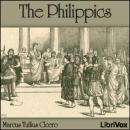
"A philippic is a fiery, damning speech delivered to condemn a particular political actor. The term originates with Demosthenes, who delivered an attack on Philip II of Macedon in the 4th century BCE. Cicero consciously modeled his own attacks on Mark Antony, in 44 BC and 43 BC, on Demosthenes's speeches, and if the correspondence between M. Brutus and Cicero are genuine [ad Brut. ii 3.4, ii 4.2], at least the fifth and seventh speeches were referred to as the Philippics in Cicero's time. They were also called the Antonian Orations by Aulus Gellius. It is ironic that they were named after a series of speeches that failed to effectively warn the Greeks of the danger of Philip of Macedon whose son, Alexander the Great, went on to be one of the greatest conquerors of all time. After the death of Caesar, Cicero privately expressed regrets that the murderers of Caesar had not included Antony in their plot and became focused on discrediting Antony. Cicero even promoted illegal action, such as legitimatizing Octavian's private army. In total, Cicero made 14 Phillipics in less than two years - an impressively energetic feat for the over 60 ex-consul. Cicero's focus on Antony, however, would contribute to his downfall as he failed to recognize the threat of Octavian and ignored and promoted illegal actions. Cicero's attacks on Antony did not go unpunished and in 43 BC he was proscribed and killed. His head and hands were publicly displayed in the forum discouraging those who would openly oppose the new Triumvirate of Octavian, Mark Antony and Lepidus. (Summary from Wikipedia)"
Marcus Tullius Cicero (Author), Ontheroad (Narrator)
Audiobook
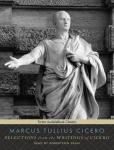
Selections from the Writings of Cicero
"Roman statesman and philosopher Marcus Tullius Cicero wrote on a wide range of subjects, from Greek philosophy to moral duty to friendship. Though he considered philosophy secondary to politics and often used his writings for explicit political ends, his work has nevertheless been widely read for over two thousand years and has influenced everything from the culture of the Renaissance to the ideals of the founding fathers of the United States. This edition contains three of Cicero's best-known works. In 'On Friendship,' from his Treatises on Friendship and Old Age, Cicero examines the nature of true friendship, which he considers to be based on virtue and dependent upon honesty, truth, and trust. In De Officiis, or 'On Duties,' written as a letter to his son, Cicero shares his beliefs about the potential conflicts between moral obligation and expedience. Finally, 'Scipio's Dream,' the sixth book of On the Republic, describes a fictional dream vision of the Roman general Scipio Aemilianus, set two years before the destruction of Carthage in 146 BC."
Marcus Tullius Cicero (Author), Robertson Dean (Narrator)
Audiobook
©PTC International Ltd T/A LoveReading is registered in England. Company number: 10193437. VAT number: 270 4538 09. Registered address: 157 Shooters Hill, London, SE18 3HP.
Terms & Conditions | Privacy Policy | Disclaimer
Join our community for the latest bookish news, reading recommendations, exclusive opening extracts, author events and competitions. It\'s all free. And enter a monthly draw to win a £50 Gift Card. See past winners here
Join Our Community