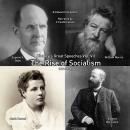
"The birth of liberation movements in the C19th saw a rise in fighting for the rights of workers.
William Morris believed decries the belief “not that Commerce was made for man, but that man was made for Commerce”, with the profit motive that renders all work miserable when “It is right and necessary that all men should have work to do which shall be worth doing, and be of itself pleasant to do; and which should be done under such conditions as would make it neither over-wearisome nor over-anxious.”
Edward Carpenter demands of those whose only question is “Does It Pay?” to know why any action is undertaken. On starting a farm, he found, “that if I was happy in the life..., and if we were cultivating genuine and useful products… that it might really pay me better to get 1%, than 10% with jangling and wrangling.”
Annie Besant attacks a reactionary appeal to the ‘natural’ role of men and women by pointing out that it is equality of opportunity and representation that women want.
Eduard Bernstein confronts a misunderstanding that people still have today. Marx and Engels realized in their lifetimes that society was further away than they initially thought from a genuine socialism – that many small revolutions would be necessary, and that a single grand rewriting of society could not work. The next writer also refers to it, in saying that “A few.. only know what Socialism is, and they are Socialists. The rest are opposed to it because the little they know about it is not true.”
Eugene Debs rails against the approach government takes in promoting “equality” between capitalist and labourer.
We end with Debs' response to being sentenced to ten years imprisonment, for the crime of “opposing a social order in which it is possible for one man who does absolutely nothing that is useful to amass a fortune, while millions work all the days of their lives secure barely enough for a wretched existence. .”"
"'The Healing of Nations and the Hidden Sources of Their Strife' by Edward Carpenter explores the effects that war has on a nation and its citizens. Written during the course of World War I, the book is heavily inspired by Carpenter's personal experiences and those he witnessed. It also describes the social forces that led to the start of the 'Great War' in the hopes that it could be learned from in the future."
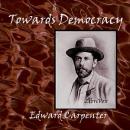
""Civilization sinks and swims, but the old facts remain-the sun smiles, knowing well its strength." Edward Carpenter (1844-1929) wrote his prose poem, Towards Democracy, styled after Walt Whitman's Leaves of Grass, in a summer burst of creativity. "Early in 1881, no doubt as the culmination and result of struggles and experiences that had been going on, I became conscious that a mass of material was forming within me, imperatively demanding expression . . ." An English intellectual, Carpenter was in rebellion against Victorian prudery. Railing against Industrialization's dehumanization, he preached a return to a simple life in harmony with Nature. Towards Democracy reads like Beat poetry-wild flowing word associations, moments of insight so clear they hurt, interspersed with pure rant! Included is an essay Carpenter wrote in 1894 explaining his intent and feelings in writing Towards Democracy. - Summary by Sue Anderson"
Join our community for the latest bookish news, reading recommendations, exclusive opening extracts, author events and competitions. It\'s all free. And enter a monthly draw to win a £50 Gift Card. See past winners here