Browse audiobooks by Vladimir Lenin, listen to samples and when you're ready head over to Audiobooks.com where you can get 3 FREE audiobooks on us
Two Tactics Of Social Democracy In The Democratic Revolution
"This influential political work by Vladimir Lenin examines the strategies, conflicts, and power struggles shaping revolutionary movements during a time of social upheaval. Written amid rising unrest, it confronts the clash between different approaches to change—one seeking gradual reform through compromise, the other demanding decisive, organized action to overthrow entrenched systems of power. At its core, the book asks who should lead a revolution, how far it should go, and whose interests it must ultimately serve. Lenin dissects the tension between competing forces within the working-class movement, exposing how hesitation, half-measures, and fear of radical change can weaken the struggle for real transformation. He argues that political freedom cannot be fully achieved without confronting the economic structures that sustain inequality. Every tactical decision becomes a question of survival, momentum, and the danger of betrayal from within. With urgency and uncompromising clarity, Vladimir Lenin explores leadership, class struggle, compromise, and the mechanics of political power. This work is a fierce examination of how revolutions succeed or fail—not only through external opposition, but through internal division. It stands as a sharp and forceful reflection on strategy, conviction, and the high cost of choosing moderation in moments that demand decisive change."
Vladimir Lenin (Author), Oneita, The Light (Narrator)
Audiobook
"This foundational political work by Vladimir Lenin examines the true nature of the state and its role as an instrument of class power rather than a neutral force serving all people equally. Challenging comforting ideas about government, law, and democracy, it argues that the state exists primarily to protect the interests of the ruling class and to suppress those beneath it. What appears as order and stability is revealed as controlled force shaped by economic domination. Lenin traces how revolutions do not simply change leaders, but must dismantle the existing machinery of power itself. He confronts the illusion that injustice can be reformed away without breaking the structures that sustain it. Compromise is exposed as a trap, and gradual change as a delay that serves those already in control. The question is not whether the state should exist in its current form, but whether it must be replaced entirely in order for real liberation to occur. With sharp urgency and uncompromising logic, Vladimir Lenin explores power, authority, class struggle, and the conditions required for genuine social transformation. This work is both a political warning and a strategic blueprint, revealing how deeply embedded systems resist change and how easily freedom is promised but withheld. It remains a forceful meditation on revolution, control, and the dangerous illusion of power that claims to serve everyone equally."
Vladimir Lenin (Author), Alex Squire, The Light (Narrator)
Audiobook
The State & Revolution: The Book That Changed The World
"The State & Revolution stands as one of the most powerful and unsettling political works ever written. Composed in the charged atmosphere of 1917, it cuts straight to the heart of what a state truly is beneath its flags, ceremonies, and promises. Lenin argues that the modern state is not a neutral protector of all citizens, but a mechanism built to preserve the dominance of those who already hold power. He shows how laws, police, armies, and institutions present themselves as guardians of order while quietly shaping society to favor the privileged. With a clarity that still startles, the book insists that meaningful freedom cannot arise from structures designed to restrain the majority, and that real democracy demands the rebuilding of political life from the ground up. The work moves between hard theory and burning moral urgency, explaining why oppressed groups throughout history have repeatedly clashed with governments that claim to represent them. Lenin exposes how revolutions are not accidents, but eruptions caused by long-standing tensions between those who control economic life and those who labor within it. He revisits Marx and Engels, expanding their ideas to show why the state cannot simply be reformed into fairness, and why every society must eventually confront the truth of who it empowers and who it excludes. More than a century later, The State & Revolution remains uncannily relevant. In a world of widening wealth gaps, tightening surveillance, political polarization, and institutions struggling to maintain public trust, the book’s questions feel newly alive. What is the real purpose of government? Who benefits from the laws that shape our daily existence? What happens when a society outgrows the system that manages it? The text challenges readers not only to understand these issues but to imagine how a more just world might look if ordinary people had genuine control over their collective future."
Vladimir Lenin (Author), Geoffrey Giuliano, The Rebellion (Narrator)
Audiobook
"Vladimir Ilyich Ulyanov, better known as Vladimir Lenin, was a Russian revolutionary, politician, and political theorist. He served as the first and founding head of government of Soviet Russia from 1917 to 1924 and of the Soviet Union from 1922 to 1924. Under his administration, Russia, and later the Soviet Union, became a one-party socialist state governed by the Communist Party. Ideologically a Marxist, his developments to the ideology are called Leninism. Russia in the Shadows is a book by H. G. Wells published early in 1921, which includes a series of articles previously printed in The Sunday Express in connection with Wells's second visit to Russia (after a previous trip in January 1914 to St. Petersburg and Moscow) in September and October 1920. During his visit to Russia he visited his old friend Maxim Gorky, whom he had first met in 1906 on a trip to the United States, and who arranged Wells's meeting with Lenin. In a chapter (The Dreamer in the Kremlin) devoted to an interview with Lenin at the Kremlin Wells describes the leader and founder of Russian communism. Wells portrays Lenin as a pragmatic leader who 'has recently stripped off the last pretence that the Russian revolution is anything more than the inauguration of an age of limitless experiment.' Vladimir Lenin: State and Revolution What Is to Be Done? Imperialism: The Final Stage of Capitalism The State and Revolution The Three Sources and Three Component Parts of Marxism To the Citizens of Russia! To Workers, Soldiers, and Peasants! Report on Peace Report on Land Decree on Abolishment of Capital Punishment Decree on Transfer of Power to the Soviets Decree on Establishment of the Workers' and Peasants' Government Decree on Elections for the Constituent Assembly Decree on Suppression of Hostile Newspapers Decree on Transfer of Food Control to Municipalities Decree on an Eight-Hour Working Day Decree on the Right to Issue Laws Resolution on the Right of Sovnarkom to Issue Decrees Decree on Social Insurance Declaration of the Rights of the People of Russia Decree on Organization of Volost Land Committees Decree on Transfer of Power and the Means of Production to the Toilers Decree Proclaiming Advertising a State Monopoly Decree Abolishing Classes and Civil Ranks Decree on Workers' Control Resolution on Relation of the Central Executive Committee to the Sovnarkom Decree on the Right to Call for Re-Elections Decree on Establishment of the Extraordinary Commission to Fight Counter-Revolution V. I. Lenin Note To F. E. Dzerzhinsky with a Draft of A Decree On Fighting Counter-Revolutionaries And Saboteurs H. G. Wells: The Dreamer in the Kremlin"
H.G. Wells, Vladimir Lenin (Author), Andrew Roberts, Mark Bowen, Peter Coates (Narrator)
Audiobook
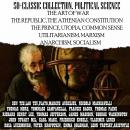
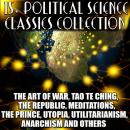
"Political science is the scientific study of politics. It is a social science dealing with systems of governance and power, and the analysis of political activities, political thought, political behavior, and associated constitutions and laws. Contents: Sun Tzu. The Art of War Lao Tzu. Tao Te Ching Plato. The Republic Aristotle. The Athenian Constitution Marcus Aurelius. Meditations Niccolo Machiavelli. The Prince Thomas More. Utopia Tommaso Campanella. The City of the Sun Francis Bacon. The New Atlantis Thomas Paine. Common Sense Richard Henry Lee. Lee Resolution Thomas Jefferson. Declaration of Independence James Madison. - Virginia Plan - Constitution of the United States - Bill of Rights - Northwest Ordinance George Washington. President George Washington's First Inaugural Speech Great Historical Documents of the United States: - Federal Judiciary Act - Marbury v. Madison - Articles of Confederation - Treaty of Alliance with France - Treaty of Paris John Stuart Mil. Utilitarianism Karl Marx and Friedrich Engels. The Communist Manifesto Vladimir Lenin: - The State and Revolution - The Three Sources and Three Component Parts of Marxism - Vladimir Lenin To the Citizens of Russia! - Vladimir Lenin To Workers, Soldiers, and Peasants! - Report on Peace - Report on Land - Decree on Abolishment of Capital Punishment - Decree on Transfer of Power to the Soviets - Decree on Establishment of the Workers' and Peasants' Government - Decree on Elections for the Constituent Assembly - Decree on Suppression of Hostile Newspapers - Decree on Transfer of Food Control to Municipalities - Decree on an Eight-Hour Working Day - Decree on the Right to Issue Laws - Resolution on the Right of Sovnarkom to Issue Decrees - Decree on Social Insurance - Declaration of the Rights of the People of Russia - Decree on Organization of Volost Land Committees - Decree on Transfer of Power and the Means of Production to the Toilers - Decree Proclaiming Advertising a State Monopoly - Decree Abolishing Classes and Civil Ranks - Decree on Workers' Control - Resolution on Relation of the Central Executive Committee to the Sovnarkom - Decree on the Right to Call for Re-Elections - Decree on Establishment of the Extraordinary Commission to Fight Counter-Revolution - V. I. Lenin Note To F. E. Dzerzhinsky with a Draft of A Decree On Fighting Counter-Revolutionaries And Saboteurs Rosa Luxemburg. Reform or Revolution Peter Kropotkin. The Conquest of Bread Emma Goldman. Anarchism: What It Really Stands For Leon Trotsky. Fascism: What It Is and How to Fight It"
Emma Goldman, Francis Bacon, John Stuart Mill, Karl Marx, Lao Tzu, Leon Trotsky, Marcus Aurelius, Niccolo Machiavelli, Peter Kropotkin, Plato, Rosa Luxemburg, Sun Tzu, Thomas More, Thomas Paine, Tommaso Campanella, Vladimir Lenin (Author), Alfred Costa, Andrew Roberts, Douglass Scott, Jamey Lewis, Joe Phoenix, Jowanna Lewis, Kenneth Elliot, Mark Bowen, Peter Coates, Richard Williams (Narrator)
Audiobook
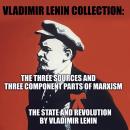
"The Three Sources and Three Component Parts of Marxism, by Lenin, is a concise article that examines the historical roots, essence, and content of Marxist teaching. Lenin wrote it on the 30th anniversary of the death of Karl Marx. Soviet propaganda makers lifted a key quote from the article to use as a slogan for posters, inscriptions on monuments, or other propaganda purposes. The phrase was: 'The might of Marx's teaching is in its truth.' The book, The State and Revolution: The Marxist Theory of the State and the Tasks of the Proletariat in the Revolution, was written while preparing for the socialist revolution. At this time the role of the state was of prime importance to the Bolsheviks. Lenin used the text to justify the need for a dictatorship of the proletariat. He also provided definitions for imperialism, socialism, and communism."
Vladimir Lenin (Author), Andrew Roberts, Mark Bowen (Narrator)
Audiobook
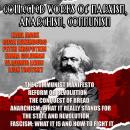
"This book contains the fundamental works of Marxism, Anarchism and Bolshevism: The Communist Manifesto, originally the Manifesto of the Communist Party, by Karl Marx and Friedrich Engels; Reform or Revolution by Rosa Luxemburg; The Conquest of Bread by the Russian anarcho-communist Peter Kropotkin; Anarchism: What it Really Stands For by Emma Goldman; The State and Revolution by Vladimir Lenin; Fascism: What It Is and How To Fight It by Leon Trotsky. Translated by Mary Fox. Illustrated by Dmytro Rybalko."
Emma Goldman, Friedrich Engels, Karl Marx, Leon Trotsky, Peter Kropotkin, Rosa Luxemburg, Vladimir Lenin (Author), Andrew Roberts, Kenneth Elliot, Mark Bowen, Peter Coates (Narrator)
Audiobook
"What is Political Science? Within human society, it is customary to distinguish between the following spheres: economic, political, social, and spiritual. The political sphere is important in that it involves and determines the interactions of different political powers. This understanding lies at the foundation of any political analysis of public life. Politics as a specific sector within human society is as old as it is modern. Many famous statesmen and scientists are credited as the authors of laws and political systems. In today's global community, facing growing pressures of political extremism and radicalism, knowledge of basic political science principles should help students develop a democratic ethos and foster qualities, such as political tolerance, compromise, and cooperation, while learning to express and defend their interests in a civilized manner. The foundation of political science lies in the accumulated knowledge of mankind. Each included piece o this collection is required reading at some of the best universities on the planet including: Harvard, Princeton, Yale, and Columbia Universities, the Massachusetts Institute of Technology (MIT), and the Universities of Oxford and Cambridge, among others. Sun Tzu: The Art of War Lao Tzu: Tao Te Ching Plato: The Republic Marcus Aurelius: Meditations Niccolo Machiavelli: The Prince Thomas More: Utopia Tommaso Campanella: The City of the Sun Francis Bacon: The New Atlantis Thomas Paine: Common Sense John Stuart Mill: Utilitarianism Karl Marx and Friedrich Engels: The Communist Manifesto Vladimir Lenin: The State and Revolution Rosa Luxemburg: Reform or Revolution Peter Kropotkin: The Conquest of Bread Emma Goldman: Anarchism: What It Really Stands For Leon Trotsky: Fascism: What It Is and How to Fight It"
Emma Goldman, Francis Bacon, Friedrich Engels, John Stuart Mill, Karl Marx, Lao Tzu, Leon Trotsky, Marcus Aurelius, Niccolo Machiavelli, Peter Kropotkin, Plato, Rosa Luxemburg, Sun Tzu, Thomas More, Thomas Paine, Tommaso Campanella, Vladimir Lenin (Author), Alfred Costa, Andrew Roberts, Douglass Scott, Jamey Lewis, Joe Phoenix, Jowanna Lewis, Kenneth Elliot, Mark Bowen, Peter Coates, Richard Williams (Narrator)
Audiobook

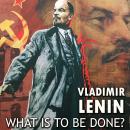
"'What Is to Be Done?' by Vladimir Lenin is a seminal work that outlines the revolutionary strategy and organizational principles for the Russian Social Democratic Labour Party. Written in 1902, this influential text serves as a cornerstone in the development of Leninist thought. Lenin addresses the challenges facing the working class movement, particularly the lack of revolutionary consciousness among the proletariat. He argues for the necessity of a vanguard party composed of professional revolutionaries who possess the political knowledge to guide the working class towards socialist revolution. The text delves into Lenin's critique of spontaneity and calls for a disciplined and centralized party that can provide direction and leadership. Lenin emphasizes the importance of theoretical clarity, political education, and a strong organizational structure to achieve the ultimate goal of overthrowing the capitalist system. 'What Is to Be Done?' has been a subject of extensive debate and interpretation within Marxist circles, and its ideas have had a profound impact on the development of revolutionary movements worldwide. This work remains a key reference for those exploring Leninist theory and the role of the vanguard party in revolutionary change."
Vladimir Lenin (Author), Peter Coates (Narrator)
Audiobook
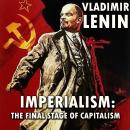
Imperialism: The Final Stage of Capitalism
"'Imperialism: The Final Stage of Capitalism' by Vladimir Lenin is a foundational Marxist text that explores the economic and political dynamics of imperialism in the early 20th century. Originally published in 1917, this work was a response to the global geopolitical landscape of the time and sought to analyze the nature of imperialism as the highest stage of capitalist development. Lenin argues that imperialism represents a new and advanced form of capitalism characterized by the domination of finance capital, the export of capital to foreign territories, the formation of monopolies, and the intensification of international rivalries. He contends that imperialist powers engage in the exploitation of colonies and less developed nations for resources and markets, leading to economic and political subjugation. The text also addresses the impact of imperialism on class relations and the working class movement. Lenin contends that imperialism intensifies the contradictions of capitalism, creating conditions ripe for proletarian revolution. 'Imperialism' remains a significant Marxist analysis that has influenced subsequent discussions on global economics, geopolitics, and anti-colonial struggles. While primarily an economic and political treatise, Lenin's work provides key insights into the intersection of economic power, politics, and class struggle during the imperialist era."
Vladimir Lenin (Author), Mark Bowen (Narrator)
Audiobook
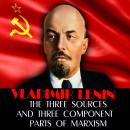
The Three Sources and Three Component Parts of Marxism
"The Three Sources and Three Component Parts of Marxism (Russian: Три источника и три составных части марксизма ) is an article written by the Russian revolutionary Vladimir Lenin and published in 1913. The article was dedicated to the thirtieth anniversary of Karl Marx's death."
Vladimir Lenin (Author), Mark Bowen (Narrator)
Audiobook
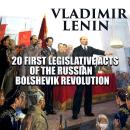
20 First Legislative Acts of the Russian Bolshevik Revolution
"Decrees were legislative acts of the highest Soviet institutions, primarily of the Council of People's Commissars (the highest executive body — Sovnarkom) and of VTsIK (the highest legislative body between sessions of the Congress of Soviets). The Bolshevik Initial Decrees were announced as soon as the Bolsheviks declared their success in the October Revolution (October 26, 1917). The Decrees seemed to conform to the popular Bolshevik slogan 'Peace, Land and Bread'. The slogan succinctly articulated the grievances of the Russian peasantry, armed forces and proletariat. The Bolsheviks were not opportunists but benevolent idealists; the point of the Decrees was to bring about a better quality of life for the Russian people. Regardless of which view is the more accurate account, it is clear from these opposing perspectives that the history of the Initial Decrees is a politically charged issue. This is perhaps because historians use the Decrees to try to discern whether the implementation of Marxist thought has totalitarian tendencies."
Vladimir Lenin (Author), Peter Coates (Narrator)
Audiobook
©PTC International Ltd T/A LoveReading is registered in England. Company number: 10193437. VAT number: 270 4538 09. Registered address: 157 Shooters Hill, London, SE18 3HP.
Terms & Conditions | Privacy Policy | Disclaimer
Join our community for the latest bookish news, reading recommendations, exclusive opening extracts, author events and competitions. It\'s all free. And enter a monthly draw to win a £50 Gift Card. See past winners here
Join Our Community