Browse audiobooks narrated by Jamey Lewis, listen to samples and when you're ready head over to Audiobooks.com where you can get 3 FREE audiobooks on us
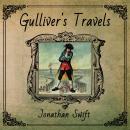
"Jonathan Swift's Gulliver's Travels is a timeless exploration of the human spirit seen through the eyes of an adventurous traveler. In this work, Swift offers a playful yet clear reflection on society without detailing every fact. Instead, he invites readers to uncover hidden lessons through a series of curious encounters and unexpected adventures. The narrative gently nudges us to question the ways we live and the institutions that shape our lives, all while delighting us with visions of strange lands and unusual peoples. Swift's language is straightforward and unpretentious, yet his wit sparkles on every page. The book does not simply recount a journey from one place to another; it hints at a deeper conversation about human nature, power, and the often absurd rules we follow. Each imagined world serves as a subtle mirror to our own, and every encounter offers a quiet challenge to accepted ideas. The beauty of Gulliver's Travels lies in its ability to blend humor with thoughtful insight. Its elegance comes not from grandiose descriptions but from the honest, clear voice of its author. This work encourages us to laugh at ourselves and to view our own lives with a sense of curious wonder. It invites readers to see beyond the surface and to explore hidden truths about our society and ourselves. This enduring work remains a beacon of creative insight, urging us to reexamine our lives with fresh clarity and purpose."
Jonathan Swift (Author), Jamey Lewis (Narrator)
Audiobook
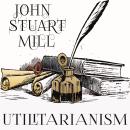
Selected Works of John Stuart Mill: On Liberty. Utilitarianism
"On Liberty is a philosophical essay by the English philosopher John Stuart Mill. Published in 1859, it applies Mill's ethical system of utilitarianism to society and state. Mill suggests standards for the relationship between authority and liberty. He emphasizes the importance of individuality, which he considers prerequisite to the higher pleasures—the summum bonum of utilitarianism. Furthermore, Mill asserts that democratic ideals may result in the tyranny of the majority. Among the standards proposed are Mill's three basic liberties of individuals, his three legitimate objections to government intervention, and his two maxims regarding the relationship of the individual to society. On Liberty was a greatly influential and well-received work. Some classical liberals and libertarians have criticized it for its apparent discontinuity with Utilitarianism, and vagueness in defining the arena within which individuals can contest government infringements on their personal freedom of action. The ideas presented in On Liberty have remained the basis of much political thought. It has remained in print since its initial publication. A copy of On Liberty is passed to the president of the British Liberal Democrats as a symbol of office. Utilitarianism is a classic exposition and defence of utilitarianism in ethics. The essay first appeared as a series of three articles published in Fraser's Magazine in 1861; the articles were collected and reprinted as a single book in 1863. Mill's aim in the book is to explain what utilitarianism is, to show why it is the best theory of ethics, and to defend it against a wide range of criticisms and misunderstandings. Though heavily criticized both in Mill's lifetime and in the years since, Utilitarianism did a great deal to popularize utilitarian ethics and has been considered 'the most influential philosophical articulation of a liberal humanistic morality that was produced in the nineteenth century. Contents: On Liberty Utilitarianism"
John Mill (Author), Emma Gibson, Jamey Lewis (Narrator)
Audiobook
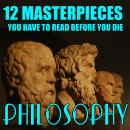
12 Masterpieces You Have to Read Before You Die. Philosophy
"Contents: The Prince by Niccolo Machiavelli The City of the Sun by Tommaso Campanella The New Atlantis by Francis Bacon Utopia by Thomas More Utilitarianism byJohn Stuart Mill On Liberty by John Stuart Mill An Answer to the Question What is Enlightenment by Immanuel Kant The Prophet by Kahlil Gibran A Confession by Leo Tolstoy Orthodoxy by G.K. Chesterton The Madman, His Parables and Poems by Kahlil Gibran On the Duty of Civil Disobedience by Henry David Thoreau"
Francis Bacon, G.K. Chesterton, Henry David Thoreau, Immanuel Kant, John Stuart Mill, Khalil Gibran, Leo Tolstoy, Niccolo Machiavelli, Thomas More, Tommaso Campanella (Author), Alfred Costa, Douglass Scott, Emma Gibson, Jamey Lewis, Joe Phoenix, Jowanna Lewis, Mark Bowen, Matt Larsen, Michael Goodrick, Trevor O'Hare (Narrator)
Audiobook
"This collection contains adventure novels from various authors, recognized masters who have become classics in this genre. None of the works included in the collection will leave an inquisitive and demanding reader indifferent. Jack London: The Call of the Wild Jack London: White Fang Jack London: To build a fire Jules Verne: Around The World in 80 Days Jules Verne: Twenty Thousand Leagues Under The Sea Robert Louis Stevenson: Treasure Island Jonathan Swift: Gulliver's Travels Daniel Defoe: Robinson Crusoe Arthur Conan Doyle: The Lost World O. Henry: The Ransom Of Red Chief"
Daniel Defoe, Jack London, Jonathan Swift, Jules Verne, O. Henry, Robert Louis Stevenson, Sir Arthur Conan Doyle (Author), Alfred Costa, Chris Dabbs, Jamey Lewis, John Lingua, Joshua Szatmari, Kenneth Elliot, Richard Williams, Sharon Plummer (Narrator)
Audiobook
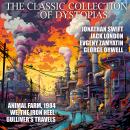
The Classic Collection of Dystopias: Animal Farm, 1984, We, The Iron Heel, Gulliver's Travels
"The Classic Collection of Dystopias brings together five of the most iconic works in dystopian literature, each offering a powerful critique of society, authority, and human nature. Animal Farm by George Orwell is an allegorical novella that depicts a group of farm animals overthrowing their human owner, only to fall under the tyranny of their own kind, exposing the dangers of totalitarianism and political corruption. 1984, also by Orwell, presents a terrifying vision of a totalitarian state where individual freedom is crushed, and 'Big Brother' controls every aspect of life, thoughts, and reality itself. We by Evgeny Zamyatin explores a futuristic world where citizens live under constant surveillance, stripped of individual identity in a totalitarian state. It is considered one of the earliest dystopian novels, heavily influencing Orwell's 1984. The Iron Heel by Jack London portrays the rise of an oligarchic dictatorship in the United States, offering a powerful reflection on class struggle and the dangers of unchecked corporate power. Gulliver's Travels by Jonathan Swift, though often seen as a satirical adventure, also contains dystopian elements, particularly in its portrayal of authoritarianism and human folly in the different societies Gulliver encounters. This collection presents readers with a thought-provoking journey through different dystopian worlds, each raising critical questions about power, control, and the human spirit. It's a must-read for fans of speculative fiction, social commentary, and political thought. Contents: Gulliver's Travels by Jonathan Swift The Iron Heel by Jack London We by Evgeny Zamyatin 1984 by George Orwell Animal Farm by George Orwell"
Evgeny Zamyatin, George Orwell, Jack London, Jonathan Swift (Author), Jamey Lewis, Mark Bowen, Trevor O'Hare (Narrator)
Audiobook
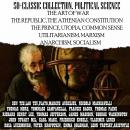
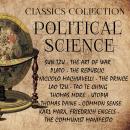
"Political science is the scientific study of politics. It is a social science dealing with systems of governance and power, and the analysis of political activities, political thought, political behavior, and associated constitutions and laws. Contents: Sun Tzu. The Art of War Lao Tzu. Tao Te Ching Plato. The Republic Aristotle. The Athenian Constitution Marcus Aurelius. Meditations Niccolo Machiavelli. The Prince Thomas More. Utopia Tommaso Campanella. The City of the Sun Francis Bacon. The New Atlantis Thomas Paine. Common Sense Richard Henry Lee. Lee Resolution Thomas Jefferson. Declaration of Independence James Madison. - Virginia Plan - Constitution of the United States - Bill of Rights - Northwest Ordinance George Washington. President George Washington's First Inaugural Speech Great Historical Documents of the United States: - Federal Judiciary Act - Marbury v. Madison - Articles of Confederation - Treaty of Alliance with France - Treaty of Paris John Stuart Mil. Utilitarianism Karl Marx and Friedrich Engels. The Communist Manifesto Vladimir Lenin: - The State and Revolution - The Three Sources and Three Component Parts of Marxism - Vladimir Lenin To the Citizens of Russia! - Vladimir Lenin To Workers, Soldiers, and Peasants! - Report on Peace - Report on Land - Decree on Abolishment of Capital Punishment - Decree on Transfer of Power to the Soviets - Decree on Establishment of the Workers' and Peasants' Government - Decree on Elections for the Constituent Assembly - Decree on Suppression of Hostile Newspapers - Decree on Transfer of Food Control to Municipalities - Decree on an Eight-Hour Working Day - Decree on the Right to Issue Laws - Resolution on the Right of Sovnarkom to Issue Decrees - Decree on Social Insurance - Declaration of the Rights of the People of Russia - Decree on Organization of Volost Land Committees - Decree on Transfer of Power and the Means of Production to the Toilers - Decree Proclaiming Advertising a State Monopoly - Decree Abolishing Classes and Civil Ranks - Decree on Workers' Control - Resolution on Relation of the Central Executive Committee to the Sovnarkom - Decree on the Right to Call for Re-Elections - Decree on Establishment of the Extraordinary Commission to Fight Counter-Revolution - V. I. Lenin Note To F. E. Dzerzhinsky with a Draft of A Decree On Fighting Counter-Revolutionaries And Saboteurs Rosa Luxemburg. Reform or Revolution Peter Kropotkin. The Conquest of Bread Emma Goldman. Anarchism: What It Really Stands For Leon Trotsky. Fascism: What It Is and How to Fight It"
Emma Goldman, Francis Bacon, John Stuart Mill, Karl Marx, Lao Tzu, Leon Trotsky, Marcus Aurelius, Niccolo Machiavelli, Peter Kropotkin, Plato, Rosa Luxemburg, Sun Tzu, Thomas More, Thomas Paine, Tommaso Campanella, Vladimir Lenin (Author), Alfred Costa, Andrew Roberts, Douglass Scott, Jamey Lewis, Joe Phoenix, Jowanna Lewis, Kenneth Elliot, Mark Bowen, Peter Coates, Richard Williams (Narrator)
Audiobook
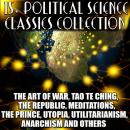
"What is Political Science? Within human society, it is customary to distinguish between the following spheres: economic, political, social, and spiritual. The political sphere is important in that it involves and determines the interactions of different political powers. This understanding lies at the foundation of any political analysis of public life. Politics as a specific sector within human society is as old as it is modern. Many famous statesmen and scientists are credited as the authors of laws and political systems. In today's global community, facing growing pressures of political extremism and radicalism, knowledge of basic political science principles should help students develop a democratic ethos and foster qualities, such as political tolerance, compromise, and cooperation, while learning to express and defend their interests in a civilized manner. The foundation of political science lies in the accumulated knowledge of mankind. Each included piece o this collection is required reading at some of the best universities on the planet including: Harvard, Princeton, Yale, and Columbia Universities, the Massachusetts Institute of Technology (MIT), and the Universities of Oxford and Cambridge, among others. Sun Tzu: The Art of War Lao Tzu: Tao Te Ching Plato: The Republic Marcus Aurelius: Meditations Niccolo Machiavelli: The Prince Thomas More: Utopia Tommaso Campanella: The City of the Sun Francis Bacon: The New Atlantis Thomas Paine: Common Sense John Stuart Mill: Utilitarianism Karl Marx and Friedrich Engels: The Communist Manifesto Vladimir Lenin: The State and Revolution Rosa Luxemburg: Reform or Revolution Peter Kropotkin: The Conquest of Bread Emma Goldman: Anarchism: What It Really Stands For Leon Trotsky: Fascism: What It Is and How to Fight It"
Emma Goldman, Francis Bacon, Friedrich Engels, John Stuart Mill, Karl Marx, Lao Tzu, Leon Trotsky, Marcus Aurelius, Niccolo Machiavelli, Peter Kropotkin, Plato, Rosa Luxemburg, Sun Tzu, Thomas More, Thomas Paine, Tommaso Campanella, Vladimir Lenin (Author), Alfred Costa, Andrew Roberts, Douglass Scott, Jamey Lewis, Joe Phoenix, Jowanna Lewis, Kenneth Elliot, Mark Bowen, Peter Coates, Richard Williams (Narrator)
Audiobook

"Stephen Crane's 'The Red Badge of Courage' is a powerful exploration of the psychological and emotional toll of war. Set against the backdrop of the American Civil War, the novel follows the journey of Henry Fleming, a young and inexperienced soldier eager to prove his courage on the battlefield. Faced with the harsh realities of war, Henry grapples with fear, doubt, and the complexities of heroism. As Henry confronts the chaos and brutality of battle, he undergoes a profound internal struggle, questioning his own motives and struggling to reconcile his romanticized notions of warfare with the harsh truths he encounters. The narrative skillfully delves into the intricacies of human nature and the transformative impact of war on an individual. Crane's vivid and evocative prose captures the raw intensity of combat, immersing readers in the gritty details of soldier life. 'The Red Badge of Courage' is a timeless examination of the human condition, offering a poignant reflection on courage, identity, and the cost of glory. This classic work continues to resonate with readers, providing a poignant and thought-provoking exploration of the complexities of war and the indomitable spirit of the individual. "
Stephen Crane (Author), Jamey Lewis (Narrator)
Audiobook
"Mill's book Utilitarianism first appeared as a series of three articles published in Fraser's Magazine in 1861 and was reprinted as a single book in 1863. John Stuart Mill was brought up as a Benthamite with the explicit intention that he would carry on the cause of utilitarianism. Utilitarianism is a family of consequentialist ethical theories that promotes actions that maximize happiness and well-being for the majority of a population. Although different varieties of utilitarianism admit different characterizations, the basic idea behind all of them is to in some sense maximize utility, which is often defined in terms of well-being or related concepts. Utilitarianism is a version of consequentialism, which states that the consequences of any action are the only standard of right and wrong. Unlike other forms of consequentialism, such as egoism and altruism, utilitarianism considers the interests of all beings equally. Famous works of the author John Stuart Mill: A System of Logic, Essays on Some Unsettled Questions of Political Economy, Principles of Political Economy, A Few Words on Non-intervention, On Liberty, Considerations on Representative Government, Utilitarianism, Аutobiography, Three Essays on Religion, Socialism, The Subjection of Women, England and Ireland. "
John Stuart Mill (Author), Jamey Lewis (Narrator)
Audiobook
"Why Political Science Classics Collection is so important? In today's world, providing quality training for the younger generation at colleges and universities is of primary importance. But higher education is not enough. Any graduate is first and foremost a citizen of his nation. He has the right to be an actor in the political life of his society. The political changes taking place today in the modern world are dependent on the civic stance of each person. In this way, a serious challenge facing the world system of higher education is to educate citizens who are capable of navigating and influencing the modern political processes in his country. Youth today actively participate in campaigns carried out by political parties and community organizations. However, it is impossible to develop conditions which foster a civic position without the existence of a political culture. In today's global community, facing growing pressures of political extremism and radicalism, knowledge of basic political science principles should help students develop a democratic ethos and foster qualities, such as political tolerance, compromise, and cooperation, while learning to express and defend their interests in a civilized manner. The foundation of political science lies in the accumulated knowledge of mankind. This collection was compiled as an aid to college and university students. Each included piece is required reading at some of the best universities on the planet including: Harvard, Princeton, Yale, and Columbia Universities, the Massachusetts Institute of Technology (MIT), and the Universities of Oxford and Cambridge, among others. This collection includes works famous authors: The Art of War by Sun Tzu Tao Te Ching by Lao Tzu The Republic by Plato Meditations by Marcus Aurelius The Prince by Niccolo Machiavelli Utopia by Thomas More Common Sense by Thomas Paine Utilitarianism by John Stuart Mill The Communist Manifesto by Karl Marx and Friedrich Engels The State and Revolution by Vladimir lenin"
Friedrich Engels, John Stuart Mill, Karl Marx, Lao Tzu, Marcus Aurelius, Niccolo Machiavelli, Plato, Sun Tzu, Thomas More, Thomas Paine, Vladimir Lenin (Author), Alfred Costa, Andrew Roberts, Douglass Scott, Jamey Lewis, John Brown, Jowanna Lewis, Kenneth Elliot, Peter Coates, Richard Williams (Narrator)
Audiobook
©PTC International Ltd T/A LoveReading is registered in England. Company number: 10193437. VAT number: 270 4538 09. Registered address: 157 Shooters Hill, London, SE18 3HP.
Terms & Conditions | Privacy Policy | Disclaimer
Join our community for the latest bookish news, reading recommendations, exclusive opening extracts, author events and competitions. It\'s all free. And enter a monthly draw to win a £50 Gift Card. See past winners here
Join Our Community