Browse Computers & Technology audiobooks, listen to samples and when you're ready head over to Audiobooks.com where you can get 3 FREE audiobooks on us
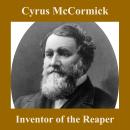
Cyrus McCormick, Inventor of the Reaper
"McCormick (1809-1884) demonstrated a workable reaper in 1831 and spent the rest of his life improving the reaper, and expanding the McCormick Harvesting Machine Company with sales across the United States and around the world. McCormick's reapers had profound effects on the alleviation of U.S. and world hunger. aspenleafmedia.com"
Christopher Crennen (Author), Christopher Crennen (Narrator)
Audiobook
The Most Human Human: What Talking with Computers Teaches Us About What It Means to Be Alive
"The Most Human Human is a provocative, exuberant, and profound exploration of the ways in which computers are reshaping our ideas of what it means to be human. Its starting point is the annual Turing Test, which pits artificial intelligence programs against people to determine if computers can "think." Named for computer pioneer Alan Turing, the Turing Test convenes a panel of judges who pose questions-ranging anywhere from celebrity gossip to moral conundrums-to hidden contestants in an attempt to discern which is human and which is a computer. The machine that most often fools the panel wins the Most Human Computer Award. But there is also a prize, bizarre and intriguing, for the Most Human Human. In 2008, the top AI program came short of passing the Turing Test by just one astonishing vote. In 2009, Brian Christian was chosen to participate, and he set out to make sure Homo sapiens would prevail. The author's quest to be deemed more human than a computer opens a window onto our own nature. Interweaving modern phenomena like customer service "chatbots" and men using programmed dialogue to pick up women in bars with insights from fields as diverse as chess, psychiatry, and the law, Brian Christian examines the philosophical, biological, and moral issues raised by the Turing Test. One central definition of human has been "a being that could reason." If computers can reason, what does that mean for the special place we reserve for humanity?"
Brian Christian (Author), Brian Christian (Narrator)
Audiobook
High Noon: The Inside Story of Scott McNealy and the Rise of Sun Microsystems
"In 1982, a little upstart named Sun was making waves in the high-tech industry with its groundbreaking workstation technology, even as early competitors dismissed the company as not worth losing sleep over. Since then, Sun Microsystems has become a formidable presence in the industry, making its own rules and taking no prisoners, and is currently poised to reach the highest point of its ascendancy—the challenge of Microsoft's dominance over the future of computing. The driving force behind this once fledgling company is a man who has been described as brash, unconventional, ambitious, forward-looking, and sometimes his own worst enemy. Scott McNealy turned Sun into the multibillion-dollar success it is today—a developer of innovative software like Java that is revolutionizing the computing landscape. High Noon is the inside story of Sun's rise to power, from its shaky start in Silicon Valley through its transformation under the aggressive and inspirational leadership of McNealy. Karen Southwick reveals the behind-the-scenes maneuverings of McNealy and Sun, with candid interviews from the key players and insights into the inner workings of the high-tech industry. This book examines how scrappy underdog Sun overcame its larger and supposedly tougher competitors, combining hard work, tenacity, and talented people to build a more innovative and flexible company. Among High Noon's revelations: –A new perspective on how the complex, contradictory McNealy shaped his company and fashioned its strategy –Insight into central issues facing the high-tech industry, such as network computers and the future of the Internet –An insider view of the maneuverings of industry powerhouses, including Microsoft, Oracle, Netscape, IBM, and Intel –Both entertaining and instructive, High Noon offers valuable lessons for taking charge of your destiny and succeeding in a fast-paced, unpredictable, and even hostile environment"
Karen Southwick (Author), Sneha Mathan (Narrator)
Audiobook
"The protection of cyberspace, the information medium, has become a vital national interest because of its importance both to the economy and to military power. An attacker may tamper with networks to steal information for money or to disrupt operations. Future wars are likely to be carried out, in part or perhaps entirely, in cyberspace. It might seem that maneuvering in cyberspace is like maneuvering in other media, but nothing would be more misleading. Cyberspace has its own laws. It is easy to hide identities and difficult to predict or even understand battle damage, and attacks deplete themselves quickly. Cyberwar is nothing so much as the manipulation of ambiguity. Martin Libicki explores these topics in detail and uses the results to address such issues as the pros and cons of counterattack, the value of deterrence and vigilance, and other defensive actions the United States and the US Air Force can take in the face of deliberate cyberattack."
Martin C. Libicki (Author), Erik Sandvold (Narrator)
Audiobook
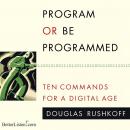
"The debate over whether the Net is good or bad for us fills the airwaves and the blogosphere. The real question is, do we direct technology, or do we let ourselves be directed by it and those who have mastered it?"
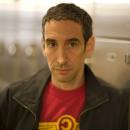
Doug Rushkoff (Author), Doug Rushkoff (Narrator)
Audiobook
"The debate over whether the Net is good or bad for us fills the airwaves and the blogosphere. The real question is, do we direct technology, or do we let ourselves be directed by it and those who have mastered it?"
Doug Rushkoff (Author), Doug Rushkoff (Narrator)
Audiobook
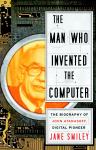
The Man Who Invented the Computer: The Biography of John Atanasoff, Digital Pioneer
"From one of our most acclaimed novelists, a David-and-Goliath biography for the digital age. One night in the late 1930s, in a bar on the Illinois-Iowa border, John Vincent Atanasoff, a professor of physics at Iowa State University, after a frustrating day performing tedious mathematical calculations in his lab, hit on the idea that the binary number system and electronic switches, combined with an array of capacitors on a moving drum to serve as memory, could yield a computing machine that would make his life and the lives of other similarly burdened scientists easier. Then he went back and built the machine. It worked. The whole world changed. Why don't we know the name of John Atanasoff as well as we know those of Alan Turing and John von Neumann? Because he never patented the device, and because the developers of the far-better-known ENIAC almost certainly stole critical ideas from him. But in 1973 a court declared that the patent on that Sperry Rand device was invalid, opening the intellectual property gates to the computer revolution. Jane Smiley tells the quintessentially American story of the child of immigrants John Atanasoff with technical clarity and narrative drive, making the race to develop digital computing as gripping as a real-life techno-thriller."
Jane Smiley (Author), Kathe Mazur (Narrator)
Audiobook
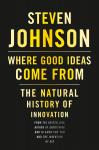
Where Good Ideas Come From: The Natural History of Innovation
"One of our most innovative, popular thinkers takes on-in exhilarating style-one of our key questions: Where do good ideas come from?"
Steven Johnson (Author), Erik Singer (Narrator)
Audiobook
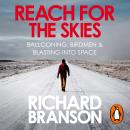
Reach for the Skies: Ballooning, Birdmen and Blasting into Space
"As far back as stories go, pioneers have reached for the skies. In the last two hundred years, they have mastered the air and made the modern world possible. Today they are bringing outer space within our reach. They're inventors and toymakers, amateurs and adventurers, visionaries, dreamers and, yes, crackpots. Some have called them irresponsible, even dangerous. But I have met many of them. I have worked with them, and funded them, and flown with them. I admire them, and trust them, and I think they and their kind are our future. In this book I look at the history of flight through the stories and people who have inspired me. These are tales of miraculous rescues; of records made and broken; of surprising feats of endurance and survival, including some of my own adventures, as well as developments in the future of air (and space) travel. This is a story of pioneers, and of course it includes the world famous Montgolfiers and the Wright brothers. But I also want to describe some of the lesser-known trailblazers -- people like Tony Jannus, who in 1914 created the world's first scheduled commercial flight, flying his passengers over the waters of Tampa Bay at an altitude of just fifty feet; the 'bird man' Leo Valentin, who in the 1950s jumped from 9,000 feet with wooden wings attached to his shoulders; and my friend, Steve Fossett, who dedicated his life to breaking records and having adventures. This is their story. It is also, in a small way, my own."
Richard Branson (Author), Adrian Mulraney (Narrator)
Audiobook
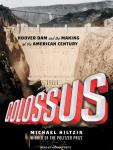
Colossus: Hoover Dam and the Making of the American Century
"As breathtaking today as when it was completed, Hoover Dam ranks among America's greatest achievements. The story of its conception, design, and construction is the story of the United States at a unique moment in history: when facing both a global economic crisis and the implacable elements of nature, we prevailed. The United States after Hoover Dam was a different country from the one that began to build it, going from the glorification of individual effort to the value of shared enterprise and communal support. The dam became the physical embodiment of this change. A remote regional construction project transformed from a Republican afterthought into a New Deal symbol of national pride. Hoover Dam went on to shape not only the American West but the American century. Michael Hiltzik populates the epic tale of the dam's construction with larger-than-life characters, such as Theodore and Franklin Roosevelt, William Mulholland, and the dam's egomaniacal architect, Frank Crowe. Shedding real light on a one-of-a-kind moment in twentieth-century American history, Hiltzik combines exhaustive research, trenchant observation, and a gift for unforgettable storytelling in a book that is bound to become a classic in its genre."
Michael Hiltzik (Author), Norman Dietz (Narrator)
Audiobook
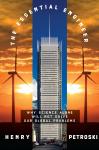
The Essential Engineer: Why Science Alone Will Not Solve Our Global Problems
"From the acclaimed author of The Pencil and To Engineer Is Human, The Essential Engineer is an eye-opening exploration of the ways in which science and engineering must work together to address our world's most pressing issues, from dealing with climate change and the prevention of natural disasters to the development of efficient automobiles and the search for renewable energy sources. While the scientist may identify problems, it falls to the engineer to solve them. It is the inherent practicality of engineering, which takes into account structural, economic, environmental, and other factors that science often does not consider, that makes engineering vital to answering our most urgent concerns. Henry Petroski takes us inside the research, development, and debates surrounding the most critical challenges of our time, exploring the feasibility of biofuels, the progress of battery-operated cars, and the question of nuclear power. He gives us an in-depth investigation of the various options for renewable energy-among them solar, wind, tidal, and ethanol-explaining the benefits and risks of each. Will windmills soon populate our landscape the way they did in previous centuries? Will synthetic trees, said to be more efficient at absorbing harmful carbon dioxide than real trees, soon dot our prairies? Will we construct a "sunshade" in outer space to protect ourselves from dangerous rays? In many cases, the technology already exists. What's needed is not so much invention as engineering. Just as the great achievements of centuries past-the steamship, the airplane, the moon landing-once seemed beyond reach, the solutions to the twenty-first century's problems await only a similar coordination of science and engineering. Eloquently reasoned and written, The Essential Engineer identifies and illuminates these problems-and, above all, sets out a course for putting ideas into action. Photograph of The New York Times Building (c) David Sundberg/Esto"
Henry Petroski (Author), Mark Deakins (Narrator)
Audiobook
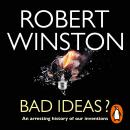
Bad Ideas?: An arresting history of our inventions
"As one of the world's leading experts in human reproduction and a research pioneer since the 1970s, Professor Winston is accustomed to working in the world of controversial science. From the earliest days of IVF treatment to current controversy over stem cell research, strong feelings and hot debate have always been provoked over the merits of medical technology and the ethics of so-called scientific progress. Few writers are better placed to review the history of human technological invention over the centuries and question its real benefits to mankind. Professor Winston argues that it is a basic human need to create and invent - a consequence of standing on two legs and seeing our environment as something separate from ourselves. But the more we invent, the more we intervene in the world around us, especially as mankind has many instincts besides the creative one: the urge to destroy, control, create disharmony and to use its powers to excess. For that reason, contained within every one of our finest inventions is the potential for great harm. This does not only apply to obvious menaces like gunpowder and oil, but to the most seemingly benign advances such as writing, farming, medicine. In this unique and timely book, Professor Winston takes a fresh look at man's greatest discoveries and innovations and asks whether our dependence on science and technology has led us into a precarious situation which is doomed to become worse before it gets better? As well as tracing the history and fall-out of our very worst ideas, his book also advocates the merits of scientific progress. For our drive to invent and improve the world around us is what, after all, makes us human."
Robert Winston (Author), Robert Winston (Narrator)
Audiobook
©PTC International Ltd T/A LoveReading is registered in England. Company number: 10193437. VAT number: 270 4538 09. Registered address: 157 Shooters Hill, London, SE18 3HP.
Terms & Conditions | Privacy Policy | Disclaimer
Join our community for the latest bookish news, reading recommendations, exclusive opening extracts, author events and competitions. It\'s all free. And enter a monthly draw to win a £50 Gift Card. See past winners here
Join Our Community