Browse Computers & Technology audiobooks, listen to samples and when you're ready head over to Audiobooks.com where you can get 3 FREE audiobooks on us
Birdseye: The Adventures of a Curious Man
"Break out the TV dinners! From the author who gave us Cod, Salt, and other informative bestsellers, the first biography of Clarence Birdseye, the eccentric genius inventor whose fast-freezing process revolutionized the food industry and American agriculture."
Mark Kurlansky (Author), Jon Van Ness (Narrator)
Audiobook
Platform: Get Noticed in a Noisy World
"How do you turn your social media accounts into viable business opportunities? Michael Hyatt has the blueprint. Michael Hyatt learned to use his social media platform as the foundation for his own successful writing, speaking, and business coaching practice. In this straightforward how-to, he offers down-to-earth guidance on crafting an effective and meaningful online platform. In Platform, you will learn how to: - Extend your influence, monetize it, and build a sustainable career. - Get noticed and start earning money in an increasingly noisy world. - Learn to amplify, update, polish, and organize your content for success. Platform goes behind the scenes into the world of social media success. You'll discover what bestselling authors, public speakers, entrepreneurs, musicians, and other creatives are doing differently to gain contacts, connections, and followers and win customers in today's crowded marketplace. With proven strategies, easy-to-replicate formulas, and practical tips, this book makes it easier, less expensive, and more possible than ever to stand out from the crowd and launch a business."
Michael Hyatt (Author), Michael Hyatt (Narrator)
Audiobook
Turing's Cathedral: The Origins of the Digital Universe
""It is possible to invent a single machine which can be used to compute any computable sequence," twenty-four-year-old Alan Turing announced in 1936. In Turing's Cathedral, George Dyson focuses on a small group of men and women, led by John von Neumann at the Institute for Advanced Study in Princeton, New Jersey, who built one of the first computers to realize Alan Turing's vision of a Universal Machine. Their work would break the distinction between numbers that mean things and numbers that do things-and our universe would never be the same. Using five kilobytes of memory (the amount allocated to displaying the cursor on a computer desktop of today), they achieved unprecedented success in both weather prediction and nuclear weapons design, while tackling, in their spare time, problems ranging from the evolution of viruses to the evolution of stars. Dyson's account, both historic and prophetic, sheds important new light on how the digital universe exploded in the aftermath of World War II. The proliferation of both codes and machines was paralleled by two historic developments: the decoding of self-replicating sequences in biology and the invention of the hydrogen bomb. It's no coincidence that the most destructive and the most constructive of human inventions appeared at exactly the same time. How did code take over the world? In retracing how Alan Turing's one-dimensional model became John von Neumann's two-dimensional implementation, Turing's Cathedral offers a series of provocative suggestions as to where the digital universe, now fully three-dimensional, may be heading next."
George Dyson (Author), Arthur Morey (Narrator)
Audiobook
Titanic, The Voices From The BBC Archive
"The RMS Titanic sailed from Southampton en route for New York on her maiden voyage with 2228 passengers and crew on board. On the 14th April at twenty minutes before midnight, sailing at almost full speed, she struck an iceberg and sank in just two and a half hours. Over 1500 lives were lost. This is the story of a great tragedy described by the surviving passengers, officers and crew who were on board that night. Firsthand accounts help to explain why so few of the passengers took to the lifeboats and later describe the miraculous survival of those forced to jump into the icy waters of the North Atlantic. The story of the Titanic is ultimately one of simple human loss and these laconic Edwardian voices bring it vividly to life. The hold that these events have on our imagination is as strong now as it ever has been in the 100 years since the great ship went down."
Mark Jones (Author), Tim Pigott-Smith (Narrator)
Audiobook
[German] - Ich und mein iPhone. Geschichten mit dem iPhone (Ungekürzt)
"Es wird gepflegt, gehätschelt, und der kleinste Kratzer bedeutet meist schon ein großes Drama. Die einen lieben es heiß und innig, die anderen verweigern sich ihm (noch): das iPhone ist das Kult-Handy schlechthin! Kein anderes Smartphone hat eine derart magische Anziehungskraft und spielt in so vielen Anekdoten aus dem Alltag mindestens eine wichtige Nebenrolle. Aus diesem Grund hat steinbach sprechende bücher gemeinsam mit dem Falkemedia Verlag einen Kurzgeschichten-Wettbewerb ausgerufen: Für das erste iPhone-Hörbuch wurden die besten Geschichten gesucht - witzige, spannende, abenteuerliche, romantische oder auch besinnliche Geschichten rund um das beste Smartphone der Welt. Und das sind die besten 16 Einsendungen, die es auf das Hörbuch geschafft haben: '12G oder: Das Ende der Einsamkeit' von Sascha Deckel 'Mehr iPhones in Geschichten!' von Sibylle Ortner 'Tann wimmen!' von Susanne Feiner 'Das verbrannte iPhone' von Deike Lautenschläger 'Hommage' von Nadin Wedel 'OlliPhone' von Jennifer Wellen 'Lovestory' von Jürgen Heidenreich 'Xavier und die Sache mit Bens iPhone' von Christina Stein 'Für immer verbunden' von Daniel Berger 'Der gestohlene Schatz' von Martina Ernst 'Ich und mein iPhone. Ein modernes Märchen' von Simone Bauer 'Die spanische Armada' von Stefan Müller '8 Uhr 20, Linie 5' von Karin Koenicke 'App-ostolisches iPhone-Bekenntnis' von Veronika Fischer 'Die Winkerkrabbe. Ein GPS-Abenteuer' von Wolff Rump 'iPhone. You phone?' von Patrik Sebastian Schmidt"
Johannes Steck (Author), Johannes Steck (Narrator)
Audiobook
Public Parts: How Sharing in the Digital Age Improves the Way We Work and Live
"International bestselling author and optimistic internet thinker Jeff Jarvis examines the way the Internet has changed the way we form communities, create identities, engage in commerce, and live our lives. A visionary and optimistic thinker examines the tension between privacy and publicness that is transforming how we form communities, create identities, do business, and live our lives. Thanks to the internet, we now live—more and more—in public. More than 750 million people (and half of all Americans) use Facebook, where we share a billion times a day. The collective voice of Twitter echoes instantly 100 million times daily, from Tahrir Square to the Mall of America, on subjects that range from democratic reform to unfolding natural disasters to celebrity gossip. New tools let us share our photos, videos, purchases, knowledge, friendships, locations, and lives. Yet change brings fear, and many people—nostalgic for a more homogeneous mass culture and provoked by well-meaning advocates for privacy—despair that the internet and how we share there is making us dumber, crasser, distracted, and vulnerable to threats of all kinds. But not Jeff Jarvis. In this shibboleth-destroying book, Public Parts argues persuasively and personally that the internet and our new sense of publicness are, in fact, doing the opposite. Jarvis travels back in time to show the amazing parallels of fear and resistance that met the advent of other innovations such as the camera and the printing press. The internet, he argues, will change business, society, and life as profoundly as Gutenberg's invention, shifting power from old institutions to us all. Based on extensive interviews, Public Parts introduces us to the men and women building a new industry based on sharing. Some of them have become household names—Facebook's Mark Zuckerberg, Google's Eric Schmidt, and Twitter's Evan Williams. Others may soon be recognized as the industrialists, philosophers, and designers of our future. Jarvis explores the promising ways in which the internet and publicness allow us to collaborate, think, ways—how we manufacture and market, buy and sell, organize and govern, teach and learn. He also examines the necessity as well as the limits of privacy in an effort to understand and thus protect it. This new and open era has already profoundly disrupted economies, industries, laws, ethics, childhood, and many other facets of our daily lives. But the change has just begun. The shape of the future is not assured. The amazing new tools of publicness can be used to good ends and bad. The choices—and the responsibilities—lie with us. Jarvis makes an urgent case that the future of the internet—what one technologist calls "the eighth continent"—requires as much protection as the physical space we share, the air we breathe, and the rights we afford one another. It is a space of the public, for the public, and by the public. It needs protection and respect from all of us. As Secretary of State Hillary Clinton said in the wake of the uprisings in the Middle East, "If people around the world are going to come together every day online and have a safe and productive experience, we need a shared vision to guide us." Jeff Jarvis has that vision and will be that guide."
Jeff Jarvis (Author), Jeff Jarvis (Narrator)
Audiobook
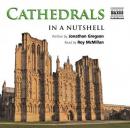
"For almost two millennia, cathedrals have been among the most imposing, astonishing and inspiring buildings in Europe. Regardless of faith, their scale and architectural daring has never ceased to spark wonder. This guide traces the development of the cathedral from its earliest beginnings as a Bishop's house, through the Romanesque and Gothic periods and up to the most extravagant contemporary designs around the world. In doing so, it sheds light on social, religious and architectural history, as well as bringing the story of these extraordinary buildings to life."
Jonathan Gregson (Author), Roy McMillan (Narrator)
Audiobook
The Penguin and the Leviathan: How Cooperation Triumphs over Self-Interest
"What do Wikipedia, Zip Car's business model, Barack Obama's presidential campaign, and a small group of lobster fishermen have in common? They all show the power and promise of human cooperation in transforming our businesses, our government, and our society at large. Because today, when the costs of collaborating are lower than ever before, there are no limits to what we can achieve by working together. For centuries, we as a society have operated according to a very unflattering view of human nature: that, humans are universally and inherently selfish creatures. As a result, our most deeply entrenched social structures - our top-down business models, our punitive legal systems, our market-based approaches to everything from education reform to environmental regulation - have been built on the premise that humans are driven only by self interest, programmed to respond only to the invisible hand of the free markets or the iron fist of a controlling government. In the last decade, however, this fallacy has finally begun to unravel, as hundreds of studies conducted across dozens of cultures have found that most people will act far more cooperatively than previously believed. Here, Harvard University Professor Yochai Benkler draws on cutting-edge findings from neuroscience, economics, sociology, evolutionary biology, political science, and a wealth of real world examples to debunk this long-held myth and reveal how we can harness the power of human cooperation to improve business processes, design smarter technology, reform our economic systems, maximize volunteer contributions to science, reduce crime, improve the efficacy of civic movements, and more. For example, he describes how: • By building on countless voluntary contributions, open-source software communities have developed some of the most important infrastructure on which the World Wide Web runs • Experiments with pay-as-you-wish pricing in the music industry reveal that fans will voluntarily pay far more for their favorite music than economic models would ever predic • Many self-regulating communities, from the lobster fishermen of Maine to farmers in Spain, live within self-regulating system for sharing and allocating communal resources • Despite recent setbacks, Toyota's collaborative shop-floor, supply chain, and management structure contributed to its meteoric rise above its American counterparts for over a quarter century. • Police precincts across the nation have managed to reduce crime in tough neighborhoods through collaborative, trust-based, community partnerships. A must-read for anyone who wants to understand the dynamics of cooperation in 21st century life, The Penguin and the Leviathan not only challenges so many of the ways in which we live and work, it forces us to rethink our entire view of human nature."
Yochai Benkler (Author), Marc Cashman (Narrator)
Audiobook
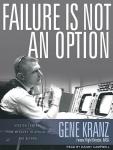
Failure Is Not an Option: Mission Control from Mercury to Apollo 13 and Beyond
"Gene Kranz was present at the creation of America's manned space program and was a key player in it for three decades. As a flight director in NASA's Mission Control, Kranz witnessed firsthand the making of history. He participated in the space program from the early days of the Mercury program to the last Apollo mission, and beyond. He endured the disastrous first years when rockets blew up and the United States seemed to fall further behind the Soviet Union in the space race. He helped to launch Alan Shepard and John Glenn, then assumed the flight director's role in the Gemini program, which he guided to fruition. With his teammates, he accepted the challenge to carry out President John F. Kennedy's commitment to land a man on the moon before the end of the 1960s. Kranz was flight director for both Apollo 11, the mission in which Neil Armstrong fulfilled President Kennedy's pledge, and Apollo 13. He headed the Tiger Team that had to figure out how to bring the three Apollo 13 astronauts safely back to Earth. (In the film Apollo 13, Kranz was played by the actor Ed Harris, who earned an Academy Award nomination for his performance.) In Failure Is Not an Option, Gene Kranz recounts these thrilling historic events and offers new information about the famous flights. What appeared as nearly flawless missions to the moon were, in fact, a series of hair-raising near misses. When the space technology failed, as it sometimes did, the controllers' only recourse was to rely on their skills and those of their teammates. Kranz takes us inside Mission Control and introduces us to some of the whiz kids—still in their twenties, only a few years out of college—who had to figure it all out as they went along, creating a great and daring enterprise. He reveals behind-the-scenes details to demonstrate the leadership, discipline, trust, and teamwork that made the space program a success. Finally, Kranz reflects on what has happened to the space program and offers his own bold suggestions about what we ought to be doing in space now. This is a fascinating firsthand account written by a veteran mission controller of one of America's greatest achievements."
Gene Kranz (Author), Danny Campbell (Narrator)
Audiobook
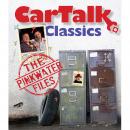
Car Talk Classics: The Pinkwater Files
"The hands-down highlight of many a Car Talk episode, Daniel Pinkwater is responsible for some of the all-time greatest moments of the program’s storied history on public radio. Whether discussing man’s best friend (but worst passenger) or searching for the perfect vehicle for those who are “horizontally challenged,” Pinkwater keeps Tom and Ray in stitches, along with the show’s far-flung audience. The latest time-wasting Car Talk collection features the official designation of the Pinkwater seating standard, the strange case of the motorhead boyfriend, the presentation of the first Car Talk Peace Prize, Stump the Chumps, a puzzler from the Lying Used Car Salesman series, a stirring recitation from a BMW owner’s manual, a discussion of puking pooches, and more. It’s four perfectly good hours of laughter and conversation."
Ray Magliozzi, Tom Magliozzi (Author), Ray Magliozzi, Tom Magliozzi (Narrator)
Audiobook
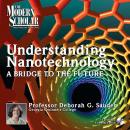
Understanding Nanotechnology I: A Bridge to the Future
"Nanotechnology is radically altering the world in ways almost unimaginable. With applications in arenas from medicine and science to warfare and even the world of sports, nanotechnology opens the doorway to a vast array of breathtaking possibilities. In this series of clearly articulated lectures, Professor Deborah G. Sauder explores the world of nanotechnology and all its astounding applications, while also examining the ethical issues raised by the science and the impact nanotechnology is having on big business."
Deborah G. Sauder (Author), Deborah G. Sauder (Narrator)
Audiobook
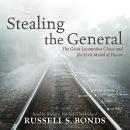
Stealing the General: The Great Locomotive Chase and the First Medal of Honor
"On April 12, 1862-one year to the day after Confederate guns opened on Fort Sumter and started the Civil War-a tall, mysterious smuggler and self-appointed Union spy named James J. Andrews and nineteen infantry volunteers infiltrated Georgia and stole a steam engine called the General. Racing northward at speeds near sixty miles an hour, cutting telegraph lines, and destroying track along the way, Andrews planned to open East Tennessee to the Union army, cutting off men and materiel from the Confederate forces in Virginia. If they succeeded, Andrews and his raiders could change the course of the war. But the General's young conductor, William A. Fuller, chased the stolen train first on foot, then by handcar, and finally aboard another engine, the Texas. He pursued the General until, running out of wood and water, Andrews and his men abandoned the doomed locomotive, ending the adventure that would soon be famous as "The Great Locomotive Chase." But the ordeal of the soldiers involved was just beginning. In the days that followed, the raiders were hunted down and captured. Eight were tried and executed as spies, including Andrews. Eight others made a daring escape, including two assisted by a network of slaves and Union sympathizers. For their actions, before a personal audience with President Abraham Lincoln, six of the raiders became the first men in American history to be awarded the Medal of Honor-the nation's highest decoration for gallantry. Americans north and south, both at the time and ever since, have been astounded and fascinated by this daring raid. But until now, there has not been a complete history of the entire episode and the fates of all those involved. Based on eyewitness accounts, as well as correspondence, diaries, military records, newspaper reports, deposition testimony, and other primary sources, Stealing the General is a blend of meticulous research and compelling narrative that is destined to become the definitive history of "the boldest adventure of the war.""
Russell S. Bonds (Author), Bronson Pinchot (Narrator)
Audiobook
©PTC International Ltd T/A LoveReading is registered in England. Company number: 10193437. VAT number: 270 4538 09. Registered address: 157 Shooters Hill, London, SE18 3HP.
Terms & Conditions | Privacy Policy | Disclaimer
Join our community for the latest bookish news, reading recommendations, exclusive opening extracts, author events and competitions. It\'s all free. And enter a monthly draw to win a £50 Gift Card. See past winners here
Join Our Community