Browse audiobooks by Steven Johnson, listen to samples and when you're ready head over to Audiobooks.com where you can get 3 FREE audiobooks on us
The Study of Mental Health: The Unofficial Guide to Self-Study
"We wrote this book, Statistics for Psychology, specifically to serve as a resource for schooling and instruction. After spending several decades as a teacher of behavioural statistics, the author, who became widely known for his pedagogical prowess, intended to create a textbook that would apply the most effective classroom approaches to the written page. He did this by combining the textbook with the most effective classroom approaches. To achieve this, this book employs a variety of tactics, including timely pointing and highlighting devices, strategic reviews and reminders, a focus on the most pertinent content, and timely anticipating of the student's perspective. Additionally, Evans' technique emphasizes underlying logic and intuitive conceptions rather than sophisticated mathematical formulas and proofs, and it does so within the context of an engaging writing style. This contrasts other methods, which emphasize both of these aspects. One can say that there is a healthy balance between conceptual and computational aspects across the entirety of the object. This work is suitable for students taking their first course in behavioural statistics. After experiencing this subject, the reader will be better prepared for advanced courses and direct applications. We also provide internet links to complimentary additional supplements at www.ebookslimited.com to enhance your reading experience. Teachers of behavioural statistics and their students are the intended beneficiaries of these supplements."
Steven Johnson (Author), SOHEL RANA (Narrator)
Audiobook
The Infernal Machine: A True Story of Dynamite, Terror, and the Rise of the Modern Detective
""A fast-burning fuse of a book, every page bursting with revelatory detail."-ERIK LARSON A sweeping account of the anarchists who terrorized the streets of New York and the detective duo who transformed policing to meet the threat-a tale of fanaticism, forensic science, and dynamite from the bestselling author of The Ghost Map WINNER OF THE EDGAR AWARD • A CHICAGO PUBLIC LIBRARY BEST BOOK OF THE YEAR • LONGLISTED FOR THE ANDREW CARNEGIE MEDAL FOR EXCELLENCE IN NONFICTION Steven Johnson's engrossing account of the epic struggle between the anarchist movement and the emerging surveillance state stretches around the world and between two centuries-from Alfred Nobel's invention of dynamite and the assassination of Czar Alexander II to New York City in the shadow of World War I. April 1914. The NYPD is still largely the corrupt, low-tech organization of the Tammany Hall era. To the extent the police are stopping crime-as opposed to committing it-their role has been almost entirely defined by physical force: the brawn of the cop on the beat keeping criminals at bay with nightsticks and fists. The solving of crimes is largely outside their purview. The new commissioner, Arthur Woods, is determined to change that, but he cannot anticipate the maelstrom of violence that will soon test his science-based approach to policing. Within weeks of his tenure, New York City is engulfed in the most concentrated terrorism campaign in the nation's history: a five-year period of relentless bombings, many of them perpetrated by the anarchist movement led by legendary radicals Alexander Berkman and Emma Goldman. Coming to Woods's aide are Inspector Joseph Faurot, a science-first detective who works closely with him in reforming the police force, and Amadeo Polignani, the young Italian undercover detective who infiltrates the notorious Bresci Circle. Johnson reveals a mostly forgotten period of political conviction, scientific discovery, assassination plots, bombings, undercover operations, and innovative sleuthing. The Infernal Machine is the complex pre-history of our current moment, when decentralized anarchist networks have once again taken to the streets to protest law enforcement abuses, right-wing militia groups have attacked government buildings, and surveillance is almost ubiquitous."
Steven Johnson (Author), Steven Johnson (Narrator)
Audiobook
[Spanish] - El mapa fantasma: La EPIDEMIA que cambió la ciencia, las ciudades y el mundo moderno
"En El mapa fantasma se cuenta la historia de la aterradora epidemia de cólera que envolvió Londres en 1854 y sus dos héroes poco probables: el anestesista doctor John Snow y el afable clérigo, el reverendo Henry Whitehead, quienes derrotaron la enfermedad mediante una combinación de conocimiento local, investigación científica y elaboración de mapas. Al contar su extraordinaria historia, Steven Johnson también explora todo un mundo de ideas y conexiones, desde el terror urbano hasta los microbios, los ecosistemas y la Gran Peste, los fenómenos culturales y la vida en la calle. Una poderosa explicación de cómo se ha dado forma al mundo en que vivimos. Libro destacado - The New York Times ENGLISH DESCRIPTION A National Bestseller, a New York Times Notable Book, and an Entertainment Weekly Best Book of the Year from the author of Extra Life "By turns a medical thriller, detective story, and paean to city life, Johnson's account of the outbreak and its modern implications is a true page-turner." -The Washington Post "Thought-provoking." -Entertainment Weekly It's the summer of 1854, and London is just emerging as one of the first modern cities in the world. But lacking the infrastructure-garbage removal, clean water, sewers-necessary to support its rapidly expanding population, the city has become the perfect breeding ground for a terrifying disease no one knows how to cure. As the cholera outbreak takes hold, a physician and a local curate are spurred to action-and ultimately solve the most pressing medical riddle of their time. In a triumph of multidisciplinary thinking, Johnson illuminates the intertwined histories of the spread of disease, the rise of cities, and the nature of scientific inquiry, offering both a riveting history and a powerful explanation of how it has shaped the world we live in."
Steven Johnson (Author), Bern Hoffman (Narrator)
Audiobook
Extra Life: A Short History of Living Longer
""Offers a useful reminder of the role of modern science in fundamentally transforming all of our lives." -President Barack Obama (on Twitter) "An important book." -Steven Pinker, The New York Times Book Review The surprising and important story of how humans gained what amounts to an extra life, from the bestselling author of How We Got to Now and Where Good Ideas Come From In 1920, at the end of the last major pandemic, global life expectancy was just over forty years. Today, in many parts of the world, human beings can expect to live more than eighty years. As a species we have doubled our life expectancy in just one century. There are few measures of human progress more astonishing than this increased longevity. Extra Life is Steven Johnson's attempt to understand where that progress came from, telling the epic story of one of humanity's greatest achievements. How many of those extra years came from vaccines, or the decrease in famines, or seatbelts? What are the forces that now keep us alive longer? Behind each breakthrough lies an inspiring story of cooperative innovation, of brilliant thinkers bolstered by strong systems of public support and collaborative networks, and of dedicated activists fighting for meaningful reform. But for all its focus on positive change, this book is also a reminder that meaningful gaps in life expectancy still exist, and that new threats loom on the horizon, as the COVID-19 pandemic has made clear. How do we avoid decreases in life expectancy as our public health systems face unprecedented challenges? What current technologies or interventions that could reduce the impact of future crises are we somehow ignoring? A study in how meaningful change happens in society, Extra Life celebrates the enduring power of common goals and public resources, and the heroes of public health and medicine too often ignored in popular accounts of our history. This is the sweeping story of a revolution with immense public and personal consequences: the doubling of the human life span."
Steven Johnson (Author), Steven Johnson (Narrator)
Audiobook
Enemy of All Mankind: A True Story of Piracy, Power, and History's First Global Manhunt
""Thoroughly engrossing . . . a spirited, suspenseful, economically told tale whose significance is manifest and whose pace never flags." -The Wall Street Journal From The New York Times-bestselling author of The Ghost Map and Extra Life, the story of a pirate who changed the world Henry Every was the seventeenth century's most notorious pirate. The press published wildly popular-and wildly inaccurate-reports of his nefarious adventures. The British government offered enormous bounties for his capture, alive or (preferably) dead. But Steven Johnson argues that Every's most lasting legacy was his inadvertent triggering of a major shift in the global economy. Enemy of All Mankind focuses on one key event-the attack on an Indian treasure ship by Every and his crew-and its surprising repercussions across time and space. It's the gripping tale of one of the most lucrative crimes in history, the first international manhunt, and the trial of the seventeenth century. Johnson uses the extraordinary story of Henry Every and his crimes to explore the emergence of the East India Company, the British Empire, and the modern global marketplace: a densely interconnected planet ruled by nations and corporations. How did this unlikely pirate and his notorious crime end up playing a key role in the birth of multinational capitalism? In the same mode as Johnson's classic nonfiction historical thriller The Ghost Map, Enemy of All Mankind deftly traces the path from a single struck match to a global conflagration."
Steven Johnson (Author), Jason Culp (Narrator)
Audiobook
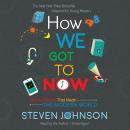
How We Got to Now: Six Innovations That Made the Modern World
"From the New York Times-bestselling author of Where Good Ideas Come From and Extra Life, a new look at the power and legacy of great ideas. In this illustrated history, Steven Johnson explores the history of innovation over centuries, tracing facets of modern life (refrigeration, clocks, and eyeglass lenses, to name a few) from their creation by hobbyists, amateurs, and entrepreneurs to their unintended historical consequences. Filled with surprising stories of accidental genius and brilliant mistakes-from the French publisher who invented the phonograph before Edison but forgot to include playback, to the Hollywood movie star who helped invent the technology behind Wi-Fi and Bluetooth-How We Got to Now investigates the secret history behind the everyday objects of contemporary life. In his trademark style, Johnson examines unexpected connections between seemingly unrelated fields: how the invention of air-conditioning enabled the largest migration of human beings in the history of the species-to cities such as Dubai or Phoenix, which would otherwise be virtually uninhabitable; how pendulum clocks helped trigger the industrial revolution; and how clean water made it possible to manufacture computer chips. Accompanied by a major six-part television series on PBS, How We Got to Now is the story of collaborative networks building the modern world, written in the provocative, informative, and engaging style that has earned Johnson fans around the globe."
Steven Johnson (Author), Steven Johnson (Narrator)
Audiobook
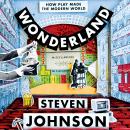
Wonderland: How Play Made the Modern World
"'The book is a house of wonders' The New York Times 'Steven Johnson is the Darwin of technology' Walter Issacson, author of Steve Jobs What connects Paleolithic bone flutes to the invention of computer software? Or the Murex sea snail to the death of the great American city? How does the bag of crisps you hold in your hand help tell the story of humanity itself? In his brilliant new work on the history of innovation, international bestseller Steven Johnson argues that the pursuit of novelty and wonder has always been a powerful driver of world-shaping technological change. He finds that that throughout history, the cutting edge of innovation lies wherever people are working the hardest to keep themselves and others amused. Johnson's storytelling is just as delightful as the inventions he describes, full of surprising stops along the journey from simple concepts to complex modern systems. He introduces us to the colourful innovators of leisure: the explorers, proprietors, showmen, and artists who changed the trajectory of history with their luxurious wares, exotic meals, taverns, gambling tables, and magic shows. Johnson compellingly argues that observers of technological and social trends should be looking for clues in novel amusements. You'll find the future wherever people are having the most fun."
Steven Johnson (Author), George Newbern (Narrator)
Audiobook
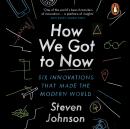
How We Got to Now: Six Innovations that Made the Modern World
"Penguin presents the unabridged, downloadable, audiobook edition of How We Got To Now by Steven Johnson, read by George Newbern. From Steven Johnson, the best-selling author of Where Good Ideas Come From, comes How We Got to Now, which tracks the surprising inspirations and unexpected consequences of the most influential innovations. How did the advent of refrigeration help create the golden age of Hollywood? How did the invention of flash photography help shift public opinion on the plight of New York's poorest inhabitants and bring about social reform? And what about our battle against dirt? How did that help create the microchips in our smartphones and computers? Unlocking tales of the unsung heroes and unexpected scientific revolutions, this is the story of the ideas that changed the world and the way we live in it."
Steven Johnson (Author), George Newbern (Narrator)
Audiobook
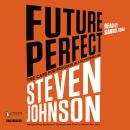
Future Perfect: The Case For Progress In A Networked Age
"Combining the deft social analysis of Where Good Ideas Come From with the optimistic arguments of Everything Bad Is Good For You, New York Times bestselling author Steven Johnson's Future Perfect makes the case that a new model of political change is on the rise, transforming everything from local governments to classrooms, from protest movements to health care. Johnson paints a compelling portrait of this new political worldview -- influenced by the success and interconnectedness of the Internet, but not dependent on high-tech solutions -- that breaks with the conventional categories of liberal or conservative thinking. With his acclaimed gift for multi-disciplinary storytelling and big ideas, Johnson explores this new vision of progress through a series of fascinating narratives: from the "miracle on the Hudson" to the planning of the French railway system; from the battle against malnutrition in Vietnam to a mysterious outbreak of strange smells in downtown Manhattan; from underground music video artists to the invention of the Internet itself. At a time when the conventional wisdom holds that the political system is hopelessly gridlocked with old ideas, Future Perfect makes the timely and inspiring case that progress is still possible, and that new solutions are on the rise. This is a hopeful, affirmative outlook for the future, from one of the most brilliant and inspiring visionaries of contemporary culture."
Steven Johnson (Author), Samuel Cohen (Narrator)
Audiobook
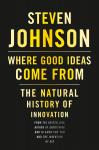
Where Good Ideas Come From: The Natural History of Innovation
"One of our most innovative, popular thinkers takes on-in exhilarating style-one of our key questions: Where do good ideas come from?"
Steven Johnson (Author), Erik Singer (Narrator)
Audiobook
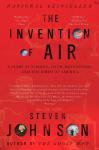
"Bestselling author Steven Johnson recounts-in dazzling, multidisciplinary fashion-the story of the brilliant man who embodied the relationship between science, religion, and politics for America's Founding Fathers. The Invention of Air is a book of world-changing ideas wrapped around a compelling narrative, a story of genius and violence and friendship in the midst of sweeping historical change that provokes us to recast our understanding of the Founding Fathers. It is the story of Joseph Priestley-scientist and theologian, protégé of Benjamin Franklin, friend of Thomas Jefferson-an eighteenth-century radical thinker who played pivotal roles in the invention of ecosystem science, the discovery of oxygen, the founding of the Unitarian Church, and the intellectual development of the United States. And it is a story that only Steven Johnson, acclaimed juggler of disciplines and provocative ideas, can do justice to. In the 1780s, Priestley had established himself in his native England as a brilliant scientist, a prominent minister, and an outspoken advocate of the American Revolution, who had sustained long correspondences with Franklin, Jefferson, and John Adams. Ultimately, his radicalism made his life politically uncomfortable, and he fled to the nascent United States. Here, he was able to build conceptual bridges linking the scientific, political, and religious impulses that governed his life. And through his close relationships with the Founding Fathers-Jefferson credited Priestley as the man who prevented him from abandoning Christianity-he exerted profound if little-known influence on the shape and course of our history. As in his last bestselling work, The Ghost Map, Steven Johnson here uses a dramatic historical story to explore themes that have long engaged him: innovation and the way new ideas emerge and spread, and the environments that foster these breakthroughs. And as he did in Everything Bad Is Good for You, Johnson upsets some fundamental assumptions about the world we live in-namely, what it means when we invoke the Founding Fathers-and replaces them with a clear-eyed, eloquent assessment of where we stand today."
Steven Johnson (Author), Mark Deakins (Narrator)
Audiobook
Everything Bad is Good for You: How Today's Popular Culture Is Actually Making Us Smarter
"From the author of the New York Times bestseller Mind Wide Open comes a groundbreaking assessment of popular culture as it's never been considered before: through the lens of intelligence.Forget everything you’ve ever read about the age of dumbed-down, instant-gratification culture. In this provocative, unfailingly intelligent, thoroughly researched, and surprisingly convincing book, Steven Johnson draws from fields as diverse as neuroscience, economics, and media theory to argue that the pop culture we soak in every day—from Lord of the Rings to Grand Theft Auto to The Simpsons—has been growing more sophisticated with each passing year, and, far from rotting our brains, is actually posing new cognitive challenges that are actually making our minds measurably sharper. You will never regard the glow of the video game or television screen the same way again."
Steven Johnson (Author), Jason Culp (Narrator)
Audiobook
©PTC International Ltd T/A LoveReading is registered in England. Company number: 10193437. VAT number: 270 4538 09. Registered address: 157 Shooters Hill, London, SE18 3HP.
Terms & Conditions | Privacy Policy | Disclaimer
Join our community for the latest bookish news, reading recommendations, exclusive opening extracts, author events and competitions. It\'s all free. And enter a monthly draw to win a £50 Gift Card. See past winners here
Join Our Community