Browse audiobooks by Plutarch, listen to samples and when you're ready head over to Audiobooks.com where you can get 3 FREE audiobooks on us
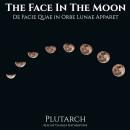
"In 100 AD, Plutarch wrote what would become the first science fiction about the civilisation on the moon, appended to a rigorous scientific analysis of current knowledge about the moon. Orbital mechanics, optics, atmospheric refraction, lunar geography, planetary and stellar composition, xenobotany, gravitation, heliocentricity, eclipse geometry and more are discussed as the state of the art is unpacked. Often startlingly modern for a work that is two millennia old, it serves as a reminder that science began long, long before norms of the modern scientific era were established. The first half reads as genuine natural philosophy. Plutarch's speakers debate the nature of the lunar surface, rejecting the notion of a perfect celestial sphere made up of fire and ether in favour of a body with mountains, valleys, and shadow-casting terrain. They examine reflected light, atmospheric optics, and the mechanics of eclipse. One speaker advances a proto-gravitational argument: that 'down' is a local condition, that objects fall toward whatever body they belong to, and that the moon holds its own just as Earth holds ours. The second half carries that physical moon into mythological territory. A soul narrative describes the lunar surface as a way-station between lives, a realm where mind and spirit undergo staged separation before returning to the cosmos or descending again to Earth. Discussing the voyages taken as the mind separates from the soul in journeys around the moon, it serves as both theological and science-fictional. Perfect for readers drawn to the history of science and the speculations that arise from it, this book is the first known moment empirical observation and speculative reasoning combined, in what would millennia later be called hard sci fi."
Plutarch (Author), Charles Featherstone (Narrator)
Audiobook
"What if the most useful lessons in power came from commanders, statesmen, and philosophers who had already seen empires rise and fail? The Complete Ancient Strategy, Statecraft and Empire Collection collects the great works of command and statecraft: battlefield judgment, political realism, self-command, persuasion, law, discipline, ambition, and the hard choices that shape victory or collapse. The arrangement is built for readers who want depth, continuity, and momentum rather than a disconnected anthology. What You'll Discover in This Modern Collection: – Strategy and War – principles of timing, deception, terrain, morale, and decisive action. – Statecraft and Power – political counsel on authority, loyalty, public order, and the management of conflict. – Discipline and Self-Command – the inner habits required before anyone can command others well. – Historical Lessons – campaigns, failures, victories, and the pressure of real decisions under danger. Whether you're studying leadership, military history, negotiation, power, discipline, or the classics of strategic thought, this edition gives you a direct way to experience the collection as a coherent journey. Begin reading today and discover how these works illuminate one another when they are heard in the right order."
Alexander Hamilton, Alexis de Tocqueville, James Madison, John Jay, Julius Caesar, Kautilya, Niccolo Machiavelli, Plutarch, Sun Tzu, Thomas Hobbes, Thucydides, Xenophon (Author), James Mitchell (Narrator)
Audiobook
How to Listen: An Ancient Guide to Learning from Others
"A lively new translation of Plutarch’s charming and timeless essay on how to be a good listener—and why listening is essential to learning and living well Listening is a skill—even an art—and it’s essential to learning and to life. Indeed, as Plutarch writes in How to Listen, “listening well is the foundation for living well.” In this volume, Jeffrey Beneker presents a vivid and accessible new translation of Plutarch’s classic essay about how to become a skilled listener, complete with an inviting introduction and the original Greek on facing pages. Plutarch is most famous as the author of Parallel Lives, a series of biographies of Greek and Roman statesmen. But he was also an expert on teaching and learning and How to Listen is arguably one of his best pedagogical works. A proponent of active listening well before its time, Plutarch explains the skills we need—and the obstacles and distractions we must overcome—to become effective listeners. Good listening requires, above all, an acknowledgement of our own ignorance in certain subjects and a commitment to gaining knowledge. We must set aside pride and envy so we can respect the expertise of others. We must also train ourselves to see through style and focus on substance, to discriminate between weak and strong arguments, and to criticize ideas fairly and accurately. Filled with shrewd insights and advice, How to Listen shows how to cultivate a skill that everyone who wants to learn and live well must master."
Jeffrey Beneker, Plutarch (Author), Pun Bandhu (Narrator)
Audiobook
How to Have Willpower: An Ancient Guide to Not Giving In
"How to Have Willpower brings together two profound ancient meditations on how to overcome pressures that encourage us to act against our own best interests—Plutarch's essay On Dysopia or How to Resist Pressure and Prudentius's poetic allegory Psychomachia or How to Slay Your Demons. Challenging the idea that humans are helpless victims of vice, these works—introduced and presented in vivid, accessible new prose translations by Michael Fontaine—emphasize the power of personal choice and the possibility of personal growth, as they offer insights and practical advice about resisting temptation. In the spirit of the best ancient self-help writing, Plutarch, a pagan Greek philosopher and historian, offers a set of practical recommendations and steps we can take to resist pressure and to stop saying 'yes' against our better judgment. And in a delightfully different work, Prudentius, a Latin Christian poet, dramatizes the necessity to actively fight temptation through the story of an epic battle within the human soul between fierce warrior women representing our virtues and vices. Plutarch and Prudentius insist that we allow pressure or temptations to get the best of us. But they also agree that we can do something about it. And their wisdom can help."
Plutarch, Prudentius (Author), Roger Clark (Narrator)
Audiobook
"Plutarch: Alexander is the essential companion to Plutarch's Caesar, the life paired with Alexander in Plutarch's Parallel Lives. This new English version of Alexander is followed by an Afterword about Plutarch’s Parallel Lives by the translator, Christopher Pelling, Emeritus Regius Professor of Greek at Oxford University. Plutarch composed his Lives in parallel pairs, and one choice must have seemed obvious: Alexander the Great and Julius Caesar, two dominating and colourful figures who each changed the world they lived in, Alexander by bringing down the Persian Empire and Caesar by winning the war which ended the Roman Republic and prepared for the rule of the emperors. It is their personalities that interested Plutarch most, as he uses ‘little things, a word or a jest or a playful moment’ to show what the men were really like. Alexander is seen to be a great soldier, full of spirit and ambition, gradually coarsened by his own successes until his final months at Babylon in a court full of superstition, terror, and dread; Caesar too is a brilliant figure, loved and admired by soldiers and people, letting nothing stand in his way until finally he lies dead, stricken down by his former friends on the Ides of March. This dynamic audiobook is available in two parts, bringing together Plutarch: Alexander with its sister volume, Caesar. A new Afterword offers listeners a rare opportunity to explore the striking parallels and profound contrasts between these two titans of history."
Plutarch (Author), Christopher Pelling (Narrator)
Audiobook
"Plutarch: Caesar is the essential companion to Plutarch's Alexander, the life paired with Caesar in Plutarch's Parallel Lives. This new English version of Caesar is followed by an Afterword about Plutarch’s Parallel Lives by the translator, Christopher Pelling, Emeritus Regius Professor of Greek at Oxford University. Plutarch composed his Lives in parallel pairs, and one choice must have seemed obvious: Alexander the Great and Julius Caesar, two dominating and colourful figures who each changed the world they lived in, Alexander by bringing down the Persian Empire and Caesar by winning the war which ended the Roman Republic and prepared for the rule of the emperors. It is their personalities that interested Plutarch most, as he uses ‘little things, a word or a jest or a playful moment’ to show what the men were really like. Alexander is seen to be a great soldier, full of spirit and ambition, gradually coarsened by his own successes until his final months at Babylon in a court full of superstition, terror, and dread; Caesar too is a brilliant figure, loved and admired by soldiers and people, letting nothing stand in his way until finally he lies dead, stricken down by his former friends on the Ides of March. This dynamic audiobook is available in two parts, bringing together Plutarch: Caesar with its sister volume, Alexander. A new Afterword offers listeners a rare opportunity to explore the striking parallels and profound contrasts between these two titans of history."
Plutarch (Author), Christopher Pelling (Narrator)
Audiobook
[Spanish] - Cómo escuchar 'Knowing How to Listen': Sabiduría clásica en tiempos de dispersión
"Corren tiempos de dispersión en los que es muy necesario escucharnos. Sentirse escuchado significa conectar con otras personas casi íntimamente; supone crear vínculos. Ser un buen oyente, nos dice Plutarco, es un arte que todos deberíamos aprender. Saber escuchar es tan importante como saber hablar bien. El placer que se alcanza al escuchar a otra persona depende tanto de quien habla como de quien escucha. Hoy día proliferan manuales, cursos y consejos para hablar en público, ser elocuentes, convencer a los demás o impresionarlos con nuestros discursos. Pero Plutarco nos revela que más importante que saber hablar, es saber escuchar. En un tiempo de ruido constante, de palabras que se lanzan como dardos contra los que no piensan como nosotros, la educación a través de la palabra es todavía una actividad tan necesaria como lo era en tiempos de Plutarco. Con su manera de escribir y educar siempre amena, con esa sabia erudición que nos sorprende y deleita en cada párrafo, Plutarco ofrece en este breve pero intenso tratado las claves para una escucha inteligente. Una edición enriquecida con el sugerente ensayo «El arte de escuchar… a los demás» de Daniel Tubau, que recoge la visión de los clásicos sobre la escucha. «Por eso, es preciso escuchar benévola e indulgentemente al que habla, como si a uno lo hubieran invitado a un banquete sagrado…»"
Plutarch (Author), Fran Salas (Narrator)
Audiobook
B. J. Harrison Reads Plutarch's Lives, Volume 2 of 2
"This second volume of 'Plutarch’s Lives' introduces the reader to even more important figures of the ancient world. Sertorius, Eumenes, Pompey, Alexander, Caesar and Cicero are only a small part of all the historical figures Plutarch describes. The philosopher produces character sketches of each persons, based on episodes of their lives. Thanks to Plutarch work and B. J. Harrison excellent narration, you will gain a better understanding of the ancient world and the lives of noble Greeks and Romans. B. J. Harrison started his Classic Tales Podcast back in 2007, wanting to breathe new life into classic stories. He masterfully plays with a wide array of voices and accents and has since then produced over 500 audiobooks. Now in collaboration with SAGA Egmont, his engaging narration of these famous classics is available to readers everywhere. Plutarch (c. AD 46 – after AD 119) was a Greek philosopher, essayist, biographer and priest. He is mostly known for his collection of 48 biographies of men, 'Parallel Lives', and 'Moralia' – a collection of manuscripts. After he became a Roman citizen, he changed his name to Lucius Mestrius Plutarchus. Plutarch spent his last thirty years in Delphi, serving as a priest."
Plutarch (Author), B.J.Harrison (Narrator)
Audiobook
B. J. Harrison Reads Plutarch's Lives, Volume 1 of 2
"If you want to start a study of the classical world, this is the right book to begin with. Written by one of the greatest biographers of all time, 'Plutarch’s Lives' tells us the brilliant history of the ancient world. In this first volume, you will find a detailed profiles and comparisons of Romulus and Theseus, Fabius and Pericles, along with many other of the greatest figures of ancient Greece, Rome, Macedonia, Sparta, Persia and Egypt. Thanks to Plutarch work and B. J. Harrison excellent narration, you will gain a better understanding of the ancient world and the lives of noble Greeks and Romans. B. J. Harrison started his Classic Tales Podcast back in 2007, wanting to breathe new life into classic stories. He masterfully plays with a wide array of voices and accents and has since then produced over 500 audiobooks. Now in collaboration with SAGA Egmont, his engaging narration of these famous classics is available to readers everywhere. Plutarch (c. AD 46 – after AD 119) was a Greek philosopher, essayist, biographer and priest. He is mostly known for his collection of 48 biographies of men, 'Parallel Lives', and 'Moralia' – a collection of manuscripts. After he became a Roman citizen, he changed his name to Lucius Mestrius Plutarchus. Plutarch spent his last thirty years in Delphi, serving as a priest."
Plutarch (Author), B.J.Harrison (Narrator)
Audiobook
How to Be a Leader: An Ancient Guide to Wise Leadership
"The ancient biographer and essayist Plutarch thought deeply about the leadership qualities of the eminent Greeks and Romans he profiled in his famous—and massive—Lives, including politicians and generals such as Pericles, Alexander the Great, Julius Caesar, and Mark Antony. Luckily for us, Plutarch distilled what he learned about wise leadership in a handful of essays, which are filled with essential lessons for experienced and aspiring leaders in any field today. In 'To an Uneducated Leader,' 'How to Be a Good Leader,' and 'Should an Old Man Engage in Politics?' Plutarch explains the characteristics of successful leaders, from being guided by reason and exercising self-control to being free from envy and the love of power, illustrating his points with memorable examples drawn from legendary Greco-Roman lives. He also explains how to train for leadership, persuade and deal with colleagues, manage one's career, and much more. Writing at the height of the Roman Empire, Plutarch suggested that people should pursue positions of leadership only if they are motivated by 'judgment and reason'—not 'rashly inspired by the vain pursuit of glory, a sense of rivalry, or a lack of other meaningful activities.' His wise counsel remains as relevant as ever."
Plutarch (Author), Matthew Waterson (Narrator)
Audiobook
"When it came to Athens and their leaders, few were as influential as the politician and Stratego Nicias. In Plutarch’s Parallel Lives, he documents the Peloponnesian War and other great achievements of the time through the life of Nicias. Most importantly, he helped negotiate peace after a decades-long war, which made him popular after an unsuccessful start in politics. However, after many years of political truces and actions, his life took a turn for the worse. "
Bernadotte Perrin, Plutarch (Author), Andrea Giordani (Narrator)
Audiobook
"We all know the founder of Rome, but do we know much about the widely-proclaimed second founder of Rome? The monarchy, tyranny, and victorious battles of Marcus Furius Camillus, the second founder, are documented in Plutarch’s Parallel Lives. After the destruction of Veii, Camillus returned to Rome as a pompous victor and dictator, causing quite a stir when he refused to follow the wishes of the senate when it came to dealing with Veii. Sensing banishment was in his future, Camillus’s time in Rome was much less bloody than many of his predecessors. "
Bernadotte Perrin, Plutarch (Author), Andrea Giordani (Narrator)
Audiobook
©PTC International Ltd T/A LoveReading is registered in England. Company number: 10193437. VAT number: 270 4538 09. Registered address: 157 Shooters Hill, London, SE18 3HP.
Terms & Conditions | Privacy Policy | Disclaimer
Join our community for the latest bookish news, reading recommendations, exclusive opening extracts, author events and competitions. It\'s all free. And enter a monthly draw to win a £50 Gift Card. See past winners here
Join Our Community