Browse audiobooks by Alexander Hamilton, listen to samples and when you're ready head over to Audiobooks.com where you can get 3 FREE audiobooks on us
"What if the most useful lessons in power came from commanders, statesmen, and philosophers who had already seen empires rise and fail? The Complete Ancient Strategy, Statecraft and Empire Collection collects the great works of command and statecraft: battlefield judgment, political realism, self-command, persuasion, law, discipline, ambition, and the hard choices that shape victory or collapse. The arrangement is built for readers who want depth, continuity, and momentum rather than a disconnected anthology. What You'll Discover in This Modern Collection: – Strategy and War – principles of timing, deception, terrain, morale, and decisive action. – Statecraft and Power – political counsel on authority, loyalty, public order, and the management of conflict. – Discipline and Self-Command – the inner habits required before anyone can command others well. – Historical Lessons – campaigns, failures, victories, and the pressure of real decisions under danger. Whether you're studying leadership, military history, negotiation, power, discipline, or the classics of strategic thought, this edition gives you a direct way to experience the collection as a coherent journey. Begin reading today and discover how these works illuminate one another when they are heard in the right order."
Alexander Hamilton, Alexis de Tocqueville, James Madison, John Jay, Julius Caesar, Kautilya, Niccolo Machiavelli, Plutarch, Sun Tzu, Thomas Hobbes, Thucydides, Xenophon (Author), James Mitchell (Narrator)
Audiobook
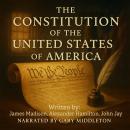
The Constitution of the United States of America
"Experience the foundation of American democracy in The Constitution of the United States, brought to life through the powerful narration of Gary Middleton. Written in 1787 by the James Madison, Alexander Hamilton, and John Jay, this defining document established the framework for the world’s first enduring republic — outlining the balance of powers, the rights of the people, and the principles of liberty that continue to guide the nation today. More than a historical artifact, The Constitution is a living testament to the American experiment — a blueprint for self-governance, justice, and unity. This audiobook invites listeners to reflect on the words that have shaped over two centuries of freedom and debate. Perfect for students, historians, educators, and anyone who wishes to better understand the foundation upon which the United States was built."
Alexander Hamilton, James Madison, John Jay (Author), Gary Middleton (Narrator)
Audiobook
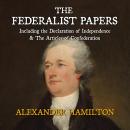
The Federalist Papers Including the Declaration of Independence & The Articles of Confederation
"This audiobook is narrated by a digital voice. The Federalist Papers serve as a primary source for interpretation of the Constitution, as they outline the philosophy and motivation of the proposed system of government. The authors of the Federalist Papers wanted to both influence the vote in favor of ratification and shape future interpretations of the Constitution. According to historian Richard B. Morris, they are an 'incomparable exposition of the Constitution, a classic in political science unsurpassed in both breadth and depth by the product of any later American writer.' The Federalist Papers consists of 85 articles advocating the ratification of the United States Constitution. Seventy-seven of the essays were published serially in The Independent Journal and The New York Packet between October 1787 and August 1788. This edition also includes the Declaration of Independence and the Articles of Confederation."
Alexander Hamilton (Author), Digital Voice Martin G (Narrator)
Audiobook
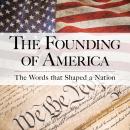
The Founding of America: The Words that Shaped a Nation
"This anthology brings together 20 texts which were vital in forging the United States and its constitution as we know it. Since the founding of the republic, great thinkers and politicians have set out their visions for America through formal documents, impassioned speeches and momentous treaties. This collection includes some of the most important works that helped define the country that America was to become. Politicians like George Washington, Benjamin Franklin, and Alexander Hamilton helped define the founding values of the United States of America. Their bold and revolutionary ideas did not come about unopposed, and they found themselves called upon to explain their reasoning to the wider public. The words of these incredible individuals ring just as true today as when they were first made and provided a firm foundation for the country that is the America we know and love today. This volume features documents such as: - The Declaration of Independence - Benjamin Franklin's Final Speech to the Constitutional Convention - The Constitution and the Amendments - The Federalist Papers - President George Washington's Farewell Address - The Emancipation Proclamation"
Abraham Lincoln, Alexander Hamilton, Benjamin Franklin, George Mason, George Washington, James Madison, James Wilson, Patrick Henry, Robert J. Allison, Thomas Jefferson (Author), Mack Gordon (Narrator)
Audiobook
The U.S. Constitution - with Thunderstorms
"Relax and listen to a reading of the U.S. Constitution while thunderstorms play in the background. Use the built-in speakers or get the best experience with headphones. The Constitution of the United States is the supreme law of the United States of America. The Constitution, originally comprising seven articles, delineates the national frame of government."
Alexander Hamilton, James Madison, John Jay (Author), Various (Narrator)
Audiobook
"The Federalist Papers is a series of 85 articles arguing in favor of ratification of the United States Constitution by the thirteen original colonies. Federalist No. 74 discusses the powers of the president as commander-in-chief and to grant pardons and reprieves. Hamilton asserts that the role of commander-in-chief is inherent in the office itself and requires the speed and resolve of a single decision-maker. He argues that vesting such powers among multiple executives could prove disastrous in the real world of military conflict. A similar argument is made regarding the power to pardon and issue reprieves, sensing correctly that group psychology might suppress the compassion to grant mercy or the courage to uphold justice when the case seems to demand it. Interestingly, he cites the need to act swiftly to grant pardons in certain situations in order to capitalize on a fleeting possibility to resolve a difficult situation, particularly in the event of rebellion. The power to grant pardons has been controversial at times, with concerns that pardons are granted for political purposes rather than to serve justice or mercy."
Alexander Hamilton (Author), D. S. Harvey (Narrator)
Audiobook
"Though best known for his primary authorship of the Federalist Papers, his death in a duel at the hands of Vice President Aaron Burr on the banks of the Hudson River and his star role in a 21st-century musical, it is often overlooked that Alexander Hamilton was instrumental in creating the key financial building blocks of the young United States of America. The first incumbent of the office of secretary of the Treasury on September 11, 1789 (under George Washington), Hamilton submitted a series of financial reports, meticulously researched, many of which, as Professor Mark Spencer explains in his introduction to this audiobook, became the economic foundations on which the US was built. The three reports presented here are the most important: The First Report on Public Credit (1790), Report on a National Bank (1790) and Report on the Subject of Manufactures (1791). The exultation following the victory of independence was tempered by some harsh fiscal realities - not least the question of war debt. The war was expensive: there existed $54 million of national debt and a further $21 million carried by individual states. How were both these debts to be managed? Being appointed secretary of the treasury was a tough assignment, not least because Hamilton’s strong character often brought him into conflict with other major figures, including Barr and Thomas Jefferson. Hamilton concluded that the nation should assume all the debt, aiming thereby to create a consolidated national debt. The Report on a National Bank was ‘the capstone’ of Hamilton’s transformative financial plan. Here, Hamilton called for the creation of a Bank of the United States which, among its functions, would be the supply of notes serving as the national currency. He concluded that the Bank would also provide a stable source of credit. The Report on Manufactures was, as Professor Spencer explains, ‘a program for federal stimulation of industrial development in the United States.’ In this complex report, it has been pointed out, Hamilton articulated ‘a relationship between public and private interests and between the political and the markets, that is in marked contrast to the political economy of his Scottish contemporary Adam Smith’. These fascinating historical economic documents provide a breadth of understanding concerning the considerable contribution made by Alexander Hamilton during the formative years of the United States."
Alexander Hamilton, Mark Spencer (Author), Adam Sims, John Chancer (Narrator)
Audiobook
FEDERALIST No. 65. The Powers of the Senate Continued
"The Federalist Papers is a series of 85 articles arguing in favor of ratification of the United States Constitution by the thirteen original colonies. The Federalist papers were written in response to criticism of the Constitution. The articles were first published between October 1787 and August 1788 in newspapers and then published in book form in 1788. Federalist No. 65 discusses the reasoning behind the choice of the Senate to conduct Impeachment trials. He is sanguine about the danger of political factions polarizing the proceedings. He rejects the Supreme Court as too small a body to represent the general public and posits that assigning the House, the representative elected by the body politic, the responsibility of bringing charges and prosecuting an impeachment, and assigning the Senate, a body of wise elders elected by state legislatures, the task trying the matter, is the best that can be done to bring about a necessary separation of powers to achieve a fair and just outcome."
Alexander Hamilton (Author), D. S. Harvey (Narrator)
Audiobook
"The Federalist Papers is a series of 85 articles arguing in favor of ratification of the United States Constitution by the thirteen original colonies. When the Constitutional Convention met in 1787 to revise the Articles of Confederation, James Madison and Alexander Hamilton advocated instead for the creation of a new government. The delegates used the principles contained in Madison's Virginia Plan to create the Constitution, which was submitted to the states in September 1787. The Federalist papers were written in response to criticism of the Constitution. Federalist No. 66 is a continuation of the argument in Federalist No. 65 for the Senate as the trial venue for impeachments. In No. 66 he addresses specific anti-Federalist objections in a series of four rebuttals. The issues addressed are: first, the concern that the Senate is encroaching on the powers of the courts; second, that the Senate itself may become too aristocratic; third, that impartiality may suffer when trying appointed officials previously approved by the same body; and, fourth, that the Senators may be unable to judge their own actions impartially in ratifying treaties."
Alexander Hamilton (Author), D. S. Harvey (Narrator)
Audiobook
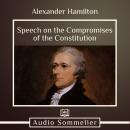
Speech on the Compromises of the Constitution
"Alexander Hamilton is considered one of the most important contributors to our constitution, and for good reason. In this speech, he addresses the handling of the constitution, and more importantly those compromises. While he acknowledges that compromises might need to be made for long-term stability’s sake, he also underlies that America had been compliant up to that point. The end called to action the need for the government subsiding over the constitution to be fair and just. "
Alexander Hamilton (Author), Bradley Parsons (Narrator)
Audiobook
"The Federalist Papers are a collection of eighty-five articles and essays written by Alexander Hamilton, James Madison, and John Jay in favor of ratifying the United States Constitution. First appearing in 1787 as a series of letters to New York newspapers, this collective body of work is widely considered to be among the most important historical collections of all time. Although the authors of The Federalist Papers foremost intended to influence the vote in favor of ratifying the Constitution, in Federalist No. 1 Hamilton explicitly set their debate in broader political terms. “It has been frequently remarked,” he wrote, “that it seems to have been reserved to the people of this country, by their conduct and example, to decide the important question, whether societies of men are really capable or not of establishing good government from reflection and choice, or whether they are forever destined to depend for their political constitutions on accident and force." Among the many highlights of these acclaimed essays is Federalist No. 10, in which Madison discusses the means of preventing rule by majority faction and advocates for a large, commercial republic. This is generally regarded as the most important of the eighty-five essays from a philosophical perspective, and it is complemented by Federalist No. 14, in which Madison takes the measure of the United States, declares it appropriate for an extended republic, and concludes with a memorable defense of the Constitution. In Federalist No. 70, Hamilton advocates for a one-man chief executive, and in Federalist No. 78 he persuasively lays the groundwork for the doctrine of judicial review by federal courts."
Alexander Hamilton, James Madison, John Jay (Author), Alma Willis, Ayden Booth, Dawson Hammond, Dorine Oliver, Leandro Stuart, Peyton Cooke, Reuben Buchanan, Talia Morton (Narrator)
Audiobook
"Approved by the Constitutional Convention on September 17, 1787, the US Constitution was to become law only if ratified by nine of the thirteen states then comprising the United States. The eighty-five letters in support of the Constitution collected here have become recognized as the most important political science work ever written in the United States. Written primarily by Hamilton, assisted by Madison and Jay, these essays are considered to be the foremost commentary on the US Constitution. Today lawyers, historians, and Supreme Court Judges, along with countless others, carefully comb these letters looking for key insights ranging from their analysis of the power of congress to their arguments on behalf of judicial review. From what we can determine, ours is the only unabridged recording to date."
Alexander Hamilton, James Madison, John Jay (Author), Michael Edwards (Narrator)
Audiobook
©PTC International Ltd T/A LoveReading is registered in England. Company number: 10193437. VAT number: 270 4538 09. Registered address: 157 Shooters Hill, London, SE18 3HP.
Terms & Conditions | Privacy Policy | Disclaimer
Join our community for the latest bookish news, reading recommendations, exclusive opening extracts, author events and competitions. It\'s all free. And enter a monthly draw to win a £50 Gift Card. See past winners here
Join Our Community