





Tap a cover to jump to that book
Science fiction is the literature of ideas - the genre that asks where we're heading and dares to imagine the answer. A great SF novel can be a thrilling adventure across the galaxy or a quiet, unsettling thought experiment about who we are; often it's both at once.
From the desert politics of Dune to the first-contact puzzles of today's hard SF, this is the genre that has predicted the future more than once and reshaped how we think about the present.
The short answer
- The one to start with
- Project Hail Mary by Andy Weir — funny, tense and easy to love
- Best classic
- Dune by Frank Herbert — the towering epic of the genre
- Best mind-bender
- Neuromancer by William Gibson — the novel that invented cyberspace
What makes a great science fiction novel?
A big idea, followed all the way through, with characters who make it matter. The genre spans everything - space opera or hard science, dystopia or first contact, far-future galaxies or a tomorrow that feels like next week - so we've ranged from the golden-age giants to the writers redrawing the map now.
Some are page-turning adventures; some will change how you see the world; the best, like all great fiction, do both.
Our pick of the best science fiction books
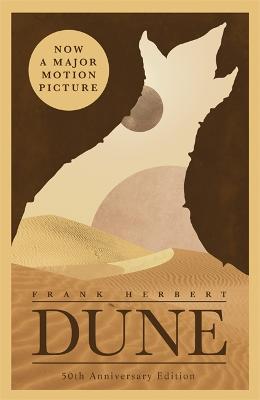
Dune by Frank Herbert
A desert planet, a precious resource and a young heir's rise to power; the best-selling SF novel of all time and a stone-cold masterpiece of world-building.Audiobook read by Oliver Wyman, Jason Culp, Byron Jennings and othersFoundation by Isaac Asimov
A mathematician predicts the fall of a galactic empire and plots to save civilisation; the grand, idea-driven epic that defined the genre's golden age.Audiobook read by William HopeThe Left Hand of Darkness by Ursula K. Le Guin
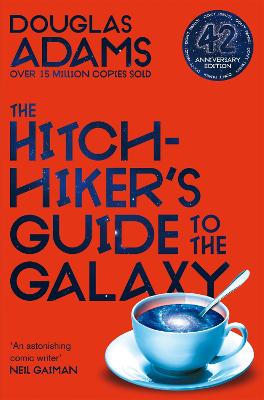
An envoy to a world without fixed gender learns what it costs to truly understand another; profound, beautiful and decades ahead of its time.Audiobook read by George GuidallThe Hitchhiker's Guide to the Galaxy by Douglas Adams
An ordinary man is swept off a doomed Earth into the funniest space adventure ever written; don't panic, and bring a towel.Audiobook read by Stephen FryNeuromancer by William Gibson
A burned-out hacker takes one last job in cyberspace; the novel that invented cyberpunk and saw the internet coming.“Nearly a quarter of a century after its initial appearance, Gibson’s groundbreaking cyberpunk debut has lost none of its modernity and fascination”Our review, by Maxim Jakubowski
Reviewed by Maxim JakubowskiAudiobook read by Jason FlemyngThe Three-Body Problem by Cixin Liu
A first-contact mystery that begins in China's Cultural Revolution and expands to the fate of humanity; staggering in scope and ambition.Audiobook read by Daniel York LohProject Hail Mary by Andy Weir
A lone astronaut wakes with no memory on a mission to save Earth; a joyous, ingenious problem-solving thriller from the author of The Martian.Children of Time by Adrian Tchaikovsky
A dying humanity's last hope is a terraformed world - but evolution has other plans for it; a breathtaking epic of deep time and unexpected minds.
Who chose these books, and why that matters
This is not a list pulled from a bestseller chart. Every title here was read and chosen by the LoveReading editorial panel, and we turn far more books down than we put forward.
The panel includes a judge of the Crime Writers’ Association Gold Dagger; a past Chair of the CILIP Carnegie and Kate Greenaway Medals; a former children’s editor of the Guardian, who is also Children’s Director of the Hay Festival; a Managing Director of the Hay Festival of twenty years; the founder of the Murder One bookshop, who has reviewed for the Guardian, The Times and the Daily Telegraph; and two UK School Librarians of the Year.
Each is named, with a photograph and full biography, on our editorial experts page.
Members of the panel include:
 Maxim JakubowskiCrime writer, editor and critic, and founder of London’s Murder One bookshop
 Liz RobinsonLoveReading reviewer since 2014 and former judge of the CWA Gold Dagger
 Paul BlezardMulti-award-winning broadcaster, author and literary commentator
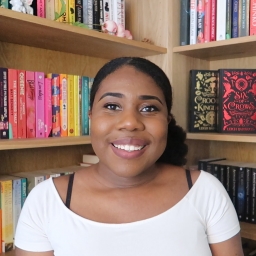 Lois CudjoeBook critic, content creator and passionate cross-genre reader
Their judgements are informed by our Reader Review Panel — several hundred readers across our adult and children’s sites who read titles before publication and tell us plainly whether a book delivers.
LoveReading has been recommending books since 2004 and has reviewed more than 33,000 titles in that time. We review for schools, for publishers and for readers, and we are a winner of the Small Business x Sage pop-up shop competition on London’s Oxford Street.
Every physical book bought through us donates 25% of the cover price to a school of your choice — more than £100,000 in books so far.
Find your next frontier
Science fiction readers are curious by nature - fall for one idea and you'll want a dozen more. The best way to choose your next is to follow what gripped you: the scale of the space opera, the rigour of the hard science, or the bite of the dystopia. Browse our science fiction reviews and editors' picks to keep the ideas coming.
Your questions answered
What's the difference between science fiction and fantasy?
Science fiction extrapolates from the possible - technology, science, the future. Fantasy draws on the impossible - magic, invented worlds, myth. Spaceships, AI and time travel are science fiction; dragons, wizards and prophecy are fantasy. Plenty of books blur the line, but that's the rule of thumb.
Are these science fiction recommendations chosen by an algorithm?
No. The strength of a central idea, whether it is followed through honestly, and whether the characters make it matter are things only a reader can weigh. Our editors and 800-strong Reader Review Panel have judged SF on merit, not sales rank, since 2004 - these are the ideas our reviewers couldn't stop thinking about.
Where should I start with science fiction?
For an unbeatable epic, begin with Dune. For a modern page-turner, Project Hail Mary is pure joy. For ideas that linger, The Left Hand of Darkness and The Three-Body Problem are the genre thinking hardest; for laughs, nothing beats The Hitchhiker's Guide to the Galaxy.
Do I need a science background to enjoy these?
Not at all. Several are pure adventure - The Hitchhiker's Guide to the Galaxy and Project Hail Mary carry you along whatever your background. Others, like The Left Hand of Darkness, are really about people and society. Only the 'hard SF' titles lean on real science, and even those explain as they go.
More from the LoveReading blog
- 35 Best Dystopian Books Everyone Should Read (2026)June 2022
- LoveReading's SciFi / Fantasy Picks of the MonthSeptember 2025
- Arthur C. Clarke 2021 Award Winner Revealed for best science fiction novelSeptember 2021
More guides from our editors
Browse every title we have reviewed in this genre: Science Fiction books.