

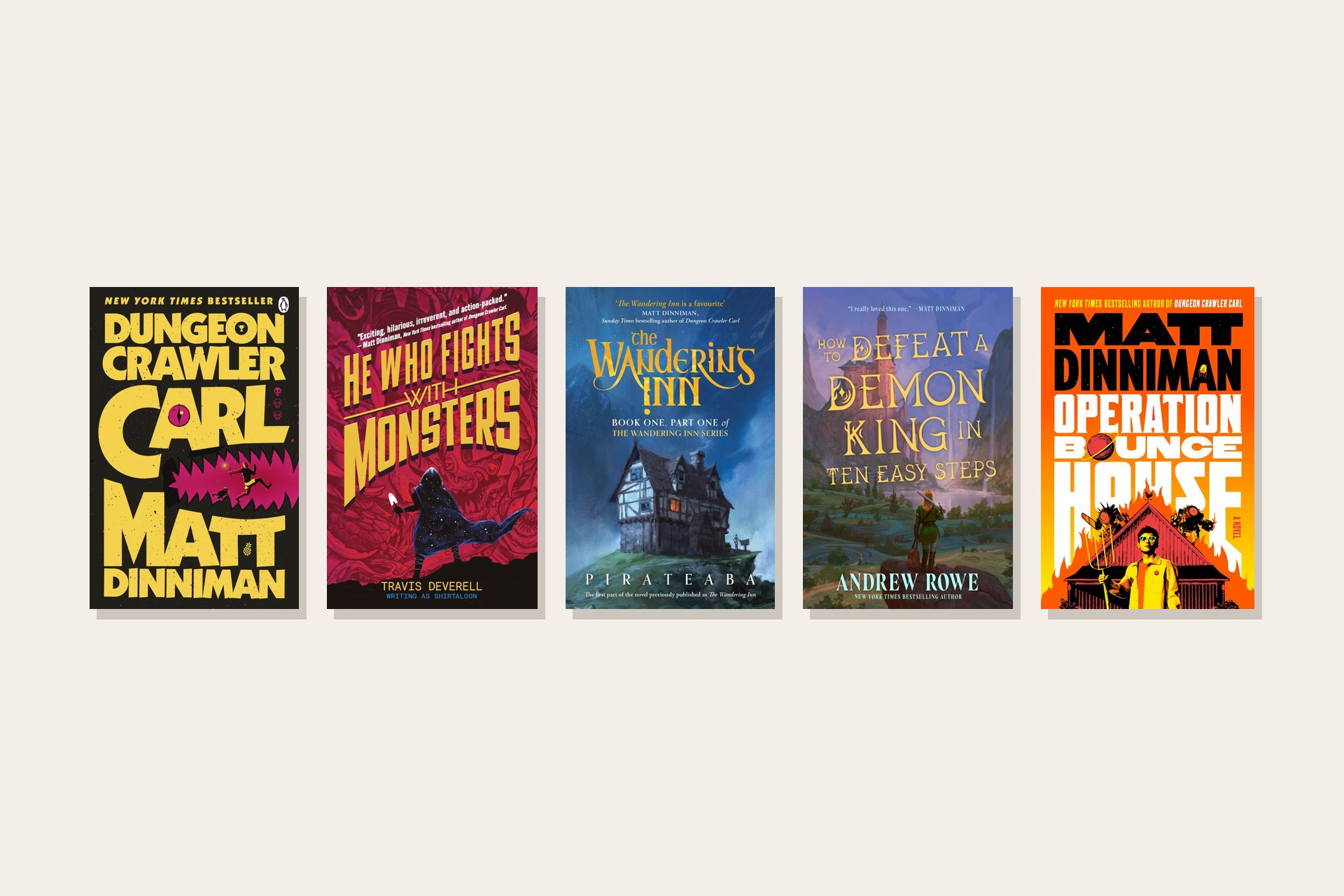
LitRPG (short for literary role-playing game) is fantasy where the hero is stuck inside the rules of a game. They level up, earn skills, read stat screens and fight their way through ever harder challenges. Start with Dungeon Crawler Carl by Matt Dinniman: funny, brutal and impossible to put down.
If you have spotted a lot of chunky hardbacks with words like “crawler”, “dungeon” and “level up” on the front, you are not imagining it. A genre that spent years thriving online, in web serials and self-published ebooks read by millions, has arrived on bookshop shelves, and the big publishers are now competing to sign it.
What is LitRPG?
Picture a fantasy adventure written by someone who grew up with a games console. The world runs on visible rules. The hero gets messages telling them they have gained a level, unlocked a skill or finished a quest. They have a class (healer, fighter, mage), numbers that grow as they get stronger, and a clear goal: survive the next floor, the next boss, the next round.
Done badly, that could be a spreadsheet with a sword. Done well, it is addictive. You always know the stakes, you can see the hero getting better, and the best writers bend the rules in ways that make you laugh out loud. Humour is a big part of it: many of these books are sharp, sweary and very self-aware.
Where did it come from, and why now?
LitRPG grew up online. Writers posted chapters on serial sites and in self-published ebooks, often at an astonishing pace, and readers followed them chapter by chapter. Audiobooks helped too: long series and big characters suit long drives and longer listens.
The turning point was Dungeon Crawler Carl. Matt Dinniman first published the series himself; it is now published in the UK by Penguin Michael Joseph, and in 2026 the first book was shortlisted for the Arthur C. Clarke Award, the UK’s best-known science fiction prize. Other online favourites have followed it into print, including Shirtaloon’s He Who Fights with Monsters and pirateaba’s The Wandering Inn, and children’s publishers have signed LitRPG series for younger readers that are due from 2027.
Five books to start with
- Dungeon Crawler Carl by Matt Dinniman. An alien invasion flattens every building on Earth, and the survivors are dropped into a deadly dungeon that doubles as the galaxy’s most popular game show. Carl’s only ally is his ex-girlfriend’s prize-winning cat, Princess Donut. The best place to start, and the funniest.
- Outworlder by Shirtaloon. Book one of He Who Fights with Monsters. Jason, a retail assistant manager, is summoned into a world of magic and monsters by mistake, and the powers he gets are a little bit evil. Snarky, warm and full of big fights.
- The Wandering Inn by Pirateaba. Erin Solstice is pulled from our world into one where people level up and gain classes. She is no warrior, so she becomes an innkeeper. A gentler, slower and much loved way in, with goblins, adventurers and a lot of heart.
- How to Defeat a Demon King in Ten Easy Steps by Andrew Rowe. A stand-alone from Andrew Rowe. The Demon King is winning and the legendary Hero is not due back for decades, so Yui Shaw makes her own ten-step plan: earn classes, gain levels and take on dungeons built for someone else. Clever and very funny.
- Operation Bounce House by Matt Dinniman. Matt Dinniman’s stand-alone. A corporation is clearing a farming colony for a reboot and lets bored people on Earth pilot the war machines as a game. For rancher Oliver Lewis it is war. Ideal if you want the Dinniman voice without starting an eight-book series.
If you have never played a video game, start here
- Ready Player One by Ernest Cline. Not strictly LitRPG, but the book that made millions of readers fall for stories set inside a game. Wade Watts hunts for a prize hidden in a vast virtual world, against people willing to kill for it.
Hooked? Keep going with Carl and Princess Donut
The Dungeon Crawler Carl series in order:
- Carl's Doomsday Scenario by Matt Dinniman. Book 2.
- The Dungeon Anarchist's Cookbook by Matt Dinniman. Book 3.
- The Gate of the Feral Gods by Matt Dinniman. Book 4.
- The Butcher's Masquerade by Matt Dinniman. Book 5.
- The Eye of the Bedlam Bride by Matt Dinniman. Book 6.
- This Inevitable Ruin by Matt Dinniman. Book 7.
- A Parade of Horribles by Matt Dinniman. Book 8.
And with Jason Asano
He Who Fights with Monsters continues with:
- Adventurer by Shirtaloon. Book 2.
- Hero by Shirtaloon. Book 3.
Your LitRPG questions answered
What does LitRPG stand for?
Literary role-playing game. The name comes from role-playing games, where players build a character, gain experience and grow stronger, and LitRPG puts those rules inside a novel.
What is the difference between LitRPG and progression fantasy?
Progression fantasy is any story built around a hero steadily getting more powerful. LitRPG is the branch where that progress is shown as game rules, with levels, skills and stat screens on the page. Gamelit is the wider family of stories set in or around games, such as Ready Player One.
Do I need to play video games to enjoy LitRPG?
No. The books explain their own rules as they go, and the best ones work because of the characters and the jokes, not the numbers.
Is LitRPG suitable for children?
Most of the books on this page are written for adults, and Dungeon Crawler Carl in particular has strong language and plenty of violence. LitRPG written for children and teenagers is on its way from UK publishers from 2027.
Which LitRPG book should I read first?
Dungeon Crawler Carl if you want laughs and pace; The Wandering Inn if you prefer something cosier; Outworlder, the first He Who Fights with Monsters book, if you want classic sword-and-magic adventure.
More from our editors:

Comments (0)
Leave A Reply
You must be logged in to post a comment.