Browse audiobooks narrated by Jennifer Austin, listen to samples and when you're ready head over to Audiobooks.com where you can get 3 FREE audiobooks on us
Cleopatra: Last Pharaoh of Egypt
"Cleopatra VII was born into the powerful Ptolemaic dynasty, a Greek ruling family that had governed Egypt since the time of Alexander the Great. As the daughter of Ptolemy XII, she was raised in a world of immense political intrigue and royal rivalries. Unlike many of her predecessors, Cleopatra was highly educated, mastering several languages, including Egyptian—an unusual skill among the Greek rulers of Egypt. Her intelligence, charm, and deep understanding of politics set her apart as a leader destined for greatness. From a young age, Cleopatra was immersed in the complexities of governance. She studied philosophy, mathematics, and diplomacy, acquiring knowledge that would later aid her in navigating the dangerous world of ancient power struggles. While her early years were marked by luxury, they were also shadowed by uncertainty. Egypt, under her father’s rule, was heavily dependent on Rome, and political instability threatened the Ptolemaic dynasty. Cleopatra observed these tensions closely, preparing herself for the inevitable challenge of ruling a divided kingdom. When Ptolemy XII died in 51 BCE, Cleopatra, at just eighteen years old, ascended to the throne alongside her younger brother, Ptolemy XIII. According to Egyptian tradition, royal siblings often married to secure dynastic rule, and Cleopatra was expected to govern jointly with her brother-husband. However, she had little interest in sharing power. She quickly demonstrated her political ambition, seeking to rule Egypt independently. Her intelligence and strategic mindset made her a formidable leader, but her brother’s advisors viewed her as a threat."
Omar Khalil (Author), Jennifer Austin (Narrator)
Audiobook
Egyptian Burial Practices: From Tombs to Pyramids
"The burial practices of ancient Egypt evolved significantly over millennia, reflecting changes in religious beliefs, social structures, and technological advancements. These practices were rooted in the belief in an afterlife, where the preservation of the body and the provision of necessary items were vital. From simple pit burials to grand pyramid constructions, the evolution of Egyptian burial customs offers valuable insights into the cultural and spiritual life of the civilization. In the Predynastic period, burial customs were relatively simple, consisting of shallow pits in the desert sand. The dry, arid environment naturally mummified the bodies, preserving them for millennia. These early graves often contained personal belongings, such as pottery, jewelry, and tools, indicating a belief in a life beyond death. The positioning of the bodies, typically in a fetal position, also suggests a symbolic return to the womb, possibly signifying rebirth. As Egypt unified and entered the Early Dynastic period, burial practices became more elaborate. The development of mastabas marked a significant shift in tomb architecture. These rectangular structures, made of mudbrick or stone, featured underground burial chambers and an above-ground offering chapel. Mastabas were primarily used by the elite, symbolizing their status and wealth. The inclusion of false doors and serdab chambers, which housed statues of the deceased, reflected the belief that the soul could interact with the living through offerings and rituals."
Omar Khalil (Author), Jennifer Austin (Narrator)
Audiobook
Ancient Egyptian Law and Governance: Systems of Order and Justice
"Ancient Egyptian law was deeply rooted in the concept of Ma’at, the divine order that governed the universe and ensured balance, truth, and justice. This principle was not just a philosophical ideal but a practical guide for governance and social conduct. The legal system in Egypt was designed to maintain harmony within society, regulate disputes, and uphold the authority of the ruling elite. Unlike modern legal frameworks based on written statutes, Egyptian law was a combination of tradition, royal decrees, and religious doctrines. It was adaptable, relying on the wisdom of judges and officials rather than rigid legal codes. The origins of legal traditions in ancient Egypt can be traced back to the early dynastic period when the first centralized state emerged. As society became more complex, a structured system of governance was necessary to manage resources, trade, and interpersonal conflicts. The earliest evidence of legal practice comes from administrative records, tomb inscriptions, and temple documents, which indicate that law was an integral part of daily life. While no single codified legal text has survived, references to decrees issued by pharaohs suggest that laws were issued and enforced at the highest levels of authority. At the heart of Egyptian governance was the role of Ma’at, which extended beyond ethical conduct to legal proceedings. Ma’at represented a cosmic balance that rulers were duty-bound to uphold. The pharaoh, as the earthly representative of the gods, was seen as the ultimate source of justice. His decrees and judgments set legal precedents, shaping the administration of law across the kingdom. This divine connection made Egyptian law unique, as it blended religious principles with practical governance, ensuring that justice was not only a human responsibility but also a sacred duty."
Omar Khalil (Author), Jennifer Austin (Narrator)
Audiobook
Egyptian Art and Architecture: From the Old Kingdom to the New Kingdom
"The art and architecture of ancient Egypt are deeply intertwined with the civilization’s religious beliefs and cultural practices. Spanning over three millennia, these artistic expressions were not merely decorative but held profound symbolic meanings, reflecting the Egyptians’ worldview and their connection with the divine. The foundations of Egyptian art and architecture were laid during the early dynastic period, evolving through distinct stages that shaped the visual language of one of history’s most iconic civilizations. Religion played a central role in shaping the aesthetic and thematic aspects of Egyptian art. Temples, tombs, and monuments were designed as sacred spaces, serving as a bridge between the human and divine realms. The concept of Ma’at, representing order and harmony, influenced the geometric precision and symmetrical layouts seen in temple complexes and pyramid construction. Deities were depicted with specific attributes, emphasizing their powers and roles within the cosmos. This symbolic representation extended to Pharaohs, who were portrayed as divine intermediaries, blending human and godly features to signify their sacred status. Symbolism permeated every facet of Egyptian art, from monumental statues to delicate jewelry. Hieroglyphs and pictorial motifs were not merely decorative; they conveyed narratives, prayers, and genealogies. The ankh, symbolizing life, and the scarab, representing transformation and rebirth, are recurring motifs that held spiritual significance. Colors also played a symbolic role: red signified vitality, blue denoted divinity, and gold represented eternity. This symbolic language was meticulously maintained across centuries, creating a consistent artistic identity despite historical changes."
Omar Khalil (Author), Jennifer Austin (Narrator)
Audiobook
Daily Life in Ancient Egypt: Society, Culture, and Customs
"Ancient Egyptian society was highly structured, with a rigid hierarchy that defined people’s roles and responsibilities. At the top of this social order was the pharaoh, considered both a political ruler and a divine figure. Below the pharaoh were the nobility and officials who managed the kingdom’s affairs. The middle class consisted of scribes, artisans, and merchants, while the majority of the population comprised farmers, laborers, and slaves. Each social group played a crucial role in maintaining Egypt’s stability and prosperity. The pharaoh was the central authority in Egypt, believed to be the living embodiment of a god. His rule was absolute, and his primary duty was to maintain ma’at, the divine balance of order and justice. He oversaw military campaigns, religious ceremonies, and massive building projects, including temples and pyramids. The royal court and government officials assisted the pharaoh in administration. These officials, often chosen from the nobility, held positions such as viziers, tax collectors, and governors, ensuring the kingdom functioned efficiently. Scribes, artisans, and merchants formed the middle class, contributing to Egypt’s economy and culture. Scribes were essential for maintaining records, writing official documents, and preserving religious texts. Their education was rigorous, requiring years of training in hieroglyphic writing. Artisans, including sculptors, painters, and metalworkers, created the intricate decorations found in tombs and temples. Merchants facilitated trade both within Egypt and with foreign lands, bringing valuable goods such as gold, spices, and precious stones. Although they did not hold political power, the middle class enjoyed a stable livelihood and social respect."
Omar Khalil (Author), Jennifer Austin (Narrator)
Audiobook
Ancient Egyptian Astronomy: The Stars and Their Influence
"Ancient Egyptian astronomy was deeply intertwined with the culture’s religious beliefs, daily life, and architectural marvels. Long before modern telescopes and advanced instruments, the Egyptians observed the night sky with precision, using it to navigate their world, mark the passing of time, and guide their spiritual practices. Astronomy was not merely a scientific endeavor but a fundamental aspect of their understanding of the cosmos and its connection to the gods. The Egyptians viewed the stars, planets, and other celestial bodies as manifestations of divine power. Central to their astronomical system was the Sun, which they associated with the god Ra. Ra's journey across the sky each day symbolized the cycle of life, death, and rebirth. The Sun’s movement was used to structure the day and marked important moments in the agricultural calendar, such as the flooding of the Nile. The Egyptians also closely tracked the movements of the Moon and stars, which helped them define the months and seasons. The study of the stars held profound religious significance for the ancient Egyptians. They believed that the stars were the eyes of the gods, observing and guiding humanity. Certain constellations, such as Orion, were particularly important, representing Osiris, the god of the afterlife. The Egyptians’ knowledge of the stars was so advanced that it influenced the alignment of their monumental architecture. The Great Pyramid of Giza, for instance, is aligned with remarkable precision to the stars, showcasing their ability to map the heavens and incorporate that knowledge into their constructions."
Omar Khalil (Author), Jennifer Austin (Narrator)
Audiobook

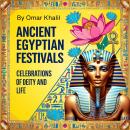
Ancient Egyptian Festivals: Celebrations of Deity and Life
"Festivals played a central role in the cultural and religious life of ancient Egypt. These grand celebrations were not just an occasion for communal enjoyment but were deeply tied to the spiritual and societal fabric of the civilization. They served as a means of honoring gods and goddesses, ensuring the prosperity of the land, and reinforcing the divine order, which was vital for the Egyptians. The festivals helped to maintain cosmic balance and provided a way for the people to connect with the divine. The ancient Egyptians viewed the natural and spiritual worlds as intricately linked. Their gods were believed to control all aspects of life, from the annual flooding of the Nile to the harvests and the afterlife. Therefore, festivals were seen as essential in securing divine favor and maintaining order. These events allowed the people to express their devotion, offering prayers, sacrifices, and rituals to appease the gods. For instance, the Festival of Opet, one of the most significant, symbolized the renewal of the king’s power and his bond with the gods. It was an opportunity for the people to reassert their allegiance to the pharaoh, who was seen as the living deity on earth. In addition to reinforcing the divine relationship, festivals also played a key role in community cohesion. The ancient Egyptians, despite the challenges of life, were brought together by shared rituals and celebrations. This unity was expressed in grand processions, feasts, music, and dance, where the people could experience a sense of collective identity. These events transcended social status and served as a reminder of the interconnectedness of all people under the divine. Festivals were not just for the elite but were a part of the communal life, extending to all citizens, from farmers to nobles."
Omar Khalil (Author), Jennifer Austin (Narrator)
Audiobook
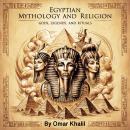
Egyptian Mythology and Religion: Gods, Legends, and Rituals
"Egyptian mythology is a vast and intricate belief system that shaped the religious and cultural identity of ancient Egypt for thousands of years. Rooted in a deep connection with nature, the cosmos, and the divine, these myths provided explanations for the creation of the world, the role of gods, and the afterlife. Unlike other mythologies, Egyptian beliefs were not static; they evolved over time, adapting to political changes and regional influences while maintaining core spiritual principles. The origins of Egyptian mythology can be traced back to the early dynastic period, though many of its concepts likely predate written history. Ancient Egyptians believed that the universe emerged from a primordial chaos, giving rise to powerful deities who shaped the world. Myths were recorded on temple walls, tombs, and papyrus scrolls, serving both religious and educational purposes. These stories were not merely symbolic; they were deeply woven into daily life, influencing laws, traditions, and the duties of rulers. The geography of Egypt played a crucial role in shaping its mythology. The Nile River, essential for agriculture and survival, became a central symbol of life and renewal, often associated with gods like Osiris and Hapi. The vast deserts surrounding Egypt were seen as chaotic and dangerous, embodying forces of disorder such as the god Set. The sun’s daily journey across the sky was one of the most significant celestial events, leading to the worship of Ra, the sun god, as a dominant figure in Egyptian religious thought."
Omar Khalil (Author), Jennifer Austin (Narrator)
Audiobook
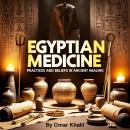
Egyptian Medicine: Practices and Beliefs in Ancient Healing
"The origins of Egyptian medicine trace back to the earliest periods of ancient Egypt, where the intertwining of practical knowledge and spiritual beliefs laid the foundation for one of the most advanced medical systems of the ancient world. As early as the Pre-Dynastic period, evidence of rudimentary medical practices reveals that Egyptians were already exploring ways to treat injuries and ailments using natural resources available in their environment. Religion played a fundamental role in shaping the practice of medicine in ancient Egypt. The Egyptians believed that the gods held power over health and illness, with many deities associated with specific aspects of healing. For instance, Sekhmet, the lioness goddess, was both a bringer of plague and a healer, while Thoth, the god of wisdom, was revered as a patron of physicians. Temples dedicated to these deities often served as centers for both worship and healing, where priests acted as both spiritual leaders and medical practitioners. Early medical practices were closely linked to mythology, with illnesses often attributed to divine displeasure or the influence of malevolent spirits. Healing rituals and incantations were designed to restore the balance between the individual and the divine order, highlighting the Egyptian belief in a holistic approach to health. The blending of prayer, magic, and practical remedies reflects a medical philosophy that considered both the physical and spiritual dimensions of wellness."
Omar Khalil (Author), Jennifer Austin (Narrator)
Audiobook
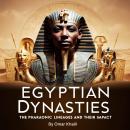
Egyptian Dynasties: The Pharaonic Lineages and Their Impact
"The Early Dynastic Period marks the beginning of ancient Egyptian civilization, a time when the foundations of one of history’s most remarkable cultures were laid. Spanning approximately from 3100 to 2686 BCE, this period is characterized by the unification of Upper and Lower Egypt under a single ruler, leading to the establishment of the first dynasties and the concept of pharaonic rule. The unification of Upper and Lower Egypt is often attributed to King Narmer, a powerful ruler who is believed to have brought the two regions together. The famous Narmer Palette, an ancient ceremonial artifact, depicts Narmer wearing the crowns of both Upper and Lower Egypt, symbolizing his authority over the unified land. This pivotal moment not only marked the creation of a centralized state but also set the stage for the development of a dynastic tradition that would persist for millennia. The consolidation of power allowed the pharaohs to wield significant control over the land, fostering political stability and cultural coherence. The role of Narmer and the early pharaohs was instrumental in shaping the governance and societal structure of ancient Egypt. As divine rulers, these early kings were seen as earthly embodiments of the gods, responsible for maintaining ma'at, the concept of cosmic order and balance. This religious authority legitimized their political power and reinforced their role as mediators between the divine and mortal worlds. During this period, the pharaohs established court systems, oversaw the construction of monumental architecture, and promoted the development of writing, which became crucial for record-keeping and administration."
Omar Khalil (Author), Jennifer Austin (Narrator)
Audiobook
Egyptian Military Leaders: Generals and Their Campaigns
"The military strength of ancient Egypt was a defining factor in its ability to expand and sustain one of the most enduring civilizations in history. From its early beginnings, Egypt developed a structured and disciplined military that evolved to meet the challenges posed by both internal conflicts and foreign threats. The foundation of this power lay in the organization of its armed forces, the strategic leadership of its rulers, and the continual advancement of its weaponry and tactics. In the early periods, Egypt's military was primarily a defensive force, focused on protecting the fertile Nile Valley from nomadic raiders. The unification of Upper and Lower Egypt under Narmer marked a crucial turning point, as military conquest became a tool for political consolidation. The pharaohs not only ruled as divine monarchs but also acted as supreme military commanders, leading their armies into battle and overseeing large-scale campaigns. This dual role reinforced their authority and ensured that military success translated into political stability. One of the key factors in Egypt’s military rise was its ability to adapt to new technologies and strategies. During the Second Intermediate Period, Egypt faced the Hyksos, a foreign power that introduced advanced chariot warfare and superior composite bows. Instead of being permanently subdued, the Egyptians learned from their enemies, incorporating these innovations into their own forces. This adaptation played a crucial role in the expulsion of the Hyksos and the rise of the New Kingdom, during which Egypt became an empire with far-reaching influence."
Omar Khalil (Author), Jennifer Austin (Narrator)
Audiobook
Egyptian Hieratic and Demotic Scripts: A Study of Ancient Writing Systems
"The writing systems of ancient Egypt are among the most fascinating and intricate aspects of the civilization’s rich cultural heritage. These scripts not only served as practical tools for administration and communication but also held immense symbolic and ritual significance. The evolution of Egyptian scripts reflects the social, political, and religious transformations that took place throughout the millennia of Egyptian history. Egyptian writing developed as a means of recording religious texts, administrative documents, literary works, and personal correspondence. Among the earliest and most iconic forms of writing is the hieroglyphic script, characterized by its detailed pictorial symbols. While hieroglyphs are often associated with monumental inscriptions and sacred texts, they were not the only writing system employed by the ancient Egyptians. As the civilization advanced, the need for more practical and expedient writing methods became apparent, giving rise to the development of cursive scripts. Hieratic script emerged as a more fluid and practical adaptation of hieroglyphs, primarily used for religious texts, administrative records, and personal documents. Unlike the elaborate and artistic nature of hieroglyphs, hieratic writing was simplified, making it faster to write and more suited for daily use. Its cursive nature allowed scribes to quickly document information on papyrus, ostraca, and other media. Despite its practicality, hieratic remained closely tied to its hieroglyphic origins, preserving many of the same signs and structures."
Omar Khalil (Author), Jennifer Austin (Narrator)
Audiobook
©PTC International Ltd T/A LoveReading is registered in England. Company number: 10193437. VAT number: 270 4538 09. Registered address: 157 Shooters Hill, London, SE18 3HP.
Terms & Conditions | Privacy Policy | Disclaimer
Join our community for the latest bookish news, reading recommendations, exclusive opening extracts, author events and competitions. It\'s all free. And enter a monthly draw to win a £50 Gift Card. See past winners here
Join Our Community