Browse audiobooks by Omar Khalil, listen to samples and when you're ready head over to Audiobooks.com where you can get 3 FREE audiobooks on us
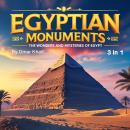
Egyptian Monuments: The Wonders and Mysteries of Egypt (3 in 1)
"This audiobook is narrated by a digital voice. Egypt's towering monuments continue to captivate the world with their scale, precision, and mystery. Egyptian Monuments – The Wonders and Mysteries of Egypt is a journey through the heart of one of history’s most awe-inspiring civilizations. From the enigmatic Pyramids of Giza to the majestic temples and the ever-watchful Sphinx, this 3-in-1 exploration uncovers the architectural genius and spiritual depth of ancient Egypt. Each section delves into a cornerstone of Egyptian legacy—the massive stone pyramids built as eternal tombs, the sprawling temple complexes that served as sacred homes of the gods, and the Sphinx, whose gaze has mystified observers for centuries. Drawing from archaeology, mythology, and ancient texts, the book reveals how these structures reflected cosmic order, royal power, and religious devotion. With rich detail and compelling insights, this volume is perfect for anyone fascinated by the blend of mystery and mastery found in Egypt’s monumental past. Whether you're a history lover, a traveler, or a seeker of ancient knowledge, this book offers a gateway into one of humanity’s most enduring wonders."
Omar Khalil (Author), Digital Voice Ava G (Narrator)
Audiobook
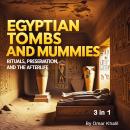
Egyptian Tombs and Mummies: Rituals, Preservation, and the Afterlife (3 in 1)
"This audiobook is narrated by a digital voice. For the ancient Egyptians, death was not an end—it was the beginning of an eternal journey. Egyptian Tombs and Mummies – Rituals, Preservation, and the Afterlife explores how this ancient civilization prepared its dead for the next world through magical rites, precise scientific methods, and awe-inspiring tomb construction. This 3-in-1 volume offers a detailed look at the intersection of mysticism, religion, and preservation. Delve into the magical spells and sacred objects used to protect the soul, uncover the science behind the remarkably effective mummification process, and journey through the Valley of the Kings, where pharaohs and nobles were buried with treasures meant to serve them in the afterlife. These practices were guided by profound beliefs in resurrection and the divine order, connecting physical preservation to spiritual rebirth. With vivid storytelling and historical depth, this book unveils the secrets of how the Egyptians viewed death—and how their legacy continues to fascinate archaeologists and historians to this day. It’s an essential read for anyone curious about ancient rituals, sacred science, and the enduring mystery of life beyond the grave."
Omar Khalil (Author), Digital Voice Charlotte G (Narrator)
Audiobook
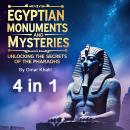
Egyptian Monuments and Mysteries: Unlocking the Secrets of the Pharaohs (4 in 1)
"This audiobook is narrated by a digital voice. Ancient Egypt’s enduring mysteries are etched into the very stones of its monuments and whispered through its sacred texts. Egyptian Monuments and Mysteries – Unlocking the Secrets of the Pharaohs delves into the grandeur and enigma of this ancient world across four fascinating themes: its colossal structures, spiritual writings, lost cities, and lifeblood—the Nile River. Explore the iconic pyramids, towering temples, and obelisks that still defy explanation with their sheer scale and alignment to celestial events. Unravel the cryptic messages within the Book of the Dead, Egypt’s most sacred funerary text, guiding souls through the afterlife. Each chapter uncovers the beliefs and rituals that shaped a civilization obsessed with eternity and the divine. The journey continues through the streets of the pharaohs’ great cities—once centers of religion, power, and innovation—and follows the vital flow of the Nile, the river that gave Egypt life and identity. This immersive volume brings together architecture, mythology, history, and geography to unlock the deeper meaning behind Egypt’s most enduring legacies."
Omar Khalil (Author), Digital Voice Chris G (Narrator)
Audiobook
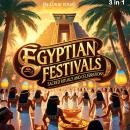
Egyptian Festivals: Sacred Rituals and Celebrations (3 in 1)
"This audiobook is narrated by a digital voice. Festivals in ancient Egypt were far more than public celebrations—they were sacred events that honored the gods, reinforced royal authority, and united the people in rituals of divine significance. Egyptian Festivals – Sacred Rituals and Celebrations is a 3-in-1 exploration of Egypt’s vibrant religious and ceremonial life, including the deep connections between festivals, spiritual belief, and the nation’s military leadership. Step into the rhythm of the Egyptian calendar with processions, temple rituals, music, and feasts that brought deities like Amun, Isis, and Ra into the heart of everyday life. Learn how these festivals aligned with agricultural cycles and cosmic events, and how kings and priests used them to reaffirm divine order and societal harmony. The book also reveals how Egyptian military leaders were celebrated and even worshipped, blending warfare and worship into powerful public displays. From the festival of Opet to the New Year celebrations, and from ritual drama to state-sponsored ceremonies, this volume uncovers the pageantry and purpose behind ancient Egypt’s most important gatherings. It's a rich journey into the soul of a civilization where faith, power, and celebration were inseparably intertwined."
Omar Khalil (Author), Digital Voice Madelyn G (Narrator)
Audiobook
The Egyptian Dynasties: Ruling the Land of the Pharaohs (4 in 1)
"This audiobook is narrated by a digital voice. From the dawn of civilization to the height of empire, the dynasties of ancient Egypt shaped one of the most enduring cultures in human history. The Egyptian Dynasties – Ruling the Land of the Pharaohs is a comprehensive 4-in-1 chronicle of the rise and reign of Egypt’s legendary rulers, exploring the powerful families and iconic kings who left their mark on temples, tombs, and time itself. This book traces the development of dynastic rule through the Old Kingdom’s pyramid builders, the Middle Kingdom’s consolidation of power, and the New Kingdom’s golden age of expansion, art, and monumental architecture. Alongside these epochs, you’ll meet the pharaohs themselves—divine monarchs who wielded political and religious authority with awe-inspiring grandeur. From the warrior-kings to the visionary reformers, their stories define the epic narrative of ancient Egypt. Whether you're intrigued by royal intrigue, sacred power, or the shifting tides of ancient politics, this volume offers an essential journey into Egypt’s past. Richly detailed and carefully organized, it brings to life the ruling bloodlines that shaped a civilization—and continue to inspire the world today."
Omar Khalil (Author), Digital Voice Mia G (Narrator)
Audiobook
Egyptian Legacies: Enduring Influence on the Modern World (3 in 1)
"This audiobook is narrated by a digital voice. The echoes of ancient Egypt can still be heard in the modern world—in our architecture, art, religion, and fascination with mystery. Egyptian Legacies – Enduring Influence on the Modern World explores the powerful ways in which this ancient civilization continues to shape contemporary life. This 3-in-1 volume bridges thousands of years, revealing how ancient beliefs and discoveries still leave their mark today. Uncover the cultural ripple effects of Egyptian thought, design, and symbolism across history and modern society. Examine the radical reign of Akhenaten, the “heretic pharaoh,” whose revolutionary ideas on religion and governance challenged tradition and foreshadowed future shifts in belief systems. Finally, relive the breathtaking discovery of Tutankhamun’s tomb—a moment that reignited global Egyptomania and transformed our understanding of ancient royalty and burial customs. With captivating insight into both history and modern relevance, this book is perfect for anyone intrigued by the timeless connection between past and present. Whether you're a student, traveler, or history enthusiast, it offers a compelling look at how the legacies of the Nile continue to shape our world."
Omar Khalil (Author), Digital Voice Morgan G (Narrator)
Audiobook
Cleopatra: Last Pharaoh of Egypt
"Cleopatra VII was born into the powerful Ptolemaic dynasty, a Greek ruling family that had governed Egypt since the time of Alexander the Great. As the daughter of Ptolemy XII, she was raised in a world of immense political intrigue and royal rivalries. Unlike many of her predecessors, Cleopatra was highly educated, mastering several languages, including Egyptian—an unusual skill among the Greek rulers of Egypt. Her intelligence, charm, and deep understanding of politics set her apart as a leader destined for greatness. From a young age, Cleopatra was immersed in the complexities of governance. She studied philosophy, mathematics, and diplomacy, acquiring knowledge that would later aid her in navigating the dangerous world of ancient power struggles. While her early years were marked by luxury, they were also shadowed by uncertainty. Egypt, under her father’s rule, was heavily dependent on Rome, and political instability threatened the Ptolemaic dynasty. Cleopatra observed these tensions closely, preparing herself for the inevitable challenge of ruling a divided kingdom. When Ptolemy XII died in 51 BCE, Cleopatra, at just eighteen years old, ascended to the throne alongside her younger brother, Ptolemy XIII. According to Egyptian tradition, royal siblings often married to secure dynastic rule, and Cleopatra was expected to govern jointly with her brother-husband. However, she had little interest in sharing power. She quickly demonstrated her political ambition, seeking to rule Egypt independently. Her intelligence and strategic mindset made her a formidable leader, but her brother’s advisors viewed her as a threat."
Omar Khalil (Author), Jennifer Austin (Narrator)
Audiobook
Egyptian Burial Practices: From Tombs to Pyramids
"The burial practices of ancient Egypt evolved significantly over millennia, reflecting changes in religious beliefs, social structures, and technological advancements. These practices were rooted in the belief in an afterlife, where the preservation of the body and the provision of necessary items were vital. From simple pit burials to grand pyramid constructions, the evolution of Egyptian burial customs offers valuable insights into the cultural and spiritual life of the civilization. In the Predynastic period, burial customs were relatively simple, consisting of shallow pits in the desert sand. The dry, arid environment naturally mummified the bodies, preserving them for millennia. These early graves often contained personal belongings, such as pottery, jewelry, and tools, indicating a belief in a life beyond death. The positioning of the bodies, typically in a fetal position, also suggests a symbolic return to the womb, possibly signifying rebirth. As Egypt unified and entered the Early Dynastic period, burial practices became more elaborate. The development of mastabas marked a significant shift in tomb architecture. These rectangular structures, made of mudbrick or stone, featured underground burial chambers and an above-ground offering chapel. Mastabas were primarily used by the elite, symbolizing their status and wealth. The inclusion of false doors and serdab chambers, which housed statues of the deceased, reflected the belief that the soul could interact with the living through offerings and rituals."
Omar Khalil (Author), Jennifer Austin (Narrator)
Audiobook
Ancient Egyptian Law and Governance: Systems of Order and Justice
"Ancient Egyptian law was deeply rooted in the concept of Ma’at, the divine order that governed the universe and ensured balance, truth, and justice. This principle was not just a philosophical ideal but a practical guide for governance and social conduct. The legal system in Egypt was designed to maintain harmony within society, regulate disputes, and uphold the authority of the ruling elite. Unlike modern legal frameworks based on written statutes, Egyptian law was a combination of tradition, royal decrees, and religious doctrines. It was adaptable, relying on the wisdom of judges and officials rather than rigid legal codes. The origins of legal traditions in ancient Egypt can be traced back to the early dynastic period when the first centralized state emerged. As society became more complex, a structured system of governance was necessary to manage resources, trade, and interpersonal conflicts. The earliest evidence of legal practice comes from administrative records, tomb inscriptions, and temple documents, which indicate that law was an integral part of daily life. While no single codified legal text has survived, references to decrees issued by pharaohs suggest that laws were issued and enforced at the highest levels of authority. At the heart of Egyptian governance was the role of Ma’at, which extended beyond ethical conduct to legal proceedings. Ma’at represented a cosmic balance that rulers were duty-bound to uphold. The pharaoh, as the earthly representative of the gods, was seen as the ultimate source of justice. His decrees and judgments set legal precedents, shaping the administration of law across the kingdom. This divine connection made Egyptian law unique, as it blended religious principles with practical governance, ensuring that justice was not only a human responsibility but also a sacred duty."
Omar Khalil (Author), Jennifer Austin (Narrator)
Audiobook
Egyptian Art and Architecture: From the Old Kingdom to the New Kingdom
"The art and architecture of ancient Egypt are deeply intertwined with the civilization’s religious beliefs and cultural practices. Spanning over three millennia, these artistic expressions were not merely decorative but held profound symbolic meanings, reflecting the Egyptians’ worldview and their connection with the divine. The foundations of Egyptian art and architecture were laid during the early dynastic period, evolving through distinct stages that shaped the visual language of one of history’s most iconic civilizations. Religion played a central role in shaping the aesthetic and thematic aspects of Egyptian art. Temples, tombs, and monuments were designed as sacred spaces, serving as a bridge between the human and divine realms. The concept of Ma’at, representing order and harmony, influenced the geometric precision and symmetrical layouts seen in temple complexes and pyramid construction. Deities were depicted with specific attributes, emphasizing their powers and roles within the cosmos. This symbolic representation extended to Pharaohs, who were portrayed as divine intermediaries, blending human and godly features to signify their sacred status. Symbolism permeated every facet of Egyptian art, from monumental statues to delicate jewelry. Hieroglyphs and pictorial motifs were not merely decorative; they conveyed narratives, prayers, and genealogies. The ankh, symbolizing life, and the scarab, representing transformation and rebirth, are recurring motifs that held spiritual significance. Colors also played a symbolic role: red signified vitality, blue denoted divinity, and gold represented eternity. This symbolic language was meticulously maintained across centuries, creating a consistent artistic identity despite historical changes."
Omar Khalil (Author), Jennifer Austin (Narrator)
Audiobook
Daily Life in Ancient Egypt: Society, Culture, and Customs
"Ancient Egyptian society was highly structured, with a rigid hierarchy that defined people’s roles and responsibilities. At the top of this social order was the pharaoh, considered both a political ruler and a divine figure. Below the pharaoh were the nobility and officials who managed the kingdom’s affairs. The middle class consisted of scribes, artisans, and merchants, while the majority of the population comprised farmers, laborers, and slaves. Each social group played a crucial role in maintaining Egypt’s stability and prosperity. The pharaoh was the central authority in Egypt, believed to be the living embodiment of a god. His rule was absolute, and his primary duty was to maintain ma’at, the divine balance of order and justice. He oversaw military campaigns, religious ceremonies, and massive building projects, including temples and pyramids. The royal court and government officials assisted the pharaoh in administration. These officials, often chosen from the nobility, held positions such as viziers, tax collectors, and governors, ensuring the kingdom functioned efficiently. Scribes, artisans, and merchants formed the middle class, contributing to Egypt’s economy and culture. Scribes were essential for maintaining records, writing official documents, and preserving religious texts. Their education was rigorous, requiring years of training in hieroglyphic writing. Artisans, including sculptors, painters, and metalworkers, created the intricate decorations found in tombs and temples. Merchants facilitated trade both within Egypt and with foreign lands, bringing valuable goods such as gold, spices, and precious stones. Although they did not hold political power, the middle class enjoyed a stable livelihood and social respect."
Omar Khalil (Author), Jennifer Austin (Narrator)
Audiobook
Ancient Egyptian Astronomy: The Stars and Their Influence
"Ancient Egyptian astronomy was deeply intertwined with the culture’s religious beliefs, daily life, and architectural marvels. Long before modern telescopes and advanced instruments, the Egyptians observed the night sky with precision, using it to navigate their world, mark the passing of time, and guide their spiritual practices. Astronomy was not merely a scientific endeavor but a fundamental aspect of their understanding of the cosmos and its connection to the gods. The Egyptians viewed the stars, planets, and other celestial bodies as manifestations of divine power. Central to their astronomical system was the Sun, which they associated with the god Ra. Ra's journey across the sky each day symbolized the cycle of life, death, and rebirth. The Sun’s movement was used to structure the day and marked important moments in the agricultural calendar, such as the flooding of the Nile. The Egyptians also closely tracked the movements of the Moon and stars, which helped them define the months and seasons. The study of the stars held profound religious significance for the ancient Egyptians. They believed that the stars were the eyes of the gods, observing and guiding humanity. Certain constellations, such as Orion, were particularly important, representing Osiris, the god of the afterlife. The Egyptians’ knowledge of the stars was so advanced that it influenced the alignment of their monumental architecture. The Great Pyramid of Giza, for instance, is aligned with remarkable precision to the stars, showcasing their ability to map the heavens and incorporate that knowledge into their constructions."
Omar Khalil (Author), Jennifer Austin (Narrator)
Audiobook

©PTC International Ltd T/A LoveReading is registered in England. Company number: 10193437. VAT number: 270 4538 09. Registered address: 157 Shooters Hill, London, SE18 3HP.
Terms & Conditions | Privacy Policy | Disclaimer
Join our community for the latest bookish news, reading recommendations, exclusive opening extracts, author events and competitions. It\'s all free. And enter a monthly draw to win a £50 Gift Card. See past winners here
Join Our Community