Browse audiobooks by Susan Glaspell, listen to samples and when you're ready head over to Audiobooks.com where you can get 3 FREE audiobooks on us
26 audiobooks in our catalogue, every one with its narrator named.
"In a quiet farmhouse, the ordinary folds into the unseen. A Jury of Her Peers turns a simple domestic scene into a mirror of justice, conscience, and the unspoken weight of women's lives. With spare, careful strokes, Susan Glaspell reveals how silence can testify and how understanding sometimes takes root where authority fails. A landmark short story of early feminist fiction, it remains haunting not for what is said — but for what is noticed."
Susan Glaspell (Author), Peter Coates (Narrator)
Audiobook · 46 mins
"Read the best mystery and adventure short stories. Be it cozy, historical, detective or murder mystery stories; our collection includes them all: The Red-Headed League by Arthur Conan Doyle The Adventure of the Blue Carbuncle by Arthur Conan Doyle The Arrow of Heaven by G. K. Chesterton The Sign of the Broken Sword by G. K. Chesterton The Purloined Letter by Edgar Allan Poe The Master of Mystery by Jack London The Problem of Cell 13 by Jacques Futrelle The Three Strangers by Thomas Hardy The Diamond as Big as the Ritz by F. Scott Fitzgerald A Jury of Her Peers by Susan Glaspell"
Edgar Allan Poe, F. Scott Fitzgerald, G.K. Chesterton, Jack London, Jacques Futrelle, Sir Arthur Conan Doyle, Susan Glaspell, Thomas Hardy (Author), Carl Hughes, Chris Dabbs, Mark Bowen, Peter Coates (Narrator)
Audiobook · 8 hrs 14 mins
"There is something about the number 3. The Ancient Greeks believed 3 was the perfect number, and in China 3 has always been a lucky number, and they know a thing or two. Most religions also have 3 this and 3 that and, of course, in these more modern times, three’s a crowd may be too many, except when it’s a ménage à trois. It seems good things usually come in threes.Whatever history and culture says WE think 3, a hat-trick of stories, is a great number to explore themes and literary avenues that classic authors were so adept at creating.From their pens to your your ears.01 - 3 Stories - Moving On02 - The Voyage by Katherine Mansfield03 - His Smile by Susan Glaspell04 - Elenora by Edgar Allan Poe"
Edgar Allan Poe, Katherine Mansfield, Susan Glaspell (Author), Eric Meyers, Laurel Lefkow, Richard Mitchley (Narrator)
Audiobook · 1 hr 6 mins
3 Stories About - Hope & Dreams
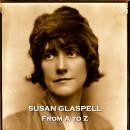
"There is something about the number 3. The Ancient Greeks believed 3 was the perfect number, and in China 3 has always been a lucky number, and they know a thing or two. Most religions also have 3 this and 3 that and, of course, in these more modern times, three’s a crowd may be too many, except when it’s a ménage à trois. It seems good things usually come in threes.Whatever history and culture says WE think 3, a hat-trick of stories, is a great number to explore themes and literary avenues that classic authors were so adept at creating.From their pens to your your ears.01 - 3 Stories About - Hope and Dreams02 - The Necklace by Guy de Maupassant03 - Gooseberries by Anton Chekhov04 - From A to Z by Susan Glaspell"
Anton Chekhov, Guy De Maupassant, Susan Glaspell (Author), David Shaw-Parker, Jake Urry, Laurel Lefkow (Narrator)
Audiobook · 1 hr 45 mins
Wonder Of Women - Murder Stories
"Let’s be clear. We are all equal under the law. However, even in these more modern times that is not an absolute and still remains a distant ambition for many. In the days when Britain ruled the waves and bestrode the world as its policeman and plunderer in chief it also subjugated half of its own people to second class status. Women were chattel and property. There were some exceptions based on wealth and birthright but for the overwhelming majority your lot was to fall in with the rules and do as you were told. Many did.But whilst male society sought to place obstacles in the path to equality, it could not deny their literary talents, which many times they circumvented by using male pseudonyms. However, the soaring sales of magazines and periodicals during the Victorian Age meant they had voracious appetites for literature, whatever the sex of its gender.Dozens of authors appeared to fill the need. Narratives had new ideas. Characters were emboldened by societal changes and the female voice taking responsibility.The women included here are talents that dazzle. Put them up against anyone and they rise to the top. Whether they remain with an avid readership today or faded to obscurity with the passing of the times their quality remains undimmed. 1 - Women of Wonder - Murder - An Introduction2 - The Murder In Saltashe Woods by Baroness Orczy3 - A Jury of Her Peers by Susan Glaspell4 - In The Dark by Edith Nesbit5 - Was It An Illusion. A Parson's Story by Amelia Edwards6 - Mrs Raeburn's Waxwork by Lady Eleanor Smith7 - Talma Gordon by Pauline E Hopkins8 - A Twin Identity by Edith Stewart Drewery9 - Why Herbert Killed His Mother by Winifred Holtby10 - The Octoroon's Revenge by Ruth D Todd11 - An Expiation by Arabella Kenealy12 - Water Running Out by Ethel Lina White13 - Ben Pitcher's Elly by Mary E Mann14 - No 5 Branch Line. The Engineer by Amelia Edwards15 - The Mysterious Death on the Underground Railroad by Baroness Emmuska Orczy16 - The 4.15 Express by Amelia Edwards"
Amelia B. Edwards, Arabella Kenealy, Baroness Emmuska Orczy, Baroness Orczy, Edith Nesbit, Edith Stewart Drewery, Ethel Lina White, Lady Eleanor Smith, Mary E Mann, Pauline E Hopkins, Ruth D Todd, Susan Glaspell, Winifred Holtby (Author), Laurel Lefkow, Mark Rice-Oxley, Richard Mitchley (Narrator)
Audiobook · 9 hrs 10 mins
The Foundations of Fiction - Modernism
"In this series we turn the pages of classic short stories to put together the literary building blocks of how a particular genre or theme began, how it built its foundations to become the well-loved and well-worn genre that it is today.Do authors have the same ideas at more or less the same time? Or can they sniff out an opportunity as to which way the tastes of an audience are moving. Success undoubtedly builds success and in literary terms we can more politely say that imitation is the sincerest form of flattery, and the surest way to reach a hungry readership is to build on the fortune and flair of your literary colleagues. It’s a reality that the term ‘modernism’ was first used for stories well over a century ago. Like fine wines they have aged remarkably well. In this volume the talents of Virginia Woolf, F Scott Fitzgerald, Katherine Mansfield, James Joyce are testament to the craft, imagination and literary chops these authors have brought to prose in one of its most enduring literary movements. 01 - Foundations of Fiction - Modernism - An Introduction2 - Bliss by Katherine Mansfield3 - Bernice Bobs Her Hair by F Scott Fitzgerald4 - The Legacy by Virginia Woolf5 - The Dead by James Joyce6 - Here We Are by Dorothy Parker7 - Odour of Chrysanthemums by D H Lawrence8 - If I Were A Man by Charlotte Perkins Gilman9 - Tomorrow by Eugene O'Neill10 - Friday by Zona Gale11 - The Defense of Strikerville by Damon Runyon12 - Rooms by Gertrude Stein13 - The Mark on the Wall by Virginia Woolf14 - The Garden Party by Katherine Mansfield15 - Eveline by James Joyce16 - His Smile by Susan Glaspell17 - A Cullenden of Virginia by Thomas Wolfe18 - Miss Brill by Katherine Mansfield19 - The Golden Honeymoon by Ring Lardner20 - Winter Dreams by F Scott Fitzgerald21 - Kew Gardens by Virginia Woolf22 - Ariel's Triumph by Booth Tarkington23 - Speed by Sinclair Lewis24 - Araby by James Joyce25 - The Ice Palace by F Scott Fitzgerald26 - The Fly by Katherine Mansfield27 - White Bread by Zona Gale28 - A Dill Pickle by Katherine Mansfield"
Booth Tarkington, Charlotte Perkins Gilman, D.H. Lawrence, Damon Runyon, Dorothy Parker, Eugene O'Neill, F Scott Fitzgerald, Gertrude Stein, James Joyce, Katherine Mansfield, Ring Lardner, Sinclair Lewis, Susan Glaspell, Thomas Wolfe, Virginia Woolf, Zona Gale (Author), Eric Meyers, Eve Karpf, Laurel Lefkow (Narrator)
Audiobook · 15 hrs 15 mins
The Foundations of Fiction - The Murder Mystery
"In this series we turn the pages of classic short stories to put together the literary building blocks of how a particular genre or theme began, how it built its foundations to become the well-loved and well-worn genre that it is today.Do authors have the same ideas at more or less the same time? Or can they sniff out an opportunity as to which way the tastes of an audience are moving. Success undoubtedly builds success and in literary terms we can more politely say that imitation is the sincerest form of flattery, and the surest way to reach a hungry readership is to build on the fortune and flair of your literary colleagues. The Whodunit is one of the great themes of literary fiction. We all believe that given the right clue at the right time we can deduce and logically unmask the killer. Unfortunately, our authors are not the most helpful of co-workers in this regard. With their more than liberal use of plot twists, red herrings and McGuffins they merrily ensure that the only one who really knows is them and them alone until it is time to reveal who really did the deed, and how.01 - Foundations of Fiction - Murder Mystery - An Introduction2 - The Murders in the Rue Morgue by Edgar Allan Poe3 - Markheim by Robert Louis Stevenson4 - A Thousand Deaths by Jack London5 - The Trial for Murder by Charles Dickens6 - A Jury of Her Peers by Susan Glaspell7 - Better Dead by J M Barrie8 - The Cone by H G Wells9 - The Hounds of Fate by Saki10 - The Mysterious Death on the Underground Railroad by Baroness Emmuska Orczy11 - The Moonlit Road by Ambrose Bierce12 - The Corpse Light by J E Preston Muddock writing as Dick Donovan13 - A Thing That Glistened by Frank R Stockton14 - Nightmare in Yellow by Fredric Brown15 - Was It An Illusion. A Parson's Story by Amelia Edwards16 - A Twin Identity by Edith Stewart Drewery17 - In A Grove by Ryunosuke Akutagawa18 - The Snow by Hugh Walpole19 - August Heat by W F Harvey20 - Allelulia by T F Powys21 - Juggernaut by D K Broster22 - The Bundle of Letters by Móritz Jókai23 - The Cask of Amontillado by Edgar Allan Poe"
Ambrose Bierce, Amelia B. Edwards, Baroness Emmuska Orczy, Charles Dickens, D.K. Broster, Edgar Allan Poe, Edith Stewart Drewery, Frank R Stockton, Fredric Brown, H.G. Wells, Hugh Walpole, J. M. Barrie, Jack London, Móritz Jókai, Robert Louis Stevenson, Ryunosuke Akutagawa, Saki, Susan Glaspell, T F Powys, W F Harvey (Author), Christopher Ragland, David Shaw-Parker, Richard Mitchley (Narrator)
Audiobook · 13 hrs 11 mins
The Cultured Bumpkin Presents: Great American Short Stories: Volume 1
"A compilation of popular short stories from American literature narrated by professional voice actor Jake Phillips."
Ambrose Bierce, Edgar Allan Poe, Mark Twain, O Henry, Stephen Crane, Susan Glaspell, Washington Irving (Author), Jake Phillips (Narrator)
Audiobook · 3 hrs 47 mins
"Susan Keating Glaspell was born on July 1st, 1876 in Davenport, Iowa. Glaspell, a precocious child, was an active student at Davenport High School. By 18 she was earning a salary at the local newspaper as a journalist, and by 20 she was the author of a weekly 'Society' column. At 21 she enrolled for Philosophy at Drake University, in Des Moines, where she excelled in debate competitions, and represented them at the state tournament. After graduation, Glaspell again worked as a reporter, still a rare position for a woman, and assigned to cover the state legislature and murder cases.At 24, after covering the conviction of a woman accused of murdering her abusive husband, Glaspell abruptly resigned and returned to Davenport, and a career writing fiction. Her stories were published by periodicals, including Harper's and Munsey's. In 1909, moving to Chicago she wrote her debut novel, ‘The Glory of the Conquered’. It was a best-seller. So too her 2nd and 3rd and to glowing reviews.With her husband Glaspell founded the Provincetown Playhouse for plays that reflected contemporary issues. Her first play, ‘Trifles’ (1916), was based on the murder trial she covered as a young reporter and later adapted as the short story ‘A Jury of Her Peers’. She wrote 12 plays over 7 years for the company. By 1918 Glaspell was considered one of America's most significant new playwrights. Despite its success theatre work did not make financial sense and she continued to submit short stories in order to support her and her husband during their years with the theater. In 1931 her play, ‘Alison's House’, received the Pulitzer Prize. She continued to write and now with themes increasingly based on her surroundings, on family life, and on theistic questions.Susan Keating Glaspell died of viral pneumonia in Provincetown, Massachusetts on 28th July 1948."
Susan Glaspell (Author), Ghizela Rowe, Laurel Lefkow (Narrator)
Audiobook · 51 mins
The Top 10 Short Stories - Murder
"Short stories have always been a sort of instant access into an author's brain, their soul and heart. A few pages can lift our lives into locations, people and experiences with a sweep of landscape, narration, feelings and emotions that is difficult to achieve elsewhere.In this series we try to offer up tried and trusted 'Top Tens' across many different themes and authors. But any anthology will immediately throw up the questions - Why that story? Why that author? The theme itself will form the boundaries for our stories which range from well-known classics, newly told, to stories that modern times have overlooked but perfectly exemplify the theme. Throughout the volume our authors whether of instant recognition or new to you are all leviathans of literature.Some you may disagree with but they will get you thinking; about our choices and about those you would have made. If this volume takes you on a path to discover more of these miniature masterpieces then we have all gained something.In this volume that most heinous of crimes is explored and dissected by the minds of our classic authors who show that the taking of another's life in print is so real that the possibility arises that they have carried out this deed in reality. Genius has many names.01 - The Top 10 - Murder - An Introduction02 - Lord Arthur Savile's Crime - Part 1 by Oscar Wilde03 - Lord Arthur Savile's Crime - Part 2 by Oscar Wilde04 - The Cask of Amontillardo by Edgar Allan Poe05 - Claude Gueux by Victor Hugo06 - In The Dark by Edith Nesbit07 - Brothers by Sherwood Anderson08 - The Kit Bag by Algernon Blackwood09 - Mateo Falcone by Prosper Merimee10 - A Jury of Her Peers by Susan Glaspell11 - In A Grove by Ryunosuke Akutagawa12 - The Repairer of Reputations - Part 1 by Robert W Chambers13 - The Repairer of Reputations - Part 2 by Robert W Chambers"
Algernon Blackwood, Edgar Allan Poe, Edith Nesbit, Oscar Wilde, Prosper Merimee, Robert W Chambers, Ryunosuke Akutagawa, Sherwood Anderson, Susan Glaspell, Victor Hugo (Author), Christopher Ragland, David Shaw-Parker, Garard Green (Narrator)
Audiobook · 6 hrs 53 mins
The Top 10 Short Stories - Revenge
"Short stories have always been a sort of instant access into an author's brain, their soul and heart. A few pages can lift our lives into locations, people and experiences with a sweep of landscape, narration, feelings and emotions that is difficult to achieve elsewhere.In this series we try to offer up tried and trusted 'Top Tens' across many different themes and authors. But any anthology will immediately throw up the questions - Why that story? Why that author? The theme itself will form the boundaries for our stories which range from well-known classics, newly told, to stories that modern times have overlooked but perfectly exemplify the theme. Throughout the volume our authors whether of instant recognition or new to you are all leviathans of literature.Some you may disagree with but they will get you thinking; about our choices and about those you would have made. If this volume takes you on a path to discover more of these miniature masterpieces then we have all gained something.Within these ten stories our authors including Edgar Allan Poe, H G Wells, Guy de Maupassant and a host of others demonstrate the power and the motivation that revenge demands. Yes, the pen is mightier and more brutal than the sword.01 - The Top 10 - Revenge - An Introduction02 - Bernice Bobs Her Hair by F Scott Fitzgerald03 - The Cone by H G Wells04 - The Hand by Guy de Maupassant05 - The Cask of Amontillardo by Edgar Allan Poe06 - The Signal by Vsevolod Garshin07 - The Caballero's Way by O Henry08 - The Cold Embrace by Mary Elizabeth Braddon09 - The Bride Comes to Yellow Sky by Stephen Crane10 - The Scapegoat by Paul Laurence Dunbar11 - A Jury of Her Peers by Susan Glaspell"
Edgar Allan Poe, F Scott Fitzgerald, Guy De Maupassant, H.G. Wells, Mary Elizabeth Braddon, O Henry, Paul Laurence Dunbar, Stephen Crane, Susan Glaspell, Vsevolod Garshin (Author), Bill Wallis, Elliot Fitzpatrick, Laurel Lefkow (Narrator)
Audiobook · 5 hrs 31 mins
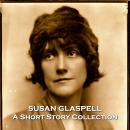
Susan Glaspell - A Short Story Collection
"Susan Keating Glaspell was born on 1st of July 1876 in Davenport, Iowa. Glaspell, a precocious child, was an active student at Davenport High School. By 18 she was earning a salary at the local newspaper as a journalist, and by 20 she was the author of a weekly 'Society' column. At 21 she enrolled for Philosophy at Drake University, in Des Moines, where she excelled in debate competitions, and represented them at the state tournament. After graduation, Glaspell again worked as a reporter, still a rare position for a woman, and assigned to cover the state legislature and murder cases.At 24, after covering the conviction of a woman accused of murdering her abusive husband, Glaspell abruptly resigned and returned to Davenport, and a career writing fiction. Her stories were published by periodicals, including Harper's and Munsey's. In 1909, moving to Chicago she wrote her debut novel, 'The Glory of the Conquered'. It was a best-seller. So too her 2nd and 3rd and to glowing reviews.With her husband Glaspell founded the Provincetown Playhouse for plays that reflected contemporary issues. Her first play, 'Trifles' (1916), was based on the murder trial she covered as a young reporter and later adapted as the short story 'A Jury of Her Peers'. She wrote 12 plays over 7 years for the company. By 1918 Glaspell was considered one of America's most significant new playwrights. Despite its success theatre work did not make financial sense and she continued to submit short stories in order to support her and her husband during their years with the theater. In 1931 her play, 'Alison's House', received the Pulitzer Prize. She continued to write and now with themes increasingly based on her surroundings, on family life, and on theistic questions.Susan Keating Glaspell died of viral pneumonia in Provincetown, Massachusetts on 28th July 1948.1 - Susan Glaspell - A Short Story Collection -An Introduction2 - A Jury of Her Peers by Susan Glaspell3 - The Last Sixty Minutes by Susan Glaspell4 - His Smile by Susan Glaspell5 - The Preposterous Motive by Susan Glaspell6 - From A to Z by Susan Glaspell"
Susan Glaspell (Author), Laurel Lefkow (Narrator)
Audiobook · 3 hrs 1 min
The Top 10 Short Stories - The 1910's - The Women
"Short stories have always been a sort of instant access into an author's brain, their soul and heart. A few pages can lift our lives into locations, people and experiences with a sweep of landscape, narration, feelings and emotions that is difficult to achieve elsewhere.In this series we try to offer up tried and trusted 'Top Tens' across many different themes and authors. But any anthology will immediately throw up the questions - Why that story? Why that author? The theme itself will form the boundaries for our stories which range from well-known classics, newly told, to stories that modern times have overlooked but perfectly exemplify the theme. Throughout the volume our authors whether of instant recognition or new to you are all leviathans of literature.Some you may disagree with but they will get you thinking; about our choices and about those you would have made. If this volume takes you on a path to discover more of these miniature masterpieces then we have all gained something.A decade of monumental change and slaughter. Many of society's telling questions are cast aside in times of that speak of greater needs, greater priorities. For these talented authors their ideas and words keep these magnificent stories at the forefront of our literary lives. 1 - The Top 10 - Women. The 1910's - An Introduction2 - Bliss by Katherine Mansfield3 - Kew Gardens by Virginia Woolf4 - If I Were A Man by Charlotte Perkins Gilman5 - The Eyes by Edith Wharton6 - In The Dark by Edith Nesbit7 - Rooms by Gertrude Stein8 - Breaking the Color Line by Annie McCary9 - A Jury of Her Peers by Susan Glaspell10 - The Coach by Violet Hunt11 - White Bread by Zona Gale"
Edith Wharton, Susan Glaspell (Author), Eve Karph, Laurel Lefkow (Narrator)
Audiobook · 7 hrs 28 mins
The Female Short Story - A Chronological History - Volume 9
"A wise man once said ‘The safest place for a child is in the arms of his mother’s voice’. This is a perfect place to start our anthology of female short stories.Some of our earliest memories are of our mothers telling us bedtime stories. This is not to demote the value of fathers but more to promote the often-overshadowed talents of the gentler sex.Perhaps ‘gentler’ is a word that we should re-evaluate. In the course of literary history it is men who dominated by opportunity and with their stranglehold on the resources, both financial and technological, who brought their words to a wider audience. Men often placed women on a pedestal from where their talented words would not threaten their own. In these stories we begin with the original disrupter and renegade author Aphra Behn. A peek at her c.v. shows an astounding capacity and leaves us wondering at just how she did all that.In those less modern days to be a woman, even ennobled, was to be seen as second class. You literally were chattel and had almost no rights in marriage. As Charlotte Smith famously said your role as wife was little more than ‘legal prostitute’. From such a despicable place these authors have used their talents and ideas and helped redress that situation. Slowly at first. Privately printed, often anonymously or under the cloak of a male pseudonym their words spread. Their stories admired and, usually, their role still obscured from rightful acknowledgement.Aided by more advanced technology, the 1700’s began to see a steady stream of female writers until by the 1900’s mass market publishing saw short stories by female authors from all the strata of society being avidly read by everyone. Their names are a rollcall of talent and ‘can do’ spirit and society is richer for their works. In literature at least women are now acknowledged as equals, true behind the scenes little has changed but if (and to mis-quote Jane Austen) there is one universal truth, it is that ideas change society. These women’s most certainly did and will continue to do so as they easily write across genres, from horror and ghost stories to tender tales of love and making your way in society’s often grueling rut. They will not be silenced, their ideas and passion move emotions, thoughts and perhaps more importantly our ingrained view of what every individual human being is capable of. It is because of their desire to speak out, their desire to add their talents to the bias around them that we perhaps live in more enlightened, almost equal, times. Within these stories you will also find very occasional examples of historical prejudice. A few words here and there which in today’s world some may find inappropriate or even offensive. It is not our intention to make anyone uncomfortable but to show that the world in order to change must reconcile itself to the actual truth rather than put it out of sight. Context is everything, both to understand and to illuminate the path forward. The author’s words are set, our reaction to them encourages our change.01 - The Female Short Story. A Chronological History - An Introduction - Volume 902 - White Bread by Zona Gale03 - A Redeeming Sacrifice by Lucy Maud Montgomery04 - The Stones of the Village by Alice Dunbar Nelson05 - A Jury of Her Peers by Susan Glaspell06 - Couching at the Door by D K Broster07 - Devereux's Last Smoke by Izola Forrester08 - The Octoroon's Revenge by Ruth D Todd09 - Guests Unexpected. A Thanksgiving Story by Maude K Griffin10 - Miss Ogilivy Finds Herself by Radclyffe Hall11 - The Mystery of the Gables by Elsie Norris12 - Blessed Are the Meek by Mary Webb13 - Those Who Wait by Ethel Dell14 - An Unwritten Novel by Virginia Woolf15 - Behind the Curtain by Gertrude Barrows Bennett writing as Francis Stevens16 - Breaking the Color Line by Annie McCary"
Radclyffe Hall, Susan Glaspell (Author), Ghizela Rowe, Laurel Lefkow (Narrator)
Audiobook · 7 hrs 57 mins
"Murder comes in two familiar forms. Both are heinous and most unlikely to gather any sympathy for the actual act itself from anyone, whatever the circumstances or the reasons. Whether as a crime of passion with high emotions or a cold dispassionate plot to take life in order to gain in some way, the act strikes us all as somehow inhuman. Beneath us as civilised beings. But however we cloak our animal instincts the need to remove a human being and gain relief from abuse or gain from money, the term is just the same - MURDER.Robert Louis Stevenson, Arthur Conan Doyle, J M Barrie, W W Jacobs and many others bring their literary heft to bear in as calculating a way as any killer could. 1 - Short Stories About Murder - An Introduction2 - The Murders in the Rue Morgue - Part 1 by Edgar Allan Poe3 - The Murders in the Rue Morgue - Part 2 by Edgar Allan Poe4 - Markheim by Robert Louis Stevenson5 - The Vendetta by Guy de Maupassant6 - The Story of B 24 by Arthur Conan Doyle7 - A Jury of Her Peers by Susan Glaspell8 - The Trial for Murder by Charles Dickens9 - The Caballero's Way by O Henry10 - Better Dead by J M Barrie11 - The Easter Egg by Saki12 - Mother Sauvage (La Mere Sauvage) by Guy de Maupassant13 - The Black Cat by Edgar Allan Poe14 - Cheating The Gallows by Israel Zangwill15 - In A Grove by Ryunosuke Akutagawa16 - August Heat by W F Harvey17 - Brothers by Sherwood Anderson18 - The Green Light by Barry Pain19 - The Hand by Guy de Maupassant20 - The Cask of Amontillardo by Edgar Allan Poe21 - A Pastoral Horror by Arthur Conan Doyle22 - In The Dark by Edith Nesbit23 - Lost Hearts by M R James24 - Ben Pitcher's Elly by Mary E Mann25 - The Hounds of Fate by Saki26 - Claude Gueux by Victor Hugo 27 - The Repairer of Reputations - Part 1 by Robert W Chambers28 - The Repairer of Reputations - Part 2 by Robert W Chambers29 - The Limping Ghost by Frederick Cowles30 - The Story of the Green House, Wallington by Allen Upward31 - The Tell Tale Heart by Edgar Allan Poe32 - Talma Gordon by Pauline E Hopkins33 - The Moonlit Road by Ambrose Bierce34 - The Murderer by Mikhail Bulgakov35 - For the Blood is the Life by F Marion Crawford36 - A Twin Identity by Edith Stewart Drewery37 - The Octoroon's Revenge by Ruth D Todd38 - An Expiation by Arabella Kenealy39 - God Sees The Truth But Waits by Leo Tolstoy40 - The Kit Bag by Algernon Blackwood41 - The Legend of Saint Julian the Hospitaller by Gustave Flaubert42 - The Murder in an Omnibus by Harold Begbie43 - Lord Arthur Savile's Crime - Part 1 by Oscar Wilde44 - Lord Arthur Savile's Crime - Part 2 by Oscar Wilde45 - The Absence of Mr Glass by G K Chesterton46 - The Middle Toe of the Right Foot by Ambrose Bierce47 - The Lie by Leonid Andreyev48 - The Three Sisters by W W Jacobs49 - Mateo Falcone by Prosper Merimee"
Charles Dickens, Edgar Allan Poe, G K Chesterton, Guy De Maupassant, Jm Barrie, Leo Tolstoy, M.R. James, Mikhail Bulgakov, O Henry, Oscar Wilde, Robert Louis Stevenson, Saki, Sir Arthur Conan Doyle, Susan Glaspell, Victor Hugo (Author), Bill Wallis, Christopher Ragland, Garard Green (Narrator)
Audiobook · 16 hrs 4 mins
B. J. Harrison Reads A Jury of Her Peers
"'A Jury of Her Peers' is a short story by Susan Glaspell, adapted from her one-act play 'Trifles' exploring a murder mystery. The detectives trying to solve the crime are two women, making it one of the first pieces feminist detective fiction. It targets the vainglorious and absent-minded decisions of men, and highlights female’s psychology and powerfulness of feeling. It is a crime and mystery short story that is both fast-paced entertaining, a must read. B. J. Harrison started his Classic Tales Podcast back in 2007, wanting to breathe new life into classic stories. He masterfully plays with a wide array of voices and accents and has since then produced over 500 audiobooks. Now in collaboration with SAGA Egmont, his engaging narration of these famous classics is available to readers everywhere. Susan Glaspell (1876-1948) was an American writer, winner of the Pulitzer Prize, and the founder of the Provincetown Players: one of the leading and most influential drama collaborations in the United States. Her central subject is life in all its manifestations, making her a connoisseur of the human condition. Her best works include the dramas 'Trifles' and 'Alison’s House', as well as the novels 'Fidelity' and 'The Morning is Near Us'."
Susan Glaspell (Author), B.J.Harrison (Narrator)
Audiobook · 54 mins
The Top Ten - American 20th Century
"Short stories have always been a sort of instant access into an author's brain, their soul and heart. A few pages can lift our lives into locations, people and experiences with a sweep of landscape, narration, feelings and emotions that is difficult to achieve elsewhere.In this series we try to offer up tried and trusted 'Top Tens' across many different themes and authors. But any anthology will immediately throw up the questions - Why that story? Why that author? The theme itself will form the boundaries for our stories which range from well-known classics, newly told, to stories that modern times have overlooked but perfectly exemplify the theme. Throughout the volume our authors whether of instant recognition or new to you are all leviathans of literature.Some you may disagree with but they will get you thinking; about our choices and about those you would have made. If this volume takes you on a path to discover more of these miniature masterpieces then we have all gained something.America has come to be the muscle and intellect of a world diminished by war and starved of virtue. True, she has faults and flaws but she has drive, ambition and a seemingly endless reach. Her literary geniuses enthrall and seduce us all with works that are bold, incisive and speak in a uniquely American way.1 - The Top 10 - The American 20th Century - An Introductionx2 - Hands by Sherwood Anderson3 - On The Gulls Road by Willa Cather4 - The Most Dangerous Game by Richard Connell5 - Bernice Bobs Her Hair by F Scott Fitzgerald6 - A Jury of Her Peers by Susan Glaspell7 - The Gift of the Magi by O Henry8 - To Build A Fire by Jack London9 - The Color Out of Space by H P Lovecraft10 - Here We Are by Dorothy Parker11 - Eves Diary by Mark Twain"
F Scott Fitzgerald, Mark Twain, Susan Glaspell (Author), Eric Meyers, Laurel Lefkow, Liza Ross (Narrator)
Audiobook · 7 hrs 15 mins
"Susan Keating Glaspell was born on July 1st, 1876 in Davenport, Iowa. Glaspell, a precocious child, was an active student at Davenport High School. By 18 she was earning a salary at the local newspaper as a journalist, and by 20 she was the author of a weekly 'Society' column. At 21 she enrolled for Philosophy at Drake University, in Des Moines, where she excelled in debate competitions, and represented them at the state tournament. After graduation, Glaspell again worked as a reporter, still a rare position for a woman, and assigned to cover the state legislature and murder cases.At 24, after covering the conviction of a woman accused of murdering her abusive husband, Glaspell abruptly resigned and returned to Davenport, and a career writing fiction. Her stories were published by periodicals, including Harper's and Munsey's. In 1909, moving to Chicago she wrote her debut novel, 'The Glory of the Conquered'. It was a best-seller. So too her 2nd and 3rd and to glowing reviews.With her husband Glaspell founded the Provincetown Playhouse for plays that reflected contemporary issues. Her first play, 'Trifles' (1916), was based on the murder trial she covered as a young reporter and later adapted as the short story 'A Jury of Her Peers'. She wrote 12 plays over 7 years for the company. By 1918 Glaspell was considered one of America's most significant new playwrights. Despite its success theatre work did not make financial sense and she continued to submit short stories in order to support her and her husband during their years with the theater. In 1931 her play, 'Alison's House', received the Pulitzer Prize. She continued to write and now with themes increasingly based on her surroundings, on family life, and on theistic questions.Susan Keating Glaspell died of viral pneumonia in Provincetown, Massachusetts on 28th July 1948."
Susan Glaspell (Author), Ghizela Rowe, Laurel Lefkow (Narrator)
Audiobook · 57 mins
"Susan Keating Glaspell (1876 -1948) was a novelist, playwright, journalist and actress. 'The Verge' reflects Glaspell's observation of the way in which Victorian society left some women feeling trapped in roles for which they were unsuited. The narrative is about Claire, a woman who lives her life on the verge of a nervous breakdown. Trying to create a new type of plant, Claire spends most of her time in the greenhouse. One winter, with a house full of guests, she diverts the heat to the greenhouse. She tries to leave her family and friends outside, in the cold, and their attempts to bring her back to the real world drive her over the edge into utter insanity. The language of 'The Verge' is unusual; the characters sometimes speak in poetic fragments rather than everyday speech. What's more, symbolism features heavily in the play. Of course it all ends in death and destruction, with Claire humming 'Nearer My God, to Thee" with a smoking gun in her hand and a dead man at her feet."
Susan Glaspell (Author), Anna Lee (Narrator)
Audiobook · 2 hrs 18 mins
The Unsolved Riddle of Social Justice
"This lengthy political essay by noted Canadian humourist Stephen Leacock was written while he was professor of political economy at McGill University. He argues for a middle ground between capitalism and pure socialism. Listeners in the early 21st century may find this 90-year old essay oddly topical. (Summary by Sean Michael Hogan)"
Stephen Leacock, Susan Glaspell (Author), LibriVox Volunteers, Sean Michael Hogan (Narrator)
Audiobook · 2 hrs 24 mins
"This play is Glaspell’s recognition of the way in which Victorian society left some women feeling trapped in roles for which they were unsuited. Because of the play’s non-realistic speech patterns and expressionistic elements, it was dismissed by most critics as being muddled and confusing. It has recently been ‘‘rediscovered’’ by feminist theorists, however, who see the work as an important contribution to theatre history. In 1921 when this play was first produced, women were still expected to stay at home and be dutiful wives and mothers. Many women began to voice dissatisfaction with their lack of opportunities and tried to change the situation. Thus, the feminist movement began to take hold. Other women rebelled by retreating into despondency, depression and, sometimes, madness. The Verge also reflects the fascination with Freudian theory that was sweeping the United States at the time. Freud had delivered his first U.S. lectures in 1909, and his theories of psychoanalysis and dream interpretation were widely discussed in many popular publications of the day. (Summary by by Michele Eaton)"
Susan Glaspell (Author), LibriVox Volunteers (Narrator)
Audiobook · 2 hrs 24 mins
"In this collection of short stories, Susan Glaspell examines the unique character of America and its people. (Summary by wildemoose)"
Susan Glaspell (Author), Arielle Lipshaw (Narrator)
Audiobook · 5 hrs 40 mins
"Inheritors, (1921) by American dramatist Susan Glaspell concerns the legacy of an idealistic farmer who wills his highly coveted midwest farmland to the establishment of a college (Act I.) Forty years later, when his granddaughter stands up for the rights of Hindu nationals to protest at the college her grandfather founded, she jeopardizes funding for the college itself and sets herself against her own uncle, president of the institution's trustees (Acts II & III.) Ultimately, she defies her family's wishes, and as a consequence is bound for prison herself (Act IV.) The play was a stirring defense of free speech and an individual's ability to stand for his or her own ideal during a time of aggressive anti-Communist politics in the US. Inheritors was first performed at Provincetown Playhouse in 1922, the last of Glaspell's plays presented there. It has been revived in New York City by Mirror Repertory in 1983 and Metropolitan Playhouse in 2005. (Summary by Wikipedia)"
Susan Glaspell (Author), LibriVox Volunteers (Narrator)
Audiobook · 2 hrs 45 mins
"On the surface, this short play is a slice-of-life story about a murder investigation in the rural United States. However, it is also a story about the relationships between men and women, husbands and wives, and the often-overlooked "trifles" which can say so much about a person's life. (Summary by Arielle Lipshaw)"
Susan Glaspell (Author), LibriVox Volunteers (Narrator)
Audiobook · 28 mins
"Based on an actual murder case Susan Glaspell reported for the Des Moines News in 1916, this one-act play represented an early exploration of gender relationships in a time when women often were considered to be mere “trifles.” The play is considered a groundbreaking work in feminist literature and is often included in American drama anthologies. Recorded at The Invisible Studios, West Hollywood, in April 2011. Adapted and directed for radio by Rosalind Ayres Producing Director: Susan Albert Loewenberg An L.A. Theatre Works Full-Cast Performance Featuring: Jeanie Hackett as Mrs. Peters Amy Madigan as Mrs. Hale Sam McMurray as the Sheriff Steve Vinovich as Mr. Hale Steven Weber as the County Attorney Recording Engineer/Sound Designer/Mixing/Engineer/Editor: Mark Holden for The Invisible Studios, West Hollywood"
Susan Glaspell (Author), Amy Madigan, Jeanie Hackett, Sam Mcmurray, Steve Vinovich, Steven Weber (Narrator)
Audiobook · 29 mins
"The facts are that a canary is dead, as is Mr. Foster. His wife, Minnie, is the prime suspect. Sheriff Peters can't crack the case, but two clever women can. Glaspell originally wrote the story as a play entitled Trifles in 1916."
Susan Glaspell (Author), Jennifer Woodward (Narrator)
Audiobook · 54 mins
©PTC International Ltd T/A LoveReading is registered in England. Company number: 10193437. VAT number: 270 4538 09. Registered address: 157 Shooters Hill, London, SE18 3HP.
Terms & Conditions | Privacy Policy | Disclaimer