

Browse audiobooks by Frances E. W. Harper, listen to samples and when you're ready head over to Audiobooks.com where you can get 3 FREE audiobooks on us
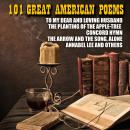
101 Great American Poems: To My Dear and Loving Husband, The Planting of the Apple-Tree, Concord Hym
"Discover the heartbeat of American poetry through 101 Great American Poems — a carefully curated collection that spans centuries of voices. From the reflective verses of Anne Bradstreet to the bold rhythms of Langston Hughes, this anthology captures the soul of a nation through themes of love, loss, freedom, and hope. Tracing a journey from Puritan resolve to the artistic fervor of the Harlem Renaissance, these poems invite readers to explore America's evolving identity across generations and genres. A testament to the enduring power of words, this anthology invites readers to witness the evolution of a nation's spirit — in verse, in rhythm, in timeless reflection. This collection brings together iconic voices, including: Anne Bradstreet Phillis Wheatley William Cullen Bryant Ralph Waldo Emerson Henry Wadsworth Longfellow Edgar Allan Poe Abraham Lincoln Oliver Wendell Holmes, Sr. Herman Melville Walt Whitman Frances E. W. Harper Emily Dickinson Ella Wheeler Wilcox Ernest Lawrence Thayer Edwin Arlington Robinson Stephen Crane James Weldon Johnson Paul Laurence Dunbar Gertrude Stein Vachel Lindsay Claude McKay Countee Cullen Amy Lowell James Oppenheim Elizabeth Barrett Browning Emma Lazarus Louisa May Alcott Ellis Parker Butler Hugh Henry Brackenridge Matthew Arnold William Butler Yeats William Blake Sara Teasdale William Barnes "
Abraham Lincoln, Amy Lowell, Anne Bradstreet, Claude McKay, Countee Cullen, Edgar Allan Poe, Edwin Arlington Robinson, Elizabeth Barrett Browning, Ella Wheeler Wilcox, Ellis Parker Butler, Emily Dickinson, Emma Lazarus, Ernest Lawrence Thayer, Frances E. W. Harper, Gertrude Stein, Henry Wadsworth Longfellow, Herman Melville, Hugh Henry Brackenridge, James Oppenheim, James Weldon Johnson, Louisa May Alcott, Matthew Arnold, Oliver Wendell Holmes Sr, Paul Laurence Dunbar, Phillis Wheatley, Ralph Waldo Emerson, Sara Teasdale, Stephen Crane, Vachel Lindsay, Walt Whitman, William Barnes, William Blake, William Butler Yeats, William Cullen Bryant (Author), Mark Bowen (Narrator)
Audiobook
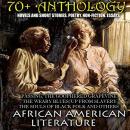
70+ Anthology. African American literature. Novels and short stories. Poetry. Non-fiction. Essays:
"African American literature is the body of literature produced in the United States by writers of African descent. It begins with the works of such late 18th-century writers as Phillis Wheatley. Before the high point of enslaved people narratives, African-American literature was dominated by autobiographical spiritual narratives. The genre known as slave narratives in the 19th century were accounts by people who had generally escaped from slavery, about their journeys to freedom and ways they claimed their lives. The Harlem Renaissance of the 1920s was a great period of flowering in literature and the arts, influenced both by writers who came North in the Great Migration and those who were immigrants from Jamaica and other Caribbean islands. The collection includes works by such prominent masters of American literature as Frederick Douglass, Nella Larsen, Charles W. Chesnutt , Paul Laurence Dunbar, Phillis Wheatley, Langston Hughes, Booker T. Washington , W. E. B. Du Bois and many others. Novels and short stories Frederick Douglass THE HEROIC SLAVE Nella Larsen QUICKSAND PASSING THE WRONG MAN FREEDOM SANCTUARY Alice Dunbar-Nelson A CARNIVAL JANGLE VIOLETS THE WOMAN TEN MINUTES' MUSING TITEE Charles W. Chesnutt THE GOOPHERED GRAPEVINE PO' SANDY SIS' BECKY'S PICKANINNY THE DOLL THE WIFE OF HIS YOUTH Paul Laurence Dunbar THE SCAPEGOAT Jean Toomer BECKY Poetry Phillis Wheatley TO THE RIGHT HONOURABLE WILLIAM, EARL OF DARTMOUTH ON VIRTUE AN HYMN TO THE MORNING AN HYMN TO THE EVENING Frances E. W. Harper BURY ME IN A FREE LAND SONGS FOR THE PEOPLE MY MOTHER'S KISS A GRAIN OF SAND OUR HERO THE SPARROW'S FALL James Weldon Johnson SENCE YOU WENT AWAY Paul Laurence Dunbar THE LESSON SYMPATHY WE WEAR THE MASK Claude McKay AFTER THE WINTER IF WE MUST DIE THE TROPICS IN NEW YORK Countee Cullen FOR PAUL LAURENCE DUNBAR INCIDENT LANGSTON HUGHES THE WEARY BLUES JAZZONIA NEGRO DANCERS THE CAT AND THE SAXOPHONE (2 A. M.) YOUNG SINGER CABARET TO MIDNIGHT NAN AT LEROY'S TO A LITTLE LOVER-LASS, DEAD HARLEM NIGHT CLUB NUDE YOUNG DANCER YOUNG PROSTITUTE TO A BLACK DANCER IN 'THE LITTLE SAVOY' SONG FOR A BANJO DANCE BLUES FANTASY LENOX AVENUE: MIDNIGHT Non-fiction Frederick Douglass NARRATIVE OF THE LIFE OF FREDERICK DOUGLASS Harriet Jacobs INCIDENTS IN THE LIFE OF A SLAVE GIRL Booker T. Washington UP FROM SLAVERY William Still UNDERGROUND RAILROAD Henry Box Brown James Hambleton Christian Theophilus Collins Seth Concklin William and Ellen Craft Abram Galloway and Richard Eden Charles Gilbert Samuel Green Jamie Griffin Harry Grimes James Hamlet and Others John Henry Hill Ann Maria Jackson and Her Seven Children Jane Johnson Matilda Mahoney Mary Frances Melvin Aunt Hannah Moore Alfred S. Thornton Essays W. E. B. Du Bois THE SOULS OF BLACK FOLK Charles W. Chesnutt THE DISFRANCHISEMENT OF THE NEGRO Paul Laurence Dunbar REPRESENTATIVE AMERICAN NEGROES"
Alice Dunbar-Nelson, Booker T. Washington, Charles W. Chesnutt, Claude McKay, Countee Cullen, Frances E. W. Harper, Frederick Douglass, Harriet Ann Jacobs, James Weldon Johnson, Jean Toomer, Nella Larsen, Paul Laurence Dunbar, Phillis Wheatley, W. E. B. Du Bois, William Still (Author), Jowanna Lewis, Mark Bowen, Peter Coates, Rick Walz, Shawna Wolf (Narrator)
Audiobook
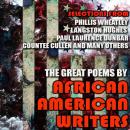
The Great Poems by African American Writers: Selections from Phillis Wheatley, Langston Hughes, Paul
"African American literature is the body of literature produced in the United States by writers of African descent. It begins with the works of such late 18th-century writers as Phillis Wheatley. Before the high point of enslaved people narratives, African-American literature was dominated by autobiographical spiritual narratives. The genre known as slave narratives in the 19th century were accounts by people who had generally escaped from slavery, about their journeys to freedom and ways they claimed their lives. The Harlem Renaissance of the 1920s was a great period of flowering in literature and the arts, influenced both by writers who came North in the Great Migration and those who were immigrants from Jamaica and other Caribbean islands. Phillis Wheatley To the Right Honourable William, Earl of Dartmouth On Virtue An Hymn To the Morning An Hymn To the Evening Frances E. W. Harper Bury Me in a Free Land Songs for the People My Mother's Kiss A Grain of Sand Our Hero The Sparrow's Fall James Weldon Johnson Sence You Went Away Paul Laurence Dunbar The Lesson Sympathy We Wear the Mask Claude McKay After the Winter If We Must Die The Tropics in New York Countee Cullen For Paul Laurence Dunbar Incident Langston Hughes The Weary Blues Jazzonia Negro Dancers The Cat And The Saxophone (2 A. M.) Young Singer Cabaret To Midnight Nan At Leroy'S To A Little Lover-Lass, Dead Harlem Night Club Nude Young Dancer Young Prostitute To A Black Dancer In 'The Little Savoy' Song For A Banjo Dance Blues Fantasy Lenox Avenue: Midnight"
Claude McKay, Countee Cullen, Frances E. W. Harper, James Weldon Johnson, Langston Hughes, Paul Laurence Dunbar, Phillis Wheatley (Author), Shawna Wolf (Narrator)
Audiobook
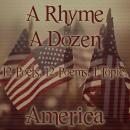
A Rhyme A Dozen - 12 Poets, 12 Poems, 1 Topic ? America
"'A dime a dozen' as known in America, is perhaps equal to the English 'cheap as chips' but whatever the lingua franca of your choice in this series we hereby submit 'A Rhyme a Dozen' as 12 poems on many given subjects that are a well-rounded gathering, maybe even an essential guide, from the knowing pens of classic poets and their beautifully spoken verse to the comfort of your ears. 1 - A Rhyme A Dozen - 12 Poems, 12 Poets, 1 Topic - America - An Introduction 2 - The New Colossus by Emma Lazarus 3 - The Natives of America by Ann Plato 4 - America the Beautiful by Katharine Lee Bates 5 - Bury Me In a Free Land by Frances E W Harper 6 - A Nation's Strength by Ralph Waldo Emerson 7 - To America by James Weldon Johnson 8 - The Crowd at the Ball Game by William Carlos Williams 9 - Harlem by Langston Hughes 10 - Wild Peaches by Elinor Wylie 11 - The Railway Train by Emily Dickinson 12 - The Ballad of the Harp-Weaver by Edna St Vincent Millay 13 - I Hear America Singing by Walt Whitman"
Ann Plato, Edna St Vincent Millay, Elinor Wylie, Emily Dickinson, Emma Lazarus, Frances E. W. Harper, James Weldon Johnson, Katharine Lee Bates, Langston Hughes, Ralph Waldo Emerson, Walt Whitman, William Carlos Williams (Author), Darrell Joe, John-Michael Macdonald, Laurel Lefkow (Narrator)
Audiobook
Born in the USA - Exploring America in Poems - The Mid-Atlantic Poets
"Poetry. A form of words that seems so elegantly simple in one verse and so cleverly complex in another. Each poet has a particular style, an individual and unique way with words and yet each of us seems to recognise the path and destination of where the verses lead, even if sometimes the full comprehension may be a little beyond us. Through the centuries every culture has produced verse to symbolize and to describe everything from everyday life, natural wonders, the human condition and even in its more hubristic moments, the crushing triumph of an enemy. In the volumes of this series we take a look through the prism of individual regions of the United States through the centuries and decades. The United States may be many things: the world's policeman, a bully, a shameless purveyor of mass market culture but it also, in its better moments, a standard bearer for truth, transparency, equality and the more positive qualities of democracy. Little wonder that's its poets are rightly acknowledged as wonders of their art. Leading lights in the fight against slavery and for equality, even if the rest of the Nation is finding it problematic to catch up. In this volume we have collected verse from poets born in the prosaically named Mid-Atlantic region. Within its boundaries, which have never been authoritatively agreed, are New York, New Jersey, Delaware, Maryland, and Virginia. Therefore it is easy to wax lyrical on what, and how, our esteemed poets including Walt Whitman, Frances W Harper, Edith Wharton, Willa Cather, William Carlos Williams and Herman Melville have penned in their gloried verse on the societies and lands before and around them."
Edith Wharton, Frances E. W. Harper, Henry James, Herman Melville, Jean Toomer, Joyce Kilmer, Stephen Crane, Wallace Stevens, Walt Whitman, Willa Cather, William Carlos Williams (Author), Lee Jackson, Trei House, William Marsh (Narrator)
Audiobook
The Female Short Story - A Chronological History - Volume 2
"A wise man once said ‘The safest place for a child is in the arms of his mother’s voice’. This is a perfect place to start our anthology of female short stories.Some of our earliest memories are of our mothers telling us bedtime stories. This is not to demote the value of fathers but more to promote the often-overshadowed talents of the gentler sex.Perhaps ‘gentler’ is a word that we should re-evaluate. In the course of literary history it is men who dominated by opportunity and with their stranglehold on the resources, both financial and technological, who brought their words to a wider audience. Men often placed women on a pedestal from where their talented words would not threaten their own. In these stories we begin with the original disrupter and renegade author Aphra Behn. A peek at her c.v. shows an astounding capacity and leaves us wondering at just how she did all that.In those less modern days to be a woman, even ennobled, was to be seen as second class. You literally were chattel and had almost no rights in marriage. As Charlotte Smith famously said your role as wife was little more than ‘legal prostitute’. From such a despicable place these authors have used their talents and ideas and helped redress that situation. Slowly at first. Privately printed, often anonymously or under the cloak of a male pseudonym their words spread. Their stories admired and, usually, their role still obscured from rightful acknowledgement.Aided by more advanced technology, the 1700’s began to see a steady stream of female writers until by the 1900’s mass market publishing saw short stories by female authors from all the strata of society being avidly read by everyone. Their names are a rollcall of talent and ‘can do’ spirit and society is richer for their works. In literature at least women are now acknowledged as equals, true behind the scenes little has changed but if (and to mis-quote Jane Austen) there is one universal truth, it is that ideas change society. These women’s most certainly did and will continue to do so as they easily write across genres, from horror and ghost stories to tender tales of love and making your way in society’s often grueling rut. They will not be silenced, their ideas and passion move emotions, thoughts and perhaps more importantly our ingrained view of what every individual human being is capable of. It is because of their desire to speak out, their desire to add their talents to the bias around them that we perhaps live in more enlightened, almost equal, times. Within these stories you will also find very occasional examples of historical prejudice. A few words here and there which in today’s world some may find inappropriate or even offensive. It is not our intention to make anyone uncomfortable but to show that the world in order to change must reconcile itself to the actual truth rather than put it out of sight. Context is everything, both to understand and to illuminate the path forward. The author’s words are set, our reaction to them encourages our change.01 - The Female Short Story. A Chronological History - An Introduction - Volume 202 - Conversation on Conversation by Harriet Beecher Stowe03 - Aunt Hetty on Matrimony by Fanny Fern, the writing pseudonym for Sarah Payton Parton04 - Reality or Delusion by Mrs Ellen Wood05 - The Little Skeleton by Mary Anne Atherstone writing as M A Bird06 - Napoleon and the Spectre by Charlotte Bronte07 - The Knitted Collar by Mary Anne Hoare08 - The Palace of Death by Emily Bronte09 - The Lifted Veil - Part 1 by George Eliot10 - The Lifted Veil - Part 2 by George Eliot11 - The Peterkins Decide to Learn the Languages by Lucretia Peabody Hale12 - The Dead Man of Varley Grange by Elizabeth Anna Hart13 - Two Offers by Frances Watkins Harper14 - The Last House in C Street by Mrs Craik15 - A Story of a Wedding Tour by Margaret Oliphant16 - The Tyburn Ghost by Wilhelmina FitzClarence, The Countess of Munster17 - The Phantom Coach by Amelia Edwards18 - The Shipwrecked Crew by Rebecca Harding Davies"
Frances E. W. Harper, George Eliot (Author), Eve Karpf, Kelly Burke (Narrator)
Audiobook
The American Short Story - Volume 2
"The American literary tradition has, in a far shorter span of time than others throughout history, achieved a glowing and glittering reputation.From its transatlantic roots it has absorbed the sons and daughters of other cultures, other lands and made them part of her own.America prides itself on liberty, on justice for all and, if you are a wealthy white man, that is essentially true. Sadly, many other segments of society find it difficult to feel or become part of this endeavour.Within this chronological history of the American short story, that prejudice has helped shape the borders of those two endless questions about any anthology. Why that story? Why that Author?We made some hard choices. We start with Uriah Derrick Dárcy, an unlikely American name and, to all intents, it appears to be a pseudonym, about whom little is known or can be verified. He leads our literary parade. From here leviathans appear on a regular basis; Hawthorne, Poe, Melville, Twain but also note how many women are here and not just Stowe, Alcott and Chopin. Women’s status as writers is often neglected or undervalued, predominantly due to their second-class social status throughout much of history but their stories, their angles of approach to writing are both expertly crafted and refreshing. Another stain on the social and cultural fabric of American has been that of Race. Black people were harshly and unfairly treated as a matter of course. The Civil War may have opened the door but in reality little changed. The majority of the stories included here written by black authors are disturbing in the wrongs they were accused of, and the burdens they were forced to carry. This eye-opening literature enables us to once more take stock and applaud and bring some glimmers of recognition to their struggles and their art. There are some authors, liberally sprinkled throughout, both male and female who may previously have escaped your attention. Enjoy them. Adore them. Make them part of your everyday reading and listening. These forgotten voices are fine examples both of their craft, their art, and their take on society as it was then.In the period we cover from the late 18th Century, around the time of the American Revolution, up until the catastrophe of World War 2, the printing press was creating a market to share words. With industrialization and a large swathe of people eager to be distracted from hard working lives, a plethora of magazines and periodicals shot up, all clamoring for works to publish, to share those words, to introduce new ideas and explain how some of us view ourselves and each other. Some of these authors were only published that way, one story wonders—hitched to the fading star of a disposable periodical. And, of course, the elephant in the room was the English. In its early days US copyright law was non-existent and didn’t recognise anyone else’s. Publishers were free to take the talents of Dickens or Trollope and freely print it without permission or coin. Competing against that, gave you a decided disadvantage.Within these stories you will also find very occasional examples of historical prejudice. A few words here and there which in today’s world some may find inappropriate or even offensive. It is not our intention to make anyone uncomfortable but to show that the world in order to change must reconcile itself to the actual truth rather than put it out of sight. Context is everything, both to understand and to illuminate the path forward. The author’s words are set, our reaction to them encourages our change.Within this melting pot of styles, genres and wordplay one fact stands out: The American short story Literary tradition has a strong, vibrant and almost inclusive history, if you know where to look. Which is here. 01 - The American Short Story - A Chronological History - An Introduction - Volume 302 - The Facts Concerning the Recent Carnival of Crime In Connecticut by Mark Twain03 - The Luck of Roaring Camp by Bret Harte04 - Christmas Eve in War Times by Edward Payson Roe05 - An Occurrence At Owl Creek Bridge by Ambrose Bierce06 - The Great Good Place by Henry James07 - Rollo Learning to Read by Robert J Burdette08 - Since I Died by Elizabeth Stuart Phelps09 - The Little Room by Madeline Yale Wynne10 - A White Heron by Sarah Orne Jewett11 - Desiree's Baby by Kate Chopin12 - The Tachypomp by Edward Page Mitchell13 - A New England Nun by Mary E Wilkins Freeman"
Frances E. W. Harper, Herman Melville, Louisa May Alcott (Author), Christopher Ragland, Eric Meyers, Laurel Lefkow (Narrator)
Audiobook
Black Words Matter - Poets From The 18th Century To The Harlem Renaissance
"This anthology focuses on African-American poets. We start in the 18th century and end with the Harlem Renaissance. Many poets featured are, and were, rarely heard and have been painfully neglected. To be of colour was deemed at best to be second class so few of our poets had the privileges most of us take for granted or a means to market. Down the ages they illuminate the stain on our humanity and its ever-repeating cycle. Over ages, eons and countless generations humanity has sought to better itself. Ideas and cultures have sprung forth creating fertile conditions for change and advancement. We have gathered together as families, clans, tribes and nations in the clear knowledge that together more can be achieved for the individual. New systems have evolved, waxed and waned, been replaced or discarded by bright shiny new ones. From afar the chances of humanity bettering itself must seem promising. But today's generations find themselves searching not only for answers from others but also from themselves, for solutions to turn a world where privilege, wealth and power reside with the few to be the right of the many. These unequal times will not give way easily. Entrenched interests will promise change and deliver little. This is the real history of the human race. We will claim that education, health care and jobs are for everyone and yet continue to mis-educate, to ignore primary care and offer jobs that even a robot would think twice about.Those oppressed by race, creed, gender or colour will find the invisible walls of the status quo difficult to overcome. But there is hope - if we collectively want action. When we don't merely call for that change but when we demand that change from ourselves, and from society. When we charge our political leaders to serve our interests rather than their own.We may be created equal but society, and ourselves, sort, layer and assemble us all into groups, those it can keep underfoot and those who will have an unequal share. Real change requires all of us to change, to recognise that equal opportunity starts from equal access to resources. We need to praise ourselves less and provoke ourselves to do more, together. If the pain is shared the rewards can be shared.This volume does not dwell only on equality but covers a very wide range of subjects from recognised masters of the craft such as Paul Laurence Dunbar and Phyllis Wheatley to lesser known poets like Mary E Tucker and Charles Lewis Reason.The reality is that we are more interested in changing our phones than changing our attitudes and the real changes that will bring. Both can be done in an instant. In an era of disposable everything we stick rigidly to keeping what we have and yet, bleat that oppression is wrong. Fair-weather activists. The news cycle will pass. So does the moment.....until the next time.In this collection of poems poets down the ages illuminate the stain on our humanity and its ever-repeating cycle. They call and illustrate the need for change. It's an enduring problem that seeks sensible and enduring solutions. If it be our will both we and society can change.They call and illustrate the need for change."
Frances E. W. Harper, Langston Hughes, Paul Laurence Dunbar (Author), Darrell Joe, Laurel Lefkow, Trei House (Narrator)
Audiobook
Black Words Matter - The Journey Of African American Poetry
"This anthology focuses on African-American poets. We start in the 18th century and end with the Harlem Renaissance. Many poets featured are, and were, rarely heard and have been painfully neglected. To be of colour was deemed at best to be second class so few of our poets had the privileges most of us take for granted or a means to market. Down the ages they illuminate the stain on our humanity and its ever-repeating cycle. Over ages, eons and countless generations humanity has sought to better itself. Ideas and cultures have sprung forth creating fertile conditions for change and advancement. We have gathered together as families, clans, tribes and nations in the clear knowledge that together more can be achieved for the individual. New systems have evolved, waxed and waned, been replaced or discarded by bright shiny new ones. From afar the chances of humanity bettering itself must seem promising. But today's generations find themselves searching not only for answers from others but also from themselves, for solutions to turn a world where privilege, wealth and power reside with the few to be the right of the many. These unequal times will not give way easily. Entrenched interests will promise change and deliver little. This is the real history of the human race. We will claim that education, health care and jobs are for everyone and yet continue to mis-educate, to ignore primary care and offer jobs that even a robot would think twice about.Those oppressed by race, creed, gender or colour will find the invisible walls of the status quo difficult to overcome. But there is hope - if we collectively want action. When we don't merely call for that change but when we demand that change from ourselves, and from society. When we charge our political leaders to serve our interests rather than their own.We may be created equal but society, and ourselves, sort, layer and assemble us all into groups, those it can keep underfoot and those who will have an unequal share. Real change requires all of us to change, to recognise that equal opportunity starts from equal access to resources. We need to praise ourselves less and provoke ourselves to do more, together. If the pain is shared the rewards can be shared.This volume does not dwell only on equality but covers a very wide range of subjects from recognised masters of the craft such as Paul Laurence Dunbar and Phyllis Wheatley to lesser known poets like Mary E Tucker and Charles Lewis Reason.The reality is that we are more interested in changing our phones than changing our attitudes and the real changes that will bring. Both can be done in an instant. In an era of disposable everything we stick rigidly to keeping what we have and yet, bleat that oppression is wrong. Fair-weather activists. The news cycle will pass. So does the moment.....until the next time.In this collection of poems poets down the ages illuminate the stain on our humanity and its ever-repeating cycle. They call and illustrate the need for change. It's an enduring problem that seeks sensible and enduring solutions. If it be our will both we and society can change.They call and illustrate the need for change. 1 - Black Words Matter - An Introduction2 - A Poem for Children with Thoughts On Death by Jupiter Hammon3 - An Evening Thought by Jupiter Hammon4 - Bars Fight by Lucy Terry5 - On Virtue by Phyllis Wheatley6 - To a Lady and Her Children on the Death of Her Son and Their Brother by Phyllis Wheatley7 - An Hymn to the Morning by Phyllis Wheatley8 - An Hymn to the Evening by Phyllis Wheatley9 - Praise of Creation by George Moses Horton10 - On the Poetic Muse by George Moses Horton11 - The Slave's Complaint by George Moses Horton12 - Epigram by Arrmand Lanusse13 - The Campaign of 1814-1815 by Hippolyte Castra14 - The Slave Trade Girl's Address to Her Mother by Sarah Louisa Forten15 - A Poem on the Fugitive Slave Law by Elymas Payson Rogers16 - The Spirit Voice or Liberty Call to The Disfranchised by Charles Lewis Reason17 - Silent Thoughts by Charles Lewis Reason18 - Away to Canada by Joshua McCarter Simpson19 - To the White People of America by Joshua McCarter Simpson20 - To.... by James Monroe Whitfield21 - Stanzas For the First of August by James Monroe Whitfield22 - Bury Me in a Free Land by Frances E W Harper23 - The Slave Mother by Frances E W Harper24 - Burial of Sarah by Frances E W Harper25 - My Mother's Kiss by Frances E W Harper26 - Reflections, Written On Visiting the Grave of a Venerated Friend by Ann Plato27 - The Natives of America by Ann Plato28 - I Would Be Free by Alfred Gibbs Campbell29 - July 4th 1857 by Alfred Gibbs Campbell30 - Creation Light by James Madison Bell31 - A Bridal Toast by James Madison Bell32 - The Corn Song by John Wesley Holloway33 - The Angel's Visit by Charlotte L Forten Grimke34 - Light In Darkness by Mary E Tucker35 - Disappointment by Mary E Tucker36 - Hope by Mary E Tucker37 - Good-bye. Off For Kansas by John Willis Menard38 - Aspiration by Adah Isaacs Menken39 - Infelix by Adah Isaacs Menken40 - Drifts That Bar My Door by Adah Isaacs Menken41 - In Memoriam. Alphonse Campbell Fordham by Mary Weston Fordham42 - The Coming Woman by Mary Weston Fordham43 - Wish for an Overcoat by Alfred Islay Walden44 - A Dream of Glory by Albery Allson Whitman45 - Aspiration by Henrietta Cordelia Ray46 - Life by Henrietta Cordelia Ray47 - The Mocking Bird by Timothy Thomas Fortune48 - Brave Man and Brave Woman by Charlotte E Linden49 - Scraps of Time by Charlotte E Linden50 - The Feet of Judas by George Marion McClellan51 - What Constitutes A Negro by Eva Carter Buckner52 - Thine Own by Josephine Delphine Henderson Heard53 - The Black Sampson by Josephine Delphine Henderson Heard54 - De Linin' ub de Hymns by Daniel Webster Davis55 - The Widening Light by Carrie Williams Clifford56 - It Was Not Fate by William H Moore57 - To a Skull by Joshua Henry Jones Jnr58 - A Night In June by James Edwin Campbell59 - Ol' Doc Hyar by James Edwin Campbell60 - Through October Fields by James Edwin Campbell61 - The Door of Hope by Lizelia Augusta Jenkins Moorer62 - Negro Heroines by Lizelia Augusta Jenkins Moorer63 - The Voice of the Negro by Lizelia Augusta Jenkins Moorer64 - The Angel's Message by Clara Ann Thompson65 - At the Closed Gate of Justice by James D Corrothers66 - Treasured Moments by Olivia Ward Bush-Banks67 - When Mandy Combs Her Head by Katherine Chapman Tillman68 - Lift Every Voice and Sing by James Weldon Johnson69 - The Creation by James Weldon Johnson70 - O Black and Unknown Bards by James Weldon Johnson71 - To America by James Weldon Johnson72 - To A Deceased Friend by Priscilla Jane Thompson73 - Emancipation by Priscilla Jane Thompson74 - For the Man Who Fails by Paul Laurence Dunbar75 - Life's Tragedy by Paul Laurence Dunbar76 - Sympathy by Paul Laurence Dunbar77 - The Fount of Tears by Paul Laurence Dunbar78 - We Wear the Mask by Paul Laurence Dunbar79 - Ain't That Hard. Transcribed by Christine Rutledge of the Carolina Singers 187380 - The Prettiest Thing That I Ever Did. Transcribed by Christine Rutledge of the Carolina Singers 187381 - The Gospel Train. Transcribed by Christine Rutledge of the Carolina Singers 187382 - Impressions by Alice Moore Dunbar Nelson83 - If I Had Known by Alice Moore Dunbar-Nelson84 - Sonnet by Alice Dunbar-Nelson85 - Star of Ethiopia by Lucian B Watkins86 - The Heart's Desire by Roberet W Justice87 - Negro Poets by Charles Bertram Johnson88 - The Rubinstein Staccato Etude by R Nathaniel Dett89 - Time to Die by Ray G Dandridge90 - The Negro Soldiers by Roscoe C Jamison91 - Poetry by Claude McKay92 - The White House by Claude McKay93 - Enslaved Poem by Claude McKay94 - The Lynching by Claude McKay95 - Rain Music by Joseph Semon Cotter96 - Is it Because I'm Black by Joseph S Cotter Jnr97 - The Washer-Woman by Otto Leland Bohanan98 - Negro Woman by Lewis Alexander99 - Africa by Lewis Alexander100 - Enchantment by Lewis Alexander101 - Fire! by Wallace Thurman102 - Confession by Wallace Thurman103 - A Brown Girl Dead by Countee Cullen104 - Tableau by Countee Cullen105 - To John Keats, Poet, At Spring Time by Countee Cullen106 - Jungle Taste by Edward S Silvera107 - Forgotten Dreams by Edward Silvera108 - On the Death of a Child by Edward Silvera"
Countee Cullen, Frances E. W. Harper, Paul Laurence Dunbar (Author), Darrell Joe, Laurel Lefkow, Trei House (Narrator)
Audiobook
©PTC International Ltd T/A LoveReading is registered in England. Company number: 10193437. VAT number: 270 4538 09. Registered address: 157 Shooters Hill, London, SE18 3HP.
Terms & Conditions | Privacy Policy | Disclaimer
Join our community for the latest bookish news, reading recommendations, exclusive opening extracts, author events and competitions. It\'s all free. And enter a monthly draw to win a £50 Gift Card. See past winners here
Join Our Community