LoveReading Says
Richard Hannay sets off an a hair-raising journey through German-occupied Europe to meet his old friend, Sandy Arbuthnot in Constantinople. They struggle to subvert German espionage attempts in the Middle East and halt the further spread of pro-German sympathy in the Muslim world. This edition has a hugely informed and terrific Introduction by Christopher Hitchens. Set during World War I, Greenmantle is a controversial meditation on the
power of political Islam (it was pulled from Radio 4's schedule at the
time of the 7 July bombings).
LoveReading
About Greenmantle
The second of John Buchan's five books with the Richard Hannay character is titled Greenmantle. London's Hodder & Stoughton published it for the first time in 1916. The other Hannay book set during the Great War is Mr.
Read the full description
Find This Book In
Greenmantle Synopsis
The second of John Buchan's five books with the Richard Hannay character is titled Greenmantle. London's Hodder & Stoughton published it for the first time in 1916. The other Hannay book set during the Great War is Mr.
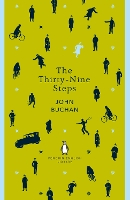
Standfast (1919). The Thirty-Nine Steps (1915), Hannay's earliest and best-known adventure, takes place in the years just before the war. Hannay travels through dangerous enemy territory to see his friend Sandy in Constantinople after being asked to look into reports of an insurrection in the Muslim world.
Once there, he and his companions must foil German efforts to exploit religion as a weapon of victory, which will culminate in the battle of Erzurum. Hannay and his friend Sandy are in the book's opening scene recovering from injuries sustained during the Battle of Loos in November 1915. Senior intelligence officer Sir Walter Bullivant summons Hannay to the Foreign Office.
Bullivant informs Hannay on the Middle Eastern political situation, implying that the Germans and their Turkish allies are planning to incite a Muslim rebellion that will destabilize the region as well as India and North Africa. Robert Baden-Powell and the Russian imperial family both read the book when it was first released as they awaited the outcome of the revolution in 1917.
About This Edition
| ISBN: |
9789357278126 |
| Publication date: |
1st January 2023 |
| Author: |
John Buchan |
| Publisher: |
Double 9 Booksllp an imprint of Repro India Limited |
| Format: |
Paperback |
| Pagination: |
234 pages |
| Primary Genre |
Espionage and spy thriller
|
| Other Genres: |
|
| Recommendations: |
|
About John Buchan
John Buchan led a truly extraordinary life: he was a diplomat, soldier, barrister, journalist, historian, politician, publisher, poet and novelist. He was born in Perth in 1875, the eldest son of a Free Church of Scotland minister, and educated at Hutcheson’s Grammar School in Glasgow. He graduated from Glasgow University then took a scholarship to Brasenose College, Oxford. During his time there – ‘spent peacefully in an enclave like a monastery’ – he wrote two historical novels.
In 1901 he became a barrister of the Middle Temple and a private secretary to the High Commissioner for South Africa. In 1907 he married Susan Charlotte Grosvenor; they had three sons and a daughter. After spells as a war correspondent, Lloyd George’s Director of Information and a Conservative MP, Buchan – now Sir John Buchan, Baron Tweedsmuir of Elsfield - moved to Canada in 1935 where he had been appointed Governor-General.
Despite poor health throughout his life, Buchan’s literary output was remarkable – thirty novels, over sixty non-fiction books, including biographies of Sir Walter Scott and Oliver Cromwell, and seven collections of short stories. In 1928 he won the prestigious James Tait Black Memorial Prize, Britain’s oldest literary prize for his biography of the Marquis of Montrose. Buchan’s distinctive thrillers – ‘shockers’ as he called them – were characterised by suspenseful atmosphere, conspiracy theories and romantic heroes, notably Richard Hannay (based on the real-life military spy William Ironside) and Sir Edward Leithen. Buchan was a favourite writer of Alfred Hitchcock, whose screen adaptation of The Thirty-Nine Steps was phenomenally successful.
John Buchan served as Governor-General of Canada until his death in 1940, the year his autobiography Memory Hold-the-door was published. His last novel Sick Heart River was published posthumously in 1941.
More About John Buchan