Browse audiobooks narrated by Kc Wayman, listen to samples and when you're ready head over to Audiobooks.com where you can get 3 FREE audiobooks on us
Deep Sleep Made Simple: Practical Strategies for Falling Asleep Faster and Staying Asleep Longer
"Do you struggle to fall asleep at night? Do you wake up feeling groggy, restless, or unrefreshed? You’re not alone — millions battle with poor sleep. But the good news is that deep, restorative sleep is within your reach. In Deep Sleep Made Simple, Mathew Breekzee breaks down the science of sleep into easy, practical steps you can apply starting tonight. Backed by research and real-world strategies, this guide gives you the tools to create lasting sleep habits that restore your body and mind. Inside, you’ll discover: ✔ The science of the sleep cycle and why deep sleep is essential for health, memory, and energy ✔ How to create a sleep-friendly environment that supports relaxation and calm ✔ Daily habits that prepare your body and brain for effortless rest ✔ Nutrition and lifestyle choices that either help or harm your sleep ✔ Mind–body techniques like breathing, relaxation, and visualization to ease stress before bed ✔ Long-term strategies for mastering sleep through every stage of life Whether you face restless nights, racing thoughts, or simply want to wake up feeling energized, this book will help you transform your nights into a source of true recovery. Simple. Science-based. Effective. Because better sleep means a better you."
Mathew Breekzee (Author), Kc Wayman (Narrator)
Audiobook
"Literary Titan - Silver Award American Legacy Book Awards, Holiday Fantasy - Finalist “Broxson masterly weaves fiction with the beloved legend of Santa Claus, offering readers an imaginative origin story.” “Its enchanting narrative, complemented by rich descriptions, makes it an ideal tale to revisit every Christmas season.” - Literary Titan “A magical story that explores the origins of Santa Claus in a way never explored before.” “Entertaining, magical, and uplifting story about the wonder of Christmas and its foremost character, Santa Claus.” - Feathered Quill “Love, happiness, and reindeer games! Is a fresh reimagining of children’s favorite gift giver.” “A great introduction of Santa Claus with just the right amount of whimsy and fantasy to get you in the spirit as the air begins to crisp.” -Samantha Hui, Independent Book Review “The enchanting story of a toymaker who reinvents the holiday season. Filled with elements the entire family can enjoy and appreciate, from the presence of angelic influences and magic to the forces that lead to Santa’s first global trip on Christmas Eve, 1840.' Diane Donovan, Sr. Reviewer, Midwest Book Review On Christmas Eve 1839, an extraordinary young toy maker named John Nicholas is visited by his angelic best friend Ben and their mentor, Mr. Rudolph Stern. The angels present John with a mission: to embrace the role of Santa Claus and bring joy to children worldwide. Follow John as he encounters magical elves and meets Jessica, the manager of Santa's castle at the North Pole. Experience the excitement of Santa's first global trip on Christmas Eve, 1840, as the story reaches its heartwarming conclusion."
Terry Broxson (Author), Kc Wayman (Narrator)
Audiobook
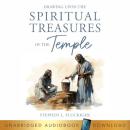
Drawing Upon the Spiritual Treasures of the Temple
"Drawing upon the Spiritual Treasures of the Temple is a captivating exploration of our faith inspired by the visionary teachings of President Russell M. Nelson. As the prophet who has announced more temples than any other in this dispensation, President Nelson invites us to move beyond routine and to better understand the spiritual treasures received through temple ordinances. In this insightful study, Stephen Fluckiger shares the incredible blessings he unearthed after accepting President Nelson's call, including the power to recognize and feel God's divine love, the life-changing influence of consistent temple worship, and the profound understanding of covenant-making central to God's perfect plan. Delve into the ministries and priesthood keys restored by Moses, Elias, and Elijah, and gain greater power to part the veil and receive divine guidance through prayer. From the supernal blessings sealed upon us through the new and everlasting covenant of marriage to the ultimate power to become one with God, this book unveils the richness of temple ordinances. More than an exploration, it serves as a guide, revealing not just the promised treasures but how to harness their power. President Nelson promises that as we do so, our families will be more “united, sealed in the temple of the Lord, and full of love for our Heavenly Father and for Jesus Christ.”"
Stephen L. Fluckiger (Author), Kc Wayman (Narrator)
Audiobook
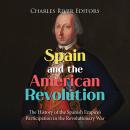
"The American Revolution is replete with seminal moments that every American learns in school, from the “shot heard ‘round the world” to the Declaration of Independence, but the events that led up to the fighting at Lexington & Concord were borne out of 10 years of division between the British and their American colonies over everything from colonial representation in governments to taxation, the nature of searches, and the quartering of British regulars in private houses. From 1764-1775, a chain of events that included lightning rods like the Townshend Acts led to bloodshed in the form of the Boston Massacre, while the Tea Party became a symbol of nonviolent protest. The political and military nature of the Revolutionary War was just as full of intrigue. While disorganized militias fought the Battles of Lexington & Concord, George Washington would lead the Continental Army in the field while men like Thomas Jefferson drafted the Declaration of Independence in Philadelphia and Benjamin Franklin negotiated overseas in France. French forces would play a crucial role at the end of the war, and the Treaty of Paris would conclude the Revolution with one last great surprise. The British surrender at Yorktown marked the end of major operations during the conflict, and many are familiar with the major role the French forces played there, and the extent of France’s participation in general, but few know the extent of other countries’ participation in the American Revolution. Among the other European powers, few had as big an influence in the Americas as Spain, and the Spanish Empire, though declining by the late 18th century, still possessed colonial holdings in the region. In fact, through political intrigue and past military efforts, the Spanish would have a say across much of the future United States during this period, from Florida to New Orleans, and all of it impacted American history over the coming decades after the Revolutionary War ended."
Charles River Editors (Author), Kc Wayman (Narrator)
Audiobook
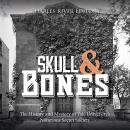
Skull and Bones: The History and Mystery of Yale University’s Notorious Secret Society
"Conspiracy theories, and particularly the belief that elements of the world are secretly controlled by individuals or groups, have been around for as long as people have lived in groups. Perhaps that’s inevitable - after all, those who are excluded from power are very likely to be inclined to see their position not as an outcome of their own choices or situation but because of the secret machinations of shadowy groups. When members of a secret society are some of the wealthiest and most powerful people in the world, it’s easy to see why rumors persist about the group, and among such secret societies, few have engendered interest quit like Skull and Bones, an undergraduate senior society at Yale University. Its members have included American presidents and the CEOs of some of the largest companies in the world, but the group’s secrecy has maintained itself to the extent that some of the membership is virtually all anyone knows for certain, leaving most of what is found in books and websites speculation and unproven legend. Is there any truth to the suggestion that this society is linked to the 18th century Illuminati? Is it a mafia-like organization that intends to see the creation of a New World Order? Why, during its almost 200-year history, has no member of this group ever talked publicly about what it involves? Have those who attempted to reveal more really been subject to intimidation, threats of violence, and even murder? Is the skull of the legendary Geronimo really kept within the group’s secret lair? Writing about any secret society is difficult, and writing about a group that has maintained absolute privacy for a long time is even more difficult."
Charles River Editors (Author), Kc Wayman (Narrator)
Audiobook
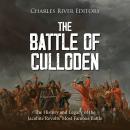
The Battle of Culloden: The History and Legacy of the Jacobite Revolts’ Most Famous Battle
"The Jacobites conjure up many images to 21st century Britons, including romantic heroism, the Outlander series, and Bonnie Prince Charlie as the doomed hero of the cause, but Jacobitism was a cause that had far reaching consequences across 18th century Europe. The Jacobites were not only supporters of the exiled Stuart monarchy, but also against the political and religious settlements agreed to across the British Isles. As Jacobite historians such as Daniel Szechi and Frank McLynn have noted, the specter of the Jacobite threat was present for the British government and monarchy in their dealings with European powers throughout the 18th century. This was especially true in France, the country that supported the exiled Stuarts and gave them a home until 1714. This soured the French monarchy’s relationship with Britain, and the Hanoverian kings who replaced the Stuarts were always aware of it. Of all the fighting conducted by the Jacobites, the Battle of Culloden, fought on April 16, 1746, was probably the most famous battle of them all, and it was a complete disaster for the Jacobite army. The government army outnumbered and outgunned the Jacobites, and when snow fell that morning, it left the battlefield wet and boggy. The exposed field also meant there would be nowhere for the Jacobites to avoid the enemy’s gunfire. The battle began around 1:00 p.m. with British artillery fire that the Jacobites struggled to respond against, and the famous Highland charge employed by the Scottish clans was hopeless in a boggy field. Their opposition had learned from previous encounters by attacking their opponent on the right instead of straight ahead, which bypassed the Highlanders’ shield. The battle lasted about an hour, and in that time the Jacobites lost about 2,000 men, a resounding defeat that marked the end of the Jacobites’ struggle to restore a Stuart to the throne."
Charles River Editors (Author), Kc Wayman (Narrator)
Audiobook
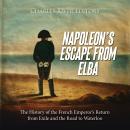
"Although Napoleon was exiled, he was allowed to retain the title of Emperor and was given de facto control over Elba. But it should not be surprising the man who once ruled Europe was not content with the island of Elba. Separated from his family and cast away on a small island, Napoleon attempted suicide by taking a poison pill, but he had first carried the pill with him on the retreat from Moscow, rightly concerned about an uncertain fate at the time. The aging process had fatally weakened the pill, which stopped it from fatally weakening Napoleon. Though the emperor busied himself developing the island’s industries and had established a miniature army and navy, he must still have found time to brood upon his situation and could not have helped but think of himself as reduced to laughing stock. The “Emperor of Elba” was a poor title for a man who had once ruled over more than half of mainland Europe. Even some of Napoleon’s old Marshals, like Murat, now controlled more territory than the man who had raised them in the first place. To add insult to injury, the salary he had been promised in the Treaty of Fontainebleau and that was meant to keep him in relative luxury was often late and sometimes failed to arrive at all. Coupled with his deteriorating health and the express refusal of the Austrian court to let him speak or write to his wife and son, Napoleon must have felt himself well and truly slighted. Beaten, but not defeated, he resolved to show the Coalition powers he could still make Europe tremble. Of all the incredible military feats Napoleon accomplished, none were more impressive than his escape from Elba and his return to France, which was literally a bloodless revolution. On February 26, 1815, Napoleon escaped from Elba, and in a desperate gamble, he landed on the French mainland with less than a thousand men and marched on Paris."
Charles River Editors (Author), Kc Wayman (Narrator)
Audiobook
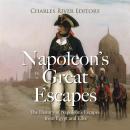
Napoleon’s Great Escapes: The History of Napoleon’s Escapes from Egypt and Elba
"In addition to being unable to be reinforced or supplied by sea, Napoleon's ambitions to establish a permanent presence in Egypt were further frustrated by a number of uprisings. Early in 1799, Napoleon advanced against France’s erstwhile enemy, the Ottoman Empire, invading modern Syria (then the province of Damascus) and conquering the cities of Gaza, Jaffa, Arish and Haifa. However, with the plague running rampant through his army and his lines of supply from Egypt stretched dangerously thin, Napoleon was unable to destroy the fortified city of Acre and was forced to retreat. The retreat cost him almost all of his wounded as, harassed by enemy forces, he was forced to abandon most of his casualties to the Ottomans’ mercy, or lack thereof. Most of the wounded were tortured and beheaded. Napoleon harbored all kinds of delusions about his time in Egypt that were not based in reality, but he definitely left a lasting legacy in the region, one he would never live to see or appreciate. By shifting the theater of operations to Africa and the Middle East, Napoleon inadvertently ensured the Europeans would fight there in the future. Of all the incredible military feats Napoleon accomplished, none were more impressive than his escape from Elba and his return to France, which was literally a bloodless revolution. On February 26, 1815, Napoleon escaped from Elba, and in a desperate gamble, he landed on the French mainland with less than a thousand men and marched on Paris. What happened next was truly remarkable. An infantry regiment was sent to intercept Napoleon and his men, but Napoleon rode up to them alone and shouted, 'Here I am. Kill your Emperor, if you wish.' Upon seeing their once invincible leader before them, the soldiers mutinied and went over to his side en masse. Other corps soon followed, and in no time at all Napoleon found himself at the head of an army marching on Paris."
Charles River Editors (Author), Kc Wayman (Narrator)
Audiobook
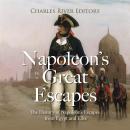
Napoleon’s Great Escapes: The History of Napoleon’s Escapes from Egypt and Elba
"Napoleon harbored all kinds of delusions about his time in Egypt that were not based in reality, but he definitely left a lasting legacy in the region, one he would never live to see or appreciate. By shifting the theater of operations to Africa and the Middle East, Napoleon inadvertently ensured the Europeans would fight there in the future, and the French occupation impressed upon the locals the necessity of catching up to the modern world in terms of technology. Ancient tactics could not prevail against a modern army, no matter the numbers, but while that was a lesson Napoleon consistently taught his enemies in Egypt and the Levant to their detriment, the French also sped up the occupied populations’ technological advances as well. Of all the incredible military feats Napoleon accomplished, none were more impressive than his escape from Elba and his return to France, which was literally a bloodless revolution. On February 26, 1815, Napoleon escaped from Elba, and in a desperate gamble, he landed on the French mainland with less than a thousand men and marched on Paris. What happened next was truly remarkable. An infantry regiment was sent to intercept Napoleon and his men, but Napoleon rode up to them alone and shouted, 'Here I am. Kill your Emperor, if you wish.' Upon seeing their once invincible leader before them, the soldiers mutinied and went over to his side en masse. Other corps soon followed, and in no time at all Napoleon found himself at the head of an army marching on Paris. The newly reinstituted Bourbon monarch fled the city, and so, with barely a shot fired, Napoleon found himself enthroned as emperor once more. In an astonishing feat of political chutzpah and military organization, within three months he had seized power anew and rebuilt his veteran forces to a strength of 200,000 men. Of these, 128,000 were assembled into the Armee du Nord, under Napoleon’s personal command."
Charles River Editors (Author), Kc Wayman (Narrator)
Audiobook
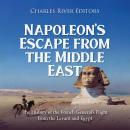
"In addition to being unable to be reinforced or supplied by sea, Napoleon's ambitions to establish a permanent presence in Egypt were further frustrated by a number of uprisings. Early in 1799, Napoleon advanced against France’s erstwhile enemy, the Ottoman Empire, invading modern Syria (then the province of Damascus) and conquering the cities of Gaza, Jaffa, Arish and Haifa. However, with the plague running rampant through his army and his lines of supply from Egypt stretched dangerously thin, Napoleon was unable to destroy the fortified city of Acre and was forced to retreat. The retreat cost him almost all of his wounded as, harassed by enemy forces, he was forced to abandon most of his casualties to the Ottomans’ mercy, or lack thereof. Most of the wounded were tortured and beheaded. Napoleon harbored all kinds of delusions about his time in Egypt that were not based in reality, but he definitely left a lasting legacy in the region, one he would never live to see or appreciate. By shifting the theater of operations to Africa and the Middle East, Napoleon inadvertently ensured the Europeans would fight there in the future, and the French occupation impressed upon the locals the necessity of catching up to the modern world in terms of technology. Ancient tactics could not prevail against a modern army, no matter the numbers, but while that was a lesson Napoleon consistently taught his enemies in Egypt and the Levant to their detriment, the French also sped up the occupied populations’ technological advances as well. Perhaps more importantly, the Egyptian Scientific Institute introduced numerous modern innovations, perhaps most importantly the printing press, which in turn encouraged literacy. This brought about the emergence of nationalism and liberalism, leading eventually to the establishment of Egyptian independence and modernization under the rule of Muhammad Ali Pasha in the first half of the 19th century."
Charles River Editors (Author), Kc Wayman (Narrator)
Audiobook

The Bohemian Club: The History of One of America’s Most Secretive and Controversial Private Clubs
"Conspiracy theories, and particularly the belief that elements of the world are secretly controlled by individuals or groups, have been around for as long as people have lived in groups. Perhaps that’s inevitable - after all, those who are excluded from power are very likely to be inclined to see their position not as an outcome of their own choices or situation but because of the secret machinations of shadowy groups. One topic that has been a constant in Internet debates is the group known as the Bohemian Club. Founded in 1872 in San Francisco, this began as a club for journalists with an interest in the arts, but over the subsequent 150 years, it appears to have changed into a vehicle for the annual conclave of some of the most wealthy and powerful men on the planet. Each year, hundreds of men gather in a luxurious camp known as Bohemian Grove in a remote forest in California to do something. Just what it is they do is a secret, which has inevitably led to some intense speculation. Is it no more than a fun-filled frolic where the super-rich and powerful can go to escape their cares for a few days, or is it something more sinister, a cabal in which secret decisions are made that affect everybody else? Finding out about the Bohemian Club and the annual gatherings at Bohemian Grove isn’t easy. Most of those invited to join this exclusive club remain members until they die, meaning there are no disaffected former members willing to talk about what goes on there. Current members are unwilling to talk about the club or its activities. It’s this secrecy that has led to some bizarre speculation about just what it is that happens in Bohemian Grove every summer. Coming up with answers is no easy feat, as the group takes its secrecy seriously and members have the wealth and power to make sure the club’s business stays secret."
Charles River Editors (Author), Kc Wayman (Narrator)
Audiobook

"The Byzantine Empire existed for over a thousand years, with a history spanning from the division of the Roman Empire in 395 until the Ottoman conquest of Constantinople in 1453. It was formed from the previous Eastern Roman Empire, and during its long existence, the Byzantine inhabitants were very proud to call themselves Romans. However, many things changed during the long lifespan of the Byzantine Empire, starting with its Hellenization in the 6th century. The use of the Latin language diminished and Greek took its place, while the typical Roman culture gave way to a more Hellenistic one. The Hellenization of Byzantium was detrimental to the relationship with the Holy Roman Empire, and the Christian world from that point would be split in two. The subsequent strengthening of the Orthodox Church caused many civil wars and conflicts to arise during the centuries, which shattered and reshaped the territory time after time. By the end of the Byzantine Empire’s existence, the old age had weakened both the state and church, making it an easy target for invading forces. The most notable invaders were the the Turkish-speaking Seljuks, led through a series of battles by Kutalmishouglu Suleiman, who supported different usurpers against the Byzantine emperor. The expansion of the Seljuks was so successful that when Suleiman died, he had put all of Bithynia under his control as well as several important harbor towns along the shores on the Asian side of Bosphorus. With that accomplishment, he had managed to separate the Byzantines living in Anatolia from their emperor in Constantinople. This immediately weakened the unity of the Byzantine Empire. "
Charles River Editors (Author), Kc Wayman (Narrator)
Audiobook

©PTC International Ltd T/A LoveReading is registered in England. Company number: 10193437. VAT number: 270 4538 09. Registered address: 157 Shooters Hill, London, SE18 3HP.
Terms & Conditions | Privacy Policy | Disclaimer
Join our community for the latest bookish news, reading recommendations, exclusive opening extracts, author events and competitions. It\'s all free. And enter a monthly draw to win a £50 Gift Card. See past winners here
Join Our Community