Browse audiobooks by Charles River Editors, listen to samples and when you're ready head over to Audiobooks.com where you can get 3 FREE audiobooks on us
Epaminondas: The Life and Legacy of Ancient Greece’s Greatest General
"Modern perceptions of Classical Greece are almost invariably based on Athens and Sparta, but the city-state of Thebes was also a key player in the history of the region during that period, and by the 4th century B.C., Thebes was the major power in Greece for many of the years preceding the emergence of Macedon. The reasons for so little being known about Thebes and its contributions to ancient Greek civilization are complex, but the fact that it was totally destroyed by Alexander the Great is certainly one. Those points notwithstanding, Thebes was an important city-state, served as the scene of many of the great myths of Greece, and developed a reputation for military might and tactical genius that was well-deserved. Thebes’ rise and fall are subjects well worthy of study, and ones that provide invaluable insights into how ancient Greek politics worked, especially in relation to the constantly changing pattern of alliances. Thebes also provided inspirational stories of individual and group heroism in the face of huge odds. At the center of it all was a general and statesman who changed the face of Greece on the battlefield and off of it, revolutionizing ancient warfare in the process. Over the course of a little more than a decade, Epaminondas shattered Spartan military dominance, liberated entire populations from centuries of slavery, and transformed his homeland from a regional power to a powerhouse at the center of Greek affairs. His victories ushered in a new era that altered the balance of power that had long defined Greece, and he established a new political order that, while short-lived, drastically reshaped the region. In fact, Epaminondas’ military lessons were passed down to a Macedonian noble who was held as a hostage in Thebes through his childhood: Philip II of Macedon, who initiated the rise of the Macedonian kingdom that his son Alexander would turn into the largest empire the world had ever seen. "
Charles River Editors (Author), Jim Walsh (Narrator)
Audiobook
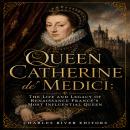
Queen Catherine de' Medici: The Life and Legacy of Renaissance France’s Most Influential Queen
"For 300 years, the memory of France’s Queen Catherine de’ Medici came down to posterity wrapped in poison. She was the wicked Italian queen of the storybooks, a Florentine schemer who kept a cabinet of venoms, a stable of astrologers, and killed her enemies with a pair of perfumed gloves or a poisoned book. She was accused of plotting the great slaughter of French Protestants that stained the feast of Saint Bartholomew in 1572. As the mother of three French kings, she was depicted as a Machiavelli in a black widow’s gown, using her twisted genius to bend the will of her three weak sons. Her legacy left her cast as one of the most durable villainies in European history, but, in most of its details, it is mostly fiction. The woman behind the legend was arguably less lurid and more remarkable. Catherine de’ Medici was born in Florence, orphaned within weeks of her birth, married off as a teenager to a French prince who never loved her, and ignored for a quarter of a century at a court that regarded her as a foreign merchant’s daughter with no royal blood. Then, in her middle age, chance and catastrophe placed the government of France in her hands, and she held it, against every probability, for nearly 30 years. As the mother of the future kings of France, she ruled in their names as a regent and steered the French monarchy through the longest and bloodiest religious wars in its history, not as a fanatic for either faith but as a pragmatist who cared above all for the survival of the crown and her sons who were fated to wear it. She negotiated, married her children across the courts of Europe, built palaces, staged spectacles, and traveled the roads of a divided kingdom in endless pursuit of a peace that always seemed to slip away. That she failed in the end is part of her tragedy. The dynasty she fought to preserve, the House of Valois, was extinguished within months of her own death, and the throne passed to the rivals she had spent her life trying to contain. "
Charles River Editors (Author), Victoria Woodson (Narrator)
Audiobook
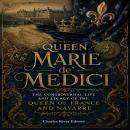
Queen Marie de' Medici: The Controversial Life and Legacy of the Queen of France and Navarre
"In the summer of 1642, an old woman died in a rented house in Cologne, far from the country she had once ruled, attended by a small and shabby household and pressed by debts she could not pay. She had been a French queen, the regent of the kingdom, the wife of one of the greatest French kings, the mother of another, a daughter of the Medici, and a granddaughter of emperors. She had commanded armies, reversed the policy of a dead king, married her children into the royal houses of Europe, and raised from obscurity the most formidable minister in France’s long history. At the end, she died in exile and near poverty, abandoned by her son and broken by the very statesman she had made. She was a queen with no court and a mother with no welcome in her own land. Her name was Marie de’ Medici, and her death closed one of the strangest and most cautionary tales of the 17th century. At the start, it seemed she had been born to have a different destiny. A century after her family seized the reins in Florence, and two generations after another Florentine Medici, Catherine de’ Medici, had governed France as queen mother through its wars of religion, Marie de’ Medici followed the same path from the banks of the Arno River to the throne of the Bourbons. She came to France as a bride bought with a fortune, intended to mend the finances of a king who needed her dowry more than he desired her as a person. She bore him the heir he required, endured his mistresses and his coldness, and was crowned at last the day before an assassin’s knife made her a widow and a ruler. For seven years, she governed France in her young son’s name, and for years after that she fought him and his minister for the power she had lost, until the long struggle ended in her ruin. History has not been kind to her, and much of the unkindness is deserved. As a ruler, Queen Marie de’ Medici was stubborn, shortsighted, and easily led, and she squandered much of the strength her murdered husband labored to build."
Charles River Editors (Author), Victoria Woodson (Narrator)
Audiobook
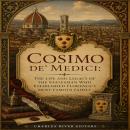
"Most historians credit the city-state of Florence as the place that started and developed the Italian Renaissance, a process carried out through the patronage and commission of artists during the late 12th century. If Florence has received its due credit, much of it belongs to the House of Medici, the family dynasty of Florence that ruled at the height of the Renaissance. The dynasty held such influence that some of its family members even became pope, and it all started with a banker colloquially known as Cosimo the Elder. Cosimo’s trajectory was nothing short of incredible. In the spring of 1433, he sat in a small stone cell high in the tower of the Palazzo della Signoria, listening to the bells of the city he had spent his life serving and waiting to learn whether he was to be beheaded. He was 43 and held no public title of consequence, commanded no army, and had taken pains for most of his life to appear as one prosperous citizen among many. Nonetheless, the men who then governed Florence had decided that he was too dangerous to leave at liberty, and for several days the question before the city was not whether Cosimo possessed power but whether the republic dared to kill him for it. Instead of being executed, within 18 months, he returned from exile to a city that received him as a deliverer, and for the 30 years that followed, he ruled Florence more completely than any king ruled a kingdom, despite never assuming a crown, a permanent office, or a public claim to authority. He governed through a network of friendships, debts, favors, and quiet arrangements so subtly that foreign observers struggled to describe it, but what they saw was plain enough even when the mechanisms by which Cosimo maintained control were not. The peace and the wars of Italy answered to his judgment, and the powerful leaders across the peninsula carried their business to his house, settling across a banker’s table the questions other cities settled in council chambers and throne rooms."
Charles River Editors (Author), Victoria Woodson (Narrator)
Audiobook

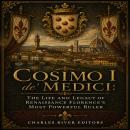
Cosimo I de' Medici: The Life and Legacy of Renaissance Florence’s Most Powerful Ruler
"Inevitably, given the time and place, the Medici’s power in Florence was frequently threatened, and over the course of several turbulent decades, the family went through a sequence of exiles and restorations, until things finally reached a breaking point in January 1537. That month, Duke Alessandro de’ Medici, the first member of the dynasty to control Florence as an open lord rather than a de facto ruler, had been killed by his cousin Lorenzino, who fled the city the same night and left no clear heir behind him. Many of the leading men of Florence, who had suffered through one Medici duke and despised him, looked about for someone they might raise in his place and, this time, govern on behalf of by making him a puppet. They settled on 17-year-old Cosimo de’ Medici, and, to be fair, almost nothing about him suggested he would become the powerful ruler he did. He had grown up far from the city, in the hill country where his branch of the family had its roots, as the son of a famous soldier and a devout mother. He had no training in statecraft and no faction of his own, which is precisely why the men who chose him chose him did so. As a Medici by blood who might lend their arrangements legitimacy while they kept the substance of power in their own hands, he seemed to be a harmless choice. It was the gravest misjudgment of their careers and a seminal moment in the history of Italy, because in the span of months, the boy shattered an army of exiles in the field, sent the leaders of the old republic to the block, and began the slow, merciless work of making himself sole master of Florence. Within 20 years, he had conquered the rival republic of Siena and ruled nearly all of Tuscany, and in time, he had won from the pope a crown and a title no Florentine had ever carried as the Grand Duke of Tuscany. From that position of power, he established a royal dynasty that controlled Tuscany for two centuries. "
Charles River Editors (Author), Victoria Woodson (Narrator)
Audiobook
Johannes Vermeer: The Life and Career of One of the Dutch Golden Age’s Greatest Painters
"Johannes Vermeer has fascinated a growing number of 21st century viewers with his most intimate depictions of the nature of human existence. The formal perfection of his compositions and the precision of his painting technique, expressing his fantastic narrative ability and accurate realism, have become a quintessential characteristic of the Dutch Golden Age of painting. Nearly 400 years later, Vermeer is still celebrated for his incomparable sense of timelessness, human dignity and unprecedented talent for creating luminosity and purity of color in his scenes. Although his paintings may seem superficially simple at first, people still identify with the handful of themes from everyday life he covered. He was a highly respected artist of his time, but by the end of the 17th century, Vermeer had mostly faded into obscurity, which is why not much is known about the man he was or how he became in artist. His life as a family father, as an artist and as a man living in the 17th century Delft has been reconstructed with the help of notary documents, but plenty of aspects about his life remain unknown. Though he was a renowned artist in his hometown during his life, Vermeer died impoverished, and after his death, he was quickly forgotten. In fact, throughout the 18th century, some of his paintings were even attributed to some of his more productive contemporaries. The revival of Vermeer’s reputation did not begin until the 19th century, when art historians started to recognize the extraordinary quality of his surviving works. Once Vermeer's paintings were rediscovered and became appreciated around the world, his artistic genius became clear, and his paintings were compared with the new art of photography. The mystique of the paintings he produced by using the most expensive pigments (such as ultramarine) and the technique of painting with an optical device known as a camera obscura made Vermeer an art pioneer, and it helped distinguish his work from those of his peers."
Charles River Editors (Author), KC Wayman (Narrator)
Audiobook
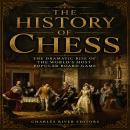
The History of Chess: The Dramatic Rise of the World’s Most Popular Board Game
"On the afternoon of May 11, 1997, in a television studio on the 34th floor of a building in midtown Manhattan, one of the strongest chess players in history sat down to play the sixth and final game of a match he had expected to win. Garry Kasparov was 34 and had held the world championship for 12 years, making his name a synonym for the human mind operating at the absolute edge of its power. Across the board from him sat an opponent with no mind at all. The opponent was a black tower of processors built by IBM and named Deep Blue. It did not sit, because it could not sit - it was represented at the board by a quiet engineer who moved the pieces on its behalf. It calculated roughly 200 million positions per second and could not grow tired across a long session. It is tempting to treat that afternoon as the climax of chess history, the moment the game arrived at its final destination. But perhaps it is better understood as a single frame in a far longer film, one that began roughly 15 centuries earlier and half a world away, on the plains of northern India, where the game did not yet carry a name recognizable to modern societies and the pieces stood not for bishops, queens, and rooks, but for elephants, chariots, and foot soldiers. The history of chess is, in a true sense, a history of globalization. No other game has crossed so many borders, come in so many variations, or worn so many costumes. It was carried out of India by merchants and diplomats, adopted by the Persian nobility, reshaped by the scholars of Islam, smuggled into Christian Europe along three separate roads, denounced from the pulpit and then preached from it, transformed in a single Spanish generation into something fast and dangerous, refined into a science by a stubborn theorist in the 19th century, made into a political and propagandist instrument of state by the Soviet Union, and at last carried into the circuitry of a machine that beat the best."
Charles River Editors (Author), Steve Knupp (Narrator)
Audiobook
"On the night of April 1, 1951, in six republics along the western edge of the Soviet Union, soldiers moved into villages and towns while the people inside their houses slept. They came with dogs and machine guns, and they carried lists on which names and addresses had already been written. The lists had been compiled over the preceding months by the Ministry of State Security, the agency the Soviets called the MGB. The men knocked, and when the doors opened, they read out an order. The order dictated that the family in front of them was being resettled, and the most important word in the documents was navechno, meaning forever. The families on those lists were Jehovah’s Witnesses, and over the span of two days in the western republics, and a week later across Ukraine, Soviet security forces seized 9,793 people, loaded them into freight cars built for transporting cattle, and sent them east into Siberia. The MGB called it Operation North, and it ended up being the largest deportation of a single religious group in the history of the Soviet Union, carried out on the direct order of Joseph Stalin. The Jehovah’s Witnesses were dispersed across the special settlements of Tomsk Oblast, Irkutsk Oblast, and Krasnoyarsk Krai, regions of forest and deep cold where the planners believed a small foreign faith could be left to die out among strangers. The families arrived to find snow still on the ground in late April, and many spent the first winter in shelters they dug into the earth, keeping themselves alive on nettles and the inner bark of trees. Of course, some had already died in the railcars, and others died in the initial months after their arrival. The bare facts of the operation are striking enough on their own, but they sit within a larger irony that gives the story its shape. The Soviet state was an ascendant empire that had crushed far greater enemies than a few thousand pacifist believers, but it ended up proving unable to break the Jehovah's Witnesses. "
Charles River Editors (Author), Steve Knupp (Narrator)
Audiobook
Belle Gunness: The Life and Legacy of America’s Most Notorious Female Serial Killer
"There was a farm outside La Porte, Indiana, that no longer exists. The buildings burned to the ground on the morning of April 28, 1908, but what the fire left behind was a cellar full of horrors that the people of La Porte and the country at large spent the better part of that spring trying to comprehend. Investigators found the remains of several bodies that had been dismembered, wrapped, and buried with the kind of efficiency that suggested someone had done the work many times before. Remains were found in the cellar, the yard, and in the hog pen, and every time authorities believed they had found everything, they found more. The case of Belle Gunness is one of the most extraordinary in the history of American crime in ways that go beyond the staggering body count. It is astonishing because of who she was and how she operated as a Norwegian immigrant widow who understood, with a clarity that bordered on genius, the particular loneliness of immigrant men far from home. For reasons that can only be speculated, she weaponized that understanding to create a murder operation that ran for years in a quiet Indiana town without attracting the kind of attention that should have been impossible to avoid. The case is also extraordinary because the question of whether Gunness died in that fire could not be resolved by a 2007 DNA test, so the case file is officially unsolved, even as modern investigators and historians occasionally returned to the La Porte farm and its ashes for more than a century. The story of how a girl born into poverty in a Norwegian fishing village became the most prolific female serial killer in American history, and how she may or may not have gotten away with all of it, began with a boat, the ocean, and the grisly determination that the life she was born into was not the life she intended to keep."
Charles River Editors (Author), Steve Knupp (Narrator)
Audiobook
Themistocles: The Life and Legacy of Ancient Greece’s Greatest General
"The ancient Greeks have long been considered the forefathers of modern Western Civilization, but the Golden Age of Athens and the spread of Greek influence across much of the known world only occurred due to some of the most crucial battles of antiquity: the Battle of Marathon and the Battle of Salamis. Those battles turned the tide in the Greeks’ favor against the Persians in the Persian Wars and ultimately played a role in Athens’ rise to a preeminent role in the Hellenic world. No general played a bigger role in the Persian Wars than Themistocles, the Athenian hero who commanded soldiers at both Marathon and Salamis. Both his contemporaries and historians have remembered him as an ambitious, brilliant, and deeply controversial architect of Athens' rise to greatness as the city-state transitioned into the most formidable naval power of the eastern Mediterranean. His career unfolded during an age of extraordinary upheaval, when the expanding Achaemenid Empire threatened the independence of the Greek world, but as crucial a role as he played in those decisive conflicts, he was a major political influence as well. From an early stage in his career, Themistocles recognized the longevity of Athens and its future prosperity would not be secured solely by the hoplite soldiers, but instead by the city's ability to command the sea. The policies he often argued for in the Assembly ultimately laid the foundations for the vast Athenian fleet that later allowed his city-state to dominate the eastern Mediterranean during its Golden Age. But despite being regarded as one of antiquity's greatest figures and a savior in his own right, Themistocles remained an intensely divisive figure even during the era in which he lived. To many Athenians, he was a visionary whose intelligence, leadership and patriotic nature saved not only Athens, but potentially the Greek world from Persian conquest."
Charles River Editors (Author), Victoria Woodson (Narrator)
Audiobook
Cincinnatus: The Life and Legacy of the Roman Leader Who Saved the Republic and Gave Up Power
"Among the figures of early Roman history, few stand out quite like Lucius Quinctius Cincinnatus, a man who to his contemporaries stood as the very image of the Roman Vir Bous (the Good Man). His life, whether viewed through the lens of ancient writers or treated as something of a foundational myth, has shaped Western thought surrounding civic duty and the restraint of power for more than 2,000 years. Cincinnatus lived during the precarious infancy of the Roman Republic, a time when the people had recently overthrown the monarchy and created a new system designed to balance power between competing interests. Naturally, the fear of an oppressive or incompetent monarchy had not yet fully diminished, and to make things worse, the period was plagued by the existential threat of invasions at the hands of neighboring Italic tribes. Internally, the Republic was not entirely stable, because its institutions were still in a process of evolution and social tensions between the patrician elite and the plebeian population often resulted in disorder. At any moment, the pressure might have forced the Republic itself to collapse. Despite the tensions, or because of them, it was within this atmosphere of uncertainty that the core ideals of Rome started to take shape: personal sacrifice, duty to the state, and an unwavering commitment to the common good. These are the very traits that Cincinnatus came to embody as a citizen-soldier who took up arms in defense of the state, and once the danger had passed, he returned without complaint to his modest life. In the 5th century BCE, he is described as toiling away on a small plot of land after a series of personal misfortunes drew him away from public life, and it was from this setting that he was summoned when a great crisis struck Rome. The Republic, left with no other option, turned to Cincinnatus and appointed him dictator."
Charles River Editors (Author), KC Wayman (Narrator)
Audiobook
The Epicureans: The History and Legacy of Ancient Greece’s Most Controversial Philosophers
"Although the school of philosophy started by Socrates and championed by Plato and Aristotle continues to be the most famous, other schools of thought began to branch, including the Epicureans and Cynics. In the 3rd century B.C., Stoicism arose in response to and under the influence of these older schools, combining many of the best theories from each into a more cohesive whole. With a greater flexibility and more practical application to everyday life, Stoicism quickly became a very popular school of thought, a growth made exponential by its introduction to the Romans. The Stoics weren’t the only ones who challenged Epicureans, because few philosophical schools in the ancient world were as controversial. To their enemies, the Epicureans were essentially hedonistic heretics, making them enemies of traditional morality whose teachings threatened the social and religious foundations of Greek civilization. To their admirers, however, the Epicureans represented one of antiquity’s most rational philosophical movements, offering ordinary people a path toward happiness, peace of mind, and freedom from fear. Though often remembered today merely for the modern word “epicurean,” which has become associated with luxurious food and refined tastes, the actual philosophy of Epicureanism was far more complex and intellectually ambitious than simple indulgence. At its heart, Epicureanism sought to answer life’s most pressing issues, namely how to achieve happiness and pleasure while avoiding physical pain and mental anguish in a world of uncertainty. To offer answers, Epicurus founded his philosophical school in Athens around 306 B.C. during one of the most turbulent periods in Greek history. The Classical Era was gone, replaced by the vast kingdoms created after the conquests of the Macedonians, and traditional political life had become unstable, warfare remained constant, and many Greeks experienced growing uncertainty about religion, identity, and the future."
Charles River Editors (Author), Steve Knupp (Narrator)
Audiobook
©PTC International Ltd T/A LoveReading is registered in England. Company number: 10193437. VAT number: 270 4538 09. Registered address: 157 Shooters Hill, London, SE18 3HP.
Terms & Conditions | Privacy Policy | Disclaimer
Join our community for the latest bookish news, reading recommendations, exclusive opening extracts, author events and competitions. It\'s all free. And enter a monthly draw to win a £50 Gift Card. See past winners here
Join Our Community