Browse audiobooks narrated by Jonathan Booth, listen to samples and when you're ready head over to Audiobooks.com where you can get 3 FREE audiobooks on us
"The shadow of an ancient evil stirs. Creatures of legend walk once more. And two unlikely heroes must rise—or their world will fall. For three hundred years, the Five Realms have known peace. Until now. Elodi never sought power. Yet after her father’s sudden death, she is forced to lead her people—burdened by doubt, her authority questioned, and tested when a horror from the past storms Calerdorn’s gates. But what she faces is only the beginning. Far greater dangers gather beyond her borders. Toryn, a farmhand haunted by a legacy that could claim his life, is driven from his home and thrust onto a perilous path he never wanted. When a long-forgotten power reveals the truth of his bloodline, he must decide whether to flee his fate… or become it. As old stories awaken and long-dormant forces move once more, their separate journeys reveal a deeper threat rising across the land—one the Archon refuses to face. Mountains lie between them. Leagues stretch long and perilous. And the cost of failure will be everything they hold dear."
R.E. Palmer (Author), Jonathan Booth (Narrator)
Audiobook
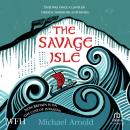
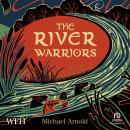
"The Romans have landed in Britain. The invasion is over, but the war has just begun. The legions march inland, but progress is slow, hampered by vast, ancient forests, swamps and treacherous rivers that must be crossed. But, guided by traitorous Celts blinded by self-interest, progress they do. Marshalling the fractious tribes, Caratacos plans the first major battle for the only fording point of the mighty Vaga River. Meanwhile, Cullen, now a warrior of renown, is dispatched by Aoife the Dread to seek out a mystic religious totem - the Whetstone of the smith god, Gobannos - which could help unite the bickering clans; a secret weapon of sorts. But will he be able to find the stone and return it to Aoife before the two great armies clash? The compelling second novel in the Savage Isle series, from the author of the Stryker Civil War novels."
Michael Arnold (Author), Jonathan Booth (Narrator)
Audiobook
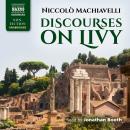
"Famous for his political treatise The Prince, which advises would-be kings on the best strategies for governing, Machiavelli turns his attention to the inner workings of a successful republic and the people necessary to maintain it in his Discourses on Livy. Comparing contemporary societies to ancient Rome, with examples from Livy’s The History of Rome, Machiavelli tries to identify the foundations of a well-working republic, examining social and political aspects, such as voting, citizenship, warfare and religion. The core belief in the Discourses is that passion and conflict will always dominate, and that a combination of social structures and clear, objective thinking based on history is necessary to compel people towards a common good. The book is also notable for its discussion of political conspiracies, which dominates the longest chapters, as Machiavelli explores political upheaval and the hidden springs of politics. Many of the book’s ideas are still relevant today, and many argue that Machiavelli’s true opinions can be found here. Its sweeping defence of republican liberty made the book as controversial in its own time as The Prince is today."
Niccolo Machiavelli (Author), Jonathan Booth (Narrator)
Audiobook
The Savage Isle: The Savage Isle
"From a ruined land, a hero will rise. Britannia, 42AD. The wild island at the fringe of the world is in chaos. Into the turmoil marches the mightiest war machine in history: the legions of Rome. In a land torn apart by conflict, an orphaned boy must come of age within a tribe he despises."
Michael Arnold (Author), Jonathan Booth (Narrator)
Audiobook
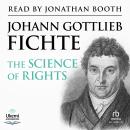
"The Science of Rights (originally in German: Grundlage des Naturrechts nach Principien der Wissenschaftslehre) by Johann Gottlieb Fichte, was originally written in 1796 and laterly translated by Adolph Ernst Kroeger into English."
Johann Gottleib Fitche (Author), Jonathan Booth (Narrator)
Audiobook
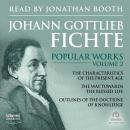
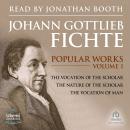
"Though born to a poor but pious family of ribbon weavers in in Saxony in 1762, Johann Gottlieb’s exceptional intelligence was apparent from an early age. Remarkably, from this humble background, he earned himself a respected place in the pantheon of late 18th and early 19th century German philosophers. That fact that he is placed between Kant and Hegel, yet still retains a significant and individual presence, says much about his work and personality. He became known, especially, for initiating the concept of ‘German idealism’ (linked with Romanticism and the revolutionary politics which emerged after the Enlightenment). In the 20th and 21st century, his importance and contribution to Western philosophy has been increasingly acknowledged. There are two substantial lecture series and one essay stemming from his time in Berlin in Popular Works Volume 2: much of Fichte’s important work appeared initially in lectures. The Characteristics of the Present Age, (1806) consists of 17 lectures in which Fichte presents his ‘speculative philosophy of history’. The series opens with ‘The Idea of Universal History’ in which he ‘divides earthly life into 5 Principal Epochs.’ Against this overview of history and culture, (including the state, civil and political freedom, science and religion) he develops his thesis with particular reference to his ‘present age’ – the time of Voltaire, Rousseau on the one hand and Lessing, Kant and Goethe on the other. In The Way Towards The Blessed Life or The Doctrine Of Religion (1806) (11 lectures) Fichte considers the relationship between established religion and his particular view on ‘transcendental’ philosophy. His opening statement is ‘Life is Love; and hence Life and Blessedness are in themselves one and the same.’ He continues by examine metaphysics, ontology, mysticism, actual and apparent life, Christianity, and his Doctrine of Being. The final work in this anthology is Outlines of the Doctrine of Knowledge (1810). It is a concise exposition of Fichte’s Wissenschaftslehre’ but in its strictly scientific form. It had an unusual provenance in that it was printed by Fichte at the conclusion of lectures as a form of a memorandum with 14 short sections. It opens with the question: ‘How this Knowledge can come into being, and what it is in its inward and essential Nature?’"
Johann Gottlieb Fitche (Author), Jonathan Booth (Narrator)
Audiobook
"Johann Gottlieb Fichte (1762-1814) was the forerunner of the post-Kantian idealists and remains one of the most important figures in German philosophy. Throughout his career, Fichte published, in addition to his systematic or 'scientific' treatises, the best known of which is the 'Foundation of the Entire Wissenchaftslehre (1794-5), a series of works directed at the general public. The purpose of these 'popular' writings was to indicate, in a non-technical manner, some of the characteristic features of the new transcendental philosophy and to explicate some of its more significant implications. William Smith translated most of these 'popular writings' in the 19th century and published them individually and in the various editions of 'The Popular Works of Johann Gottlieb Fichte'. Each edition included corrections and improvements in the translation."
Johann Gottlieb Fitche (Author), Jonathan Booth (Narrator)
Audiobook
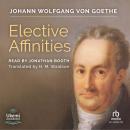
"Goethe as a novelist is best known for two earlier novels, The Sorrows of Young Werther (1774) and Wilhelm Meister’s Apprenticeship (1796). But Elective Affinities, which was published in 1809, is widely regarded as his mature masterpiece, not least because of its unusual provenance, which brings together Goethe the scientist as well as Goethe the writer. Baron Eduard and his second wife Charlotte enjoy a quiet, humdrum existence in their opulent castle, but when he invites his friend the Captain and she invites her niece Ottilie to stay with them, their lives are turned inside out as both hosts begin to feel attracted to their guests. Using one of the chemistry theories of the time (the term ‘elective affinities’ was used by Robert Boyle and Isaac Newton) as a metaphor throughout the novel, Goethe juxtaposes social interactions with scientific principles, while illustrating the typically Romantic concern of the individual coming to terms with society. Controversial when first published and still much critically debated today, Goethe s Elective Affinities is an early model for the modern novel."
Johan Wolfgang Von Goethe (Author), Jonathan Booth (Narrator)
Audiobook
The Water Margin: Outlaws of the Marsh
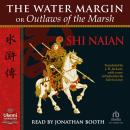
"The Water Margin is one of the most popular classics of early Chinese literature. It tells the vigorous story of 108 characters who, falling foul of the established state authorities are forced to become outlaws. They form a bandit community in Liangshan Marsh, becoming such a formidable force in their own right that they threaten the power of government itself. The author, Shi Nain, writing in the 14th century, the time of the Ming Dynasty, presents the tale with all the force and directness of a live story-teller. He describes in some detail the numerous one-to-one combats with a wide variety of weapons, as well as hand to hand fights. Despite written over half a millennium ago, it all seems very familiar to the contemporary listener, for the style lives on in the Chinese martial arts movies of today. He pulls no punches with the events themselves. There is deception, murder, torture, adultery, beheadings and massacre on a grand scale, reflecting the disorderly nature of the time – it is set 200 years earlier in a lawless period during the Northern Song dynasty. But the power of the story lies in the portrayal of the individuals who cover the wide spectrum of human kind. There are the honourable figures, wrongly branded on the face as criminals and forced to wear the heavy cangue – the massive wooden collar, punishing and restricting movement. There are the mighty warriors who, despite good deeds (killing tigers that are terrorising the neighbourhood) are forced to flee established society by powerful but envious officials. There are monks displaying varying degrees of ethical behaviour. And there are some who simply love to fight, anywhere, anytime, with any weapons, and find themselves most comfortable in the outlaw milieu. The Water Margin has come down to us in various forms – its huge size attracted abridgements – and the version recorded here is the 70-chapter chronicle by Jin Shengtan, dating from the 17th century. The translation by J. H. Jackson appeared in the 1930s. But it has been recently revised by Edwin Lowe who wanted to bring back the earthy flavour of the original, reintroducing the strong language, the brutality and the unexpurgated nature of Shi Nain’s language. In short, it is a rip-roaring tale, unrelenting in its energy, more akin to the modern thriller than the elegant, reflective character one would expect from a Chinese classic! Nevertheless, it often exhibits the features of the morality tale with wise aphorisms. Jonathan Booth gives a virtuoso presentation with vivid characterisation of the principals, and the hundreds of minor individuals who pop up in this detailed account of medieval life in the raw."
Shi Naian (Author), Jonathan Booth (Narrator)
Audiobook
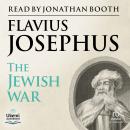
"The Jewish War is an extraordinary historical document in that it details a calamitous period of four years during which the Jews pitted themselves against the might of the Roman empire. It is partly a remarkable account in that its author, Flavius Josephus (c.37–c.100 CE) was himself a Jew and yet, during the course of the conflict, found himself playing a prominent role for both sides. It is further underpinned by the fact that Josephus himself was not only a participant, but also an historian and a scholar of standing. Few such accounts from the Classical period have survived to this degree, and it makes the whole story intensely vivid and powerful. The Jewish War actually ran from 66 CE to 70 CE, culminating in the fall of the Jerusalem. But Josephus begins his account decades back, with the purpose of setting the background. Book I (of seven) opens with the taking of Jerusalem by Antiochus Epiphanes in 167 BCE, before devoting the major part of Book I to the life and influence of Herod the Great who died in 4 CE. It was his complicated legacy that laid the ground for the uprising of the Jews. In Book II, Josephus tells how the Jews rose up against violent treatment by the Roman procurator, Florus; how early success against Cestius encouraged the Jews in the hope of ultimate success against the Roman Empire. The succeeding books tell of the gradual dominance by the Romans, under Vespasian and then his son Titus. Torture, starvation, banishment and slaughter became commonplace across the theatre of war. The gradual weakening of the Jews was not helped by internecine strife of a horrendous nature – even within Jerusalem itself when it was being besieged by the Roman army. There could be only one conclusion – the utter destruction of Jerusalem, with the final scene of the war being the infamous mass suicide at Masada. Josephus records his own role, leading the defence in the early days, notably building strong walls around various cities. But as months and years passed, he realised that the Jewish cause would never win against the might of Rome. This powerful account was written in 75 CE probably either in Aramaic or Hebrew, but it has survived in a Greek version. This recording uses the classic translation by William Whiston. PLEASE NOTE: When you purchase this title, the accompanying PDF will be available along with the audio."
Flavius Josephus (Author), Jonathan Booth (Narrator)
Audiobook

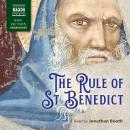
"Written in 516, The Rule of Saint Benedict for monastic living has been soul-inspiring for a countless number of people - not only monks, nuns and priests, but also a considerable number of lay people. It covers matters of doctrine, the structure of the monastery as the House of God, and observance of the Divine Office. The Rule gives a fascinating insight into the standards and behaviour expected of monks in their everyday lives. It remains notable for embodying the concept of a written constitution and influencing the shape of medieval Europe. Today the Rule, with its universal message, offers a deep and practical spirituality to all people desiring a good life."
St Benedict (Author), Jonathan Booth (Narrator)
Audiobook

History of the Russian Revolution
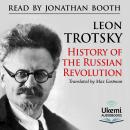
"The Russian Revolution of 1917 was one of the most cataclysmic events in world history, profoundly shaping politics, international relations, social patterns, economics and science in the century that followed. It created long-lasting aftershocks which travelled far beyond its geographical borders. How did it happen? What were the sequence of events that led, following the shocking upheaval of the old Romanov order, to a fierce and violent rivalry between a variety of revolutionary factions and the ultimate victory of the Bolsheviks? Throughout the 20th century many accounts were written—and especially in the closing years when Russian archives became more available to external historians. But prime among them remains this work, History of the Russian Revolution, published as early as 1930—for it was a work (virtually unique among historical accounts of major events) written by one of the key protagonists, the Ukrainian-Russian Marxist politician Leon Trotsky (1879-1940). It appeared just a year after he was expelled from Russia (in 1929), having lost a power struggle within the revolutionary government headed by Josef Stalin who had seized control following the death of Vladimir Lenin (1870-1924). Trotsky was forced to flee for his life and in exile immediately set about recording what actually happened (according to his viewpoint). He documented both the February Revolution (the ending of the Tsarist regime) and the October Revolution led by Lenin (and Trotsky’s) Bolshevik movement which ultimately resulted (in 1923) in the new Russian state of the Soviet Union. Trotsky’s work is divided into three parts: Volume I - The Overthrow of Tzarism, Volume II - The Attempted Counter-Revolution (headed by the socialist Alexander Kerensky), Volume III - The Triumphs of the Soviets. In his vigorous but also personal account of the events leading to Bolshevik victory, Trotsky applied his strong intellectual and analytical abilities, while at the same time allowed his close involvement to present his knowledge of the causes, the results and the personalities in considerable detail. It is a powerful and extraordinary story, all the more engaging because we know how it ended. For Trotsky himself, of course, it was going to end 10 years after publication with his assassination in Mexico (famously with an ice-pick) by an agent of Stalin’s NKVD. The importance of History of the Russian Revolution was marked by its English publication in 1932 in the definitive translation by Max Eastman, just two years after its publication in Russian (in Germany). However, it was only in 1997 that it was cleared for publication in Russia itself. Jonathan Booth gives Trotsky’s important work its first unabridged audio recording."
Leon Trotsky (Author), Jonathan Booth (Narrator)
Audiobook
©PTC International Ltd T/A LoveReading is registered in England. Company number: 10193437. VAT number: 270 4538 09. Registered address: 157 Shooters Hill, London, SE18 3HP.
Terms & Conditions | Privacy Policy | Disclaimer
Join our community for the latest bookish news, reading recommendations, exclusive opening extracts, author events and competitions. It\'s all free. And enter a monthly draw to win a £50 Gift Card. See past winners here
Join Our Community