Browse audiobooks narrated by Jonathan Beville, listen to samples and when you're ready head over to Audiobooks.com where you can get 3 FREE audiobooks on us
The Battle for Heaven and Earth: A Story of Scripture Novel
"In the beginning--before Earth, before humanity, before sin--there was Heaven. And it was perfect. This is the story of creation as you've never imagined it. Once united in worship and purpose, the angelic realm is shaken when Lucifer--the most beautiful and exalted of all--questions the authority of God Himself. What begins as subtle pride soon ignites into open rebellion. As loyalties fracture and one-third of Heaven's hosts defect, Michael the Archangel is thrust into a role he never imagined: commander of God's army in a war that was never supposed to erupt. Friendship turns to enmity. Worship becomes warfare. And Heaven itself becomes a battlefield. From the first spark of dissonance to the thunder of celestial combat, this sweeping epic explores the origin of evil and the agonizing cost of free will. With vivid imagination rooted in deep biblical truth, witness darkness rising against the very throne of God . . . and the divine plan that refuses to be undone, one that stretches from the creation of a new world to a garden paradise, and a fall that echoes through all of human history. This is not just the story of a rebellion. It is the story of why it mattered. And why it still does. Maps can be found in the audiobook companion PDF download."
Jerry B. Jenkins, Mark M. Yarbrough (Author), Jonathan Beville, Rick Adamson (Narrator)
Audiobook
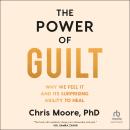
The Power of Guilt: Why We Feel It and Its Surprising Ability to Heal
"Guilt is one of the most powerful—and unpleasant—emotions we experience. When we feel it, we want it gone. But it carries an important purpose we should learn not to ignore. When was the last time you felt guilty? Chances are, you don't even want to think about it—most of us would rather not. It's uncomfortable. We can’t change what we did now, so why dwell on it? But avoiding guilt is a mistake we have to stop making if we want to improve our lives, our relationships, and our mental health. Drawing on extensive research into psychology, psychotherapy, philosophy, comparative religion, and legal studies, as well as Chris Moore's own foundational experiences with the emotion, Guilt offers a new perspective. In this fascinating deep dive, listeners will learn the evolutionary origins of guilt, what its real purpose is, and how it impacts us; why we should view guilt as a healthy emotion—and even be grateful for it; how to reframe guilt as an opportunity to grow and strengthen our relationships; why collective guilt holds the potential for driving social change; and ways to recognize when our guilt is misplaced and acting as an obstacle."
Chris Moore (Author), Jonathan Beville (Narrator)
Audiobook
The Midnight Lawyer: Hank Luger Legal Thrillers, Book 1
"In a city where power buries the truth, one lawyer's pursuit of justice could destroy his family—or redeem it. Defense attorney Hank Luger leaves a high-powered D.C. career to return home to Savannah. He opens a modest practice under the moss-draped oaks, hoping for slower days and time with his ailing mother. But his return unsettles the city's legal elite—especially his estranged father, former DA George Luger. Hank's first case involves a young woman hit with excessive charges after reporting an assault. The system's response is brutal. Then comes Pharaoh Williams—a death row inmate convicted years ago, when George was DA. What begins as a reluctant review becomes a dangerous unraveling. Buried evidence. Silenced witnesses. And powerful forces, on both sides of the law, are determined to keep the past sealed. Where Hank's father stands is anyone's guess. As threats mount and the cost of truth rises, Hank must choose: protect the Luger name—or bring it down in the name of justice. Gripping courtroom drama, deep secrets, and twists that bite—The Midnight Lawyer is legal suspense at its best. Perfect for fans of John Grisham, Robert Dugoni, Robert Bailey, and Peter O'Mahoney."
J.J. Miller (Author), Jonathan Beville (Narrator)
Audiobook
The Philosopher in the Valley: Alex Karp, Palantir and the Rise of the Surveillance State
"'An excellent look at what Palantir does, as well as a fascinating insight into the mind of its eccentric chief executive' Telegraph Palantir Technologies is the most interesting company in the world – and the most controversial. Palantir builds data integration software: its technology ingests vast quantities of information and quickly identifies patterns, trends and connections that might elude the human eye. Founded in 2003 to help the U.S. government in the war on terrorism – an early investor was the CIA – Palantir is now a $400 billion global colossus whose software is used by major intelligence services (including the Mossad), the U.S. military, the National Health Service in England, and corporate giants like Airbus and BP. From AI to counterterrorism to climate change to immigration to financial fraud to healthcare to the future of warfare, the company is at the nexus of the most critical issues of the twenty-first century. Its billionaire CEO, Alex Karp, is a distinctive figure on the global business scene. A biracial Jew who is also severely dyslexic, Karp has built Palantir into a tech giant despite having no background in either business or computer science. Instead, he's a trained philosopher who has become known for his strongly held views on a range of issues and for his willingness to grapple with the moral and ethical implications of Palantir's work. Those questions have taken on added urgency during the Trump era, which has also brought attention to the political activism of Karp's close friend and Palantir co-founder Peter Thiel. In The Philosopher in the Valley, journalist Michael Steinberger is the first to tell the story of Alex Karp and Palantir from the beginning. Steinberger offers new biographical details and a rich psychological portrait of the man leading one of the world's most secretive companies. Full of revelations, this is an urgent and insightful book about technological power, the surveillance state and the future we all face."
Michael Steinberger (Author), Jonathan Beville (Narrator)
Audiobook
Team Players: The Five Critical Roles You Need to Build a Winning Team
"The New York Times-bestselling author of Hundred Percenters and Hiring for Attitude shows you how to build the most successful team The conventional wisdom is wrong about how great teams are built. Effective leaders worry less about cohesion and more about assembling the right group of people with complementary talents and personalities. No amount of teambuilding, trust, or cohesion can overcome having the wrong mix of people in the room. In Team Players, Mark Murphy argues that the best teams contain an ideal mix of five vital roles: Director, Achiever, Stabilizer, Harmonizer, and Trailblazer. Murphy's groundbreaking research shows how to unlock each team member's talents and position them to succeed within the team. Murphy reveals how unlocking the Directors, Achievers, Stabilizers, Harmonizers, and Trailblazers on your team solves teams' absence of accountability, the torment of aimless meetings, the unfairness of uneven workloads, the scarcity of active participation, the chaos of clashing agendas, and the dearth of decisiveness. With a balance of hard-hitting research and compelling real-world examples, this book is a pivotal read for anyone keen on accelerating team development while allowing individual brilliance to shine through. "
Mark Murphy (Author), Jonathan Beville (Narrator)
Audiobook
Downwind from Death: Sheriff Ulysses Walker
"The United States is in turmoil nine months after an assassination attempt targeting the new president. Texas, home to the unsuccessful Nationalist Party candidate, has seceded from the Union, and other states are poised to follow. In Santa Fe, a priest who is an anti-nuclear activist is murdered. In Taos County, Sheriff Ulysses Walker investigates the murder of a young man associated with Nuclear Peace and Justice. Meanwhile, at Picuris Pueblo, Governor Ray Pando has a new neighbor-a religious cult called 'The Elect,' a group closely aligned with the insurgent Nationalist Party. When high-level nuclear waste goes missing from Los Alamos National Lab, Ulysses, Ray, and FBI agent LizBeth Tallichet start to connect the dots. Then, Ulysses learns that an even more dangerous threat, weapons-grade plutonium stolen from a facility in Wyoming, has reached Taos County. Nothing less than a civil war is at stake. Ulysses must race against time to neutralize the threat. The entire country is at risk, and Ulysses finds his life on the line."
C.R. Koons (Author), Jonathan Beville (Narrator)
Audiobook
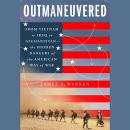
Outmaneuvered: America's Tragic Encounter with Warfare from Vietnam to Afghanistan
"From a celebrated military historian, a "searing…persuasive" (Kirkus Reviews) exploration of why the mighty United States military has repeatedly failed in irregular wars and military campaigns from Vietnam to Afghanistan. Since the early 1960s, the United States has fought in four major wars and a cluster of complicated and bloody irregular warfare campaigns. The majority have ended in failure, or something close to it. Why has the US been so ineffective, despite the American armed forces being universally recognized as the best in the world? Most scholars and analysts believe that the primary cause of our abysmal war record since Vietnam has been the US military's overwhelmingly conventional approach to conflict, which favors highly mobile precision firepower and sophisticated systems of command and control. Here, James Warren argues that a much more formidable obstacle to success has been pervasive strategic ineptitude at the highest levels of decision-making, including the presidency, the National Security Council, and the foreign policy community in DC. Time and time again, American presidents have committed military forces to operations in foreign countries whose politics and cultures they did not fully understand. Presidents of both political parties, including Johnson, Carter, Reagan, Clinton, George W. Bush, and Obama have overestimated the capacity of US forces to alter the social and political landscape of foreign nations, and underestimated the ability of insurgents and terrorists to develop effective protracted war strategies that eventually, inevitably sap Washington's will to carry on the fight. Warren asserts that in the War on Terror that followed September 11, 2001, senior military officers have been complicit in extending bankrupt strategies by refusing to speak truthfully about them to their civilian bosses. So have the American people, who lost interest in the "forever wars" in Afghanistan and Iraq and failed to press their presidents and Congress to bring an end to two futile conflicts. Warren advocates for a less hubristic foreign policy and a broader conception of warfare as a political and military enterprise. "An admirable must-read for military…foreign policy history buffs" (Booklist), and anyone interested in geopolitical strategy, this book offers unparalleled insights into America's prior—and potentially future—military conflicts."
James A. Warren (Author), Jonathan Beville (Narrator)
Audiobook
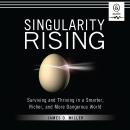
Singularity Rising: Surviving and Thriving in a Smarter, Richer, and More Dangerous World
"In Ray Kurzweil's New York Times bestseller The Singularity is Near, the futurist and entrepreneur describes the Singularity, a likely future utterly different than anything we can imagine. The Singularity is triggered by the tremendous growth of human and computing intelligence that is an almost inevitable outcome of Moore's Law. Since the book's publication, the coming of the Singularity is now eagerly anticipated by many of the leading thinkers in Silicon Valley, from PayPal mastermind Peter Thiel to Google co-founder Larry Page. The formation of the Singularity University, and the huge popularity of the Singularity website kurzweilai.com, speak to the importance of this intellectual movement. But what about the average person? How will the Singularity affect our daily lives—our jobs, our families, and our wealth? Singularity Rising: Surviving and Thriving in a Smarter, Richer, and More Dangerous World focuses on the implications of a future society faced with an abundance of human and artificial intelligence. James D. Miller, an economics professor and popular speaker on the Singularity, reveals how natural selection has been increasing human intelligence over the past few thousand years and speculates on how intelligence enhancements will shape civilization over the next forty years. Miller considers several possible scenarios in this coming singularity: - A merger of man and machine making society fantastically wealthy and nearly immortal - Competition with billions of cheap AIs drive human wages to almost nothing while making investors rich - Businesses rethink investment decisions to take into account an expected future period of intense creative destruction - Inequality drops worldwide as technologies mitigate the cognitive cost of living in impoverished environments - Drugs designed to fight Alzheimer's disease and keep soldiers alert on battlefields have the fortunate side effect of increasing all of their users' IQs, which, in turn, adds a percentage points to worldwide economic growth Singularity Rising offers predictions about the economic implications for a future of widely expanding intelligence and practical career and investment advice on flourishing on the way to the Singularity."
James D. Miller (Author), Jonathan Beville (Narrator)
Audiobook
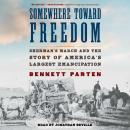
"Considered one of "the most innovative studies of American emancipation in the Civil War" (David W. Blight, Pulitzer Prize–winning author of Frederick Douglass), Somewhere Toward Freedom is a groundbreaking account of Sherman's March to the Sea—the critical Civil War campaign that destroyed the Confederacy—told for the first time from the perspective of the enslaved people who transformed it into the biggest liberation event in American history. In the fall of 1864, General William Tecumseh Sherman led his army through Atlanta, Georgia, burning buildings of military significance—and ultimately most of the city—along the way. From Atlanta, they marched across the state to the most important city at the time: Savannah. Mired in the deep of the South with no reliable supply lines, Sherman's army had to live off the land and the provisions on the plantations they seized along the way. As the army marched to the east, plantation owners fled, but even before they did so, slaves self-emancipated to Union lines. By the time the army seized Savannah in December, as many as 20,000 enslaved people had attached themselves to Sherman's army. They endured hardships, marching as much as twenty miles a day—often without food or shelter from the winter weather—and at times Union commanders discouraged and even prevented the self-emancipated from staying with the army. Racism was not confined to the Confederacy. In Somewhere Toward Freedom, historian Bennett Parten brilliantly reframes this seminal episode in Civil War history. He not only helps us understand how Sherman's March impacted the war, and what it meant to the enslaved, but also reveals how it laid the foundation for the fledging efforts of Reconstruction. When the war ended, Sherman and various government and private aid agencies seized plantation lands—particularly in the sea islands off the Georgia and South Carolina coasts—in order to resettle the newly emancipated. They were fed, housed, and in some instances, taught to read and write. This first real effort at Reconstruction was short-lived, however. As federal troops withdrew to the north, Confederate sympathizers and Southern landowners eventually brought about the downfall of this program. Sherman's march has remained controversial to this day. But as Parten reveals, it played a significant role in ending the Civil War, due in no small part to the efforts of the tens of thousands of enslaved people who became a part of it. In Somewhere Toward Freedom, this critical moment in American history has finally been given the attention it deserves."
Bennett Parten (Author), Jonathan Beville (Narrator)
Audiobook
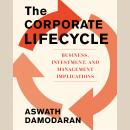
The Corporate Life Cycle: Business, Investment, and Management Implications
"THE KEY TO UNDERSTANDING COMPANY GROWTH AND DECLINE -FROM THE UNDISPUTED EXPERT ON VALUATION Throughout his storied career, Aswath Damodaran has searched for the universal key to demystify corporate finance and valuation. Now, at last, he offers the groundbreaking answer to readers everywhere. It turns out there is a corporate lifecycle very much like our own - with unique stages of growth and decline. And just as we must learn to act our age, so too must companies. By better understanding how corporations age and the characteristics of each stage of their lifecycle, we can unlock the secrets behind any businesses behavior and optimize our management and investment decisions accordingly. In Aswath Damodaran's The Corporate Life Cycle, readers will learn- - What markers tell where a company falls on its corporate lifecycle, and crucial insights for managers as they navigate the different stages - Why the shape and timing of life cycles varies across different industries - When transition points pose special challenges to companies-and strategies to conquer them - How differences in investment philosophies, in particular the divide between growth and value investing, should lead investors towards companies at different lifecycle stages As the corporate lifecycle touches virtually every aspect of business, this book is for anyone with skin in the corporate finance game-from managers to investors, from novices to seasoned pros. Aswath Damodaran's The Corporate Life Cycle is the definitive guide to understanding businesses growth, behavior, and value. * This audiobook edition includes a downloadable PDF containing charts, diagrams, and graphs from the book."
Aswath Damodaran (Author), Jonathan Beville (Narrator)
Audiobook
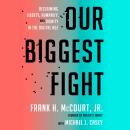
Our Biggest Fight: Reclaiming Liberty, Humanity, and Dignity in the Digital Age
"NATIONAL BESTSELLER • The internet as we know it is broken. Here's how we can seize back control of our lives from the corporate algorithms and create a better internet-before it's too late. "In the spirit of Thomas Paine's Revolution-era Common Sense, this manifesto challenges us to create new digital architectures to safeguard democracy."-Walter Isaacson, #1 New York Times bestselling author of Elon Musk It was once a utopian dream. But today's internet, despite its conveniences and connectivity, is the primary cause of a pervasive unease that has taken hold in the U.S. and other democratic societies. It's why youth suicide rates are rising, why politics has become toxic, and why our most important institutions are faltering. Information is the lifeblood of any society, and our current system for distributing it is corrupted at its heart. Everything comes down to our ability to communicate openly and trustfully with each other. But, thanks to the dominant digital platforms and the ways they distort human behavior, we have lost that ability-while, at the same time, we've been robbed of the data that is rightfully ours. The roots of this crisis, argue Frank McCourt and Michael Casey, lie in the prevailing order of the internet. In plain but forceful language, the authors-a civic entrepreneur and an acclaimed journalist-show how a centralized system controlled by a small group of for-profit entities has set this catastrophe in motion and eroded our personhood. And then they describe a groundbreaking solution to reclaim it: rather than superficial, patchwork regulations, we must reimagine the very architecture of the internet. The resulting "third-generation internet" would replace the status quo with a new model marked by digital property rights, autonomy, and ownership. Inspired by historical calls to action like Thomas Paine's Common Sense, Our Biggest Fight argues that we must act now to embed the core values of a free, democratic society in the internet of tomorrow. Do it right and we will finally, properly, unlock its immense potential."
Frank H. Mccourt (Author), Frank H. Mccourt, Jonathan Beville, Michael J. Casey (Narrator)
Audiobook
A Thirst for Murder: Sheriff Ulysses Walker
"Ulysses Walker, Sheriff of Taos County, is facing a tough re-election campaign against a well-funded opponent when a respected historian and acequiero. The murder looks like a dispute over shared irrigation water at first. But after two more murders the sheriff uncovers a web of corruption born out of New Mexico's troubled history. Sheriff Walker, with help from Ray Pando, Picuris Tribal Council Member, and LizBeth Tallichet of the FBI, must battle powerful and well-connected adversaries who want to enrich themselves by gaining rights to scarce water and land distressed by forest fires. These current day criminals, like the Santa Fe Ring before them, commit murder and mayhem with impunity. Sheriff Walker's battle to prevail culminates in a deadly chase down the Rio Grande's notorious whitewater, the Taos Box."
C.R. Koons (Author), Jonathan Beville (Narrator)
Audiobook
©PTC International Ltd T/A LoveReading is registered in England. Company number: 10193437. VAT number: 270 4538 09. Registered address: 157 Shooters Hill, London, SE18 3HP.
Terms & Conditions | Privacy Policy | Disclaimer
Join our community for the latest bookish news, reading recommendations, exclusive opening extracts, author events and competitions. It\'s all free. And enter a monthly draw to win a £50 Gift Card. See past winners here
Join Our Community