Browse audiobooks by Vladimir Korolenko, listen to samples and when you're ready head over to Audiobooks.com where you can get 3 FREE audiobooks on us
6 audiobooks in our catalogue, every one with its narrator named.
"We love reason, advancing through facts to reach a conclusion that explains exactly where we are at. When literary masters create their stories on this theme we are left with some quite brilliant and riveting works that help us gain fascinating insight into both author, story and the world beyond.1 - Philosophical Stories - An Introduction2 - In the Penal Colony by Franz Kafka3 - Bartleby the Scrivener - Part 1 by Herman Melville4 - Bartleby the Scrivener - Part 2 by Herman Melville5 - The Dream of a Ridiculous Man by Fyodor Dostoyevsky6 - Parker Adderson, Philosopher by Ambrose Bierce7 - Dickory Cronke, The Dumb Philosopher or Great Britain's Wonder by Daniel D8 - Plato's Dream by Voltaire9 - The Shades, A Phantasy by Vladimir Korolenko10 - Gods in Exile by Heinrich Heine11 - An Evening Guest by Alexander Kuprin12 - Bellerophon To Anteia by Mary Butts13 - Putois by Anatole France14 - The Lightning Rod Man by Herman Melville15 - Moxon's Master by Ambrose Bierce16 - A Country Doctor by Franz Kafka"
Alexander Kuprin, Ambrose Bierce, Anatole France, Daniel D, Franz Kafka, Fyodor Dostoyevsky, Heinrich Heine, Herman Melville, Mary Butts, Vladimir Korolenko, Voltaire (Author), Christopher Ragland, Eric Meyers, Richard Mitchley (Narrator)
Audiobook · 9 hrs 14 mins
The Church - A Short Story Collection
"Faith is a wonderful thing. Whether its faith in each other or to a God, Gods, or whatever entity you believe in, it brings a familiar comfort and sustenance to heart, soul and mental well-being. Whilst faith can be practiced anywhere religious faith is usually at a church or temple. The stories in this volume are centered both in houses of worship and with those with a strong association to its calling. Of course, short story authors have a determined belief in their undoubted talents to make us look at this subject from different angles. In this volume they take us on literary journeys that are revealing and challenging yet always entertaining. 1 - The Church - A Short Story Collection - An Introduction 2 - The Altar of the Dead - Part 1 by Henry James 3 - The Altar of the Dead - Part 2 by Henry James 4 - A Fragment of Stained Glass by D H Lawrence 5 - Neccesity. An Eastern Tale by Vladimir Korolenko 6 - Let Loose by Mary Cholmondeley.wav 7 - The Haunted Church by Frederick Cowles 8 - Lucifer by Anatole France 9 - Anathema by Alexander Kuprin 10 - Lazarus by Leonid Andreyev 11 - The Black Crusader by Alicia Ramsay 12 - The Saint by Mary Butts 13 - Marsyas In Flanders by Vernon Lee 14 - The Ankardyne Pew by W F Harvey 15 - The Tomb of Sarah by F G Loring 16 - The Atheist's Mass by Honore de Balzac 17 - A Collector's Company by R H Malden"
Alexander Kuprin, Alicia Ramsay, Anatole France, D.H. Lawrence, F G Loring, Frederick Cowles, Henry James, Honore de Balzac, Leonid Andreyev, Mary Butts, Mary Cholmondeley.Wav, R H Malden, Vernon Lee, Vladimir Korolenko, W F Harvey (Author), Eric Meyers, Mark Rice-Oxley, Richard Mitchley (Narrator)
Audiobook · 9 hrs 19 mins
"Vladimir Galaktionovich Korolenko was born in Zhytomyr, Ukraine, then part of the Russian Empire on 27th July 1853.His father died when he was 13 and life was then often struck with bouts of poverty, which resulted in his education being somewhat erratic. A spell in exile at 23 was followed by another as the politics of the times opposed his volatile but heart-felt passions.Writing was also coming to the fore and in 1879 his debut short story telling of a young Narodnik searching for social and spiritual identity, was published.In 1881, Korolenko refused to swear allegiance to the new Russian Tsar and was again exiled, this time much farther afield. He spent the next three years doing manual work, but took time to study local customs and history. These impressions in exile provided rich material for his writings.In 1885 he was allowed to settle in Nizhny, where again he repeatedly questioned the authorities. That same year ‘Makar's Dream’ established his literary reputation and was part of his first collection ‘Sketches and Stories’, the following year.In the early 1890’s when famine struck Central Russia, he went to work on relief missions, collecting donations, supervising the delivery and distribution of food, opening 45 free canteens, all this while writing the graphic reports that would later be published as ‘In the Year of Famine’ in 1893.By 1896 despite some psychological disorders, he was well regarded amongst Russian writers and was even a member of the Russian Academy of Sciences. Throughout his writing career Korolenko was a staunch advocate of human rights, putting that sacred activity above what he called his 'part-time-writing'.In the Revolutionary year of 1905, under his editorship, Russkoye Bogatstvo published the Manifest by the Petersburg Soviet of the Workers' deputies. Korolenko was now repeatedly harassed by the authorities, had his flat raided many times and materials confiscated.As a lifetime opponent of Tsarism, he guardedly welcomed the Revolution of 1917. Once the nature of Bolshevism was established, he soon started to criticize it. During the Russian Civil War that ensued, he condemned both the Red Terror and the White Terror. Despite suffering from a progressive heart disorder, he collected food packages for children in famine-stricken Moscow and Petrograd as well as organised orphanages and shelters for the homeless. Vladimir Korolenko died in Poltava, Ukraine, of the complications of pneumonia on 25th December 1921. He was 68."
Vladimir Korolenko (Author), Ghizela Rowe, Mark Rice-Oxley (Narrator)
Audiobook · 46 mins
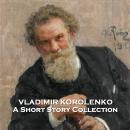
Vladimir Korolenko - A Short Story Collection
"Vladimir Galaktionovich Korolenko was born in Zhytomyr, Ukraine, then part of the Russian Empire on 27th July 1853.His father died when he was 13 and life was then often struck with bouts of poverty, which resulted in his education being somewhat erratic. A spell in exile at 23 was followed by another as the politics of the times opposed his volatile but heart-felt passions.Writing was also coming to the fore and in 1879 his debut short story telling of a young Narodnik searching for social and spiritual identity, was published.In 1881, Korolenko refused to swear allegiance to the new Russian Tsar and was again exiled, this time much farther afield. He spent the next three years doing manual work, but took time to study local customs and history. These impressions in exile provided rich material for his writings.In 1885 he was allowed to settle in Nizhny, where again he repeatedly questioned the authorities. That same year 'Makar's Dream' established his literary reputation and was part of his first collection 'Sketches and Stories', the following year.In the early 1890's when famine struck Central Russia, he went to work on relief missions, collecting donations, supervising the delivery and distribution of food, opening 45 free canteens, all this while writing the graphic reports that would later be published as 'In the Year of Famine' in 1893.By 1896 despite some psychological disorders, he was well regarded amongst Russian writers and was even a member of the Russian Academy of Sciences. Throughout his writing career Korolenko was a staunch advocate of human rights, putting that sacred activity above what he called his 'part-time-writing'.In the Revolutionary year of 1905, under his editorship, Russkoye Bogatstvo published the Manifest by the Petersburg Soviet of the Workers' deputies. Korolenko was now repeatedly harassed by the authorities, had his flat raided many times and materials confiscated.As a lifetime opponent of Tsarism, he guardedly welcomed the Revolution of 1917. Once the nature of Bolshevism was established, he soon started to criticize it. During the Russian Civil War that ensued, he condemned both the Red Terror and the White Terror. Despite suffering from a progressive heart disorder, he collected food packages for children in famine-stricken Moscow and Petrograd as well as organised orphanages and shelters for the homeless. Vladimir Korolenko died in Poltava, Ukraine, of the complications of pneumonia on 25th December 1921. He was 68.1 - Vladimir Korolenko - A Short Story Collection - An Introduction2 - The Village of God by Vladimir Korolenko3 - The Old Bell Ringer by Vladimir Korolenko4 - Neccesity. An Eastern Tale by Vladimir Korolenko5 - Lights by Vladimir Korolenko6 - The Shades, a Phantasy by Vladimir Korolenko"
Vladimir Korolenko (Author), Mark Rice-Oxley (Narrator)
Audiobook · 2 hrs 24 mins
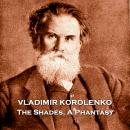
"Vladimir Galaktionovich Korolenko was born in Zhytomyr, Ukraine, then part of the Russian Empire on 27th July 1853. His father died when he was 13 and life was then often struck with bouts of poverty, which resulted in his education being somewhat erratic. A spell in exile at 23 was followed by another as the politics of the times opposed his volatile but heart-felt passions. Writing was also coming to the fore and in 1879 his debut short story telling of a young Narodnik searching for social and spiritual identity, was published. In 1881, Korolenko refused to swear allegiance to the new Russian Tsar and was again exiled, this time much farther afield. He spent the next three years doing manual work, but took time to study local customs and history. These impressions in exile provided rich material for his writings. In 1885 he was allowed to settle in Nizhny, where again he repeatedly questioned the authorities. That same year ‘Makar's Dream’ established his literary reputation and was part of his first collection ‘Sketches and Stories’, the following year. In the early 1890’s when famine struck Central Russia, he went to work on relief missions, collecting donations, supervising the delivery and distribution of food, opening 45 free canteens, all this while writing the graphic reports that would later be published as ‘In the Year of Famine’ in 1893. By 1896 despite some psychological disorders, he was well regarded amongst Russian writers and was even a member of the Russian Academy of Sciences. Throughout his writing career Korolenko was a staunch advocate of human rights, putting that sacred activity above what he called his 'part-time-writing'. In the Revolutionary year of 1905, under his editorship, Russkoye Bogatstvo published the Manifest by the Petersburg Soviet of the Workers' deputies. Korolenko was now repeatedly harassed by the authorities, had his flat raided many times and materials confiscated. As a lifetime opponent of Tsarism, he guardedly welcomed the Revolution of 1917. Once the nature of Bolshevism was established, he soon started to criticize it. During the Russian Civil War that ensued, he condemned both the Red Terror and the White Terror. Despite suffering from a progressive heart disorder, he collected food packages for children in famine-stricken Moscow and Petrograd as well as organised orphanages and shelters for the homeless. Vladimir Korolenko died in Poltava, Ukraine, of the complications of pneumonia on 25th December 1921. He was 68. In this story Korolenko invokes the characters of Socrates and Elpidias who, after their deaths, involve themselves in a debate on God. This is a tour-de-force of conception and execution."
Vladimir Korolenko (Author), Elliot Fitzpatrick (Narrator)
Audiobook · 1 hr 9 mins
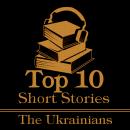
The Top 10 Short Stories - The Ukrainians
"Short stories have always been a sort of instant access into an author's brain, their soul and heart. A few pages can lift our lives into locations, people and experiences with a sweep of landscape, narration, feelings and emotions that is difficult to achieve elsewhere.In this series we try to offer up tried and trusted 'Top Tens' across many different themes and authors. But any anthology will immediately throw up the questions - Why that story? Why that author? The theme itself will form the boundaries for our stories which range from well-known classics, newly told, to stories that modern times have overlooked but perfectly exemplify the theme. Throughout the volume our authors whether of instant recognition or new to you are all leviathans of literature.Some you may disagree with but they will get you thinking; about our choices and about those you would have made. If this volume takes you on a path to discover more of these miniature masterpieces then we have all gained something.Between the Russian Empire and Europe warily sits Ukraine. Her own history has been brush stroked either by periods of independence or under the oppressive yoke of other more powerful and belligerent neighbours.It's authors, almost always cited as 'Russian', or from 'Little Russia' are diverse and brilliant. Some of them stayed, some moved to other lands but always their works harbour part of their Ukrainian souls despite the ever-changing territorial borders.01 - The Top 10 - The Ukrainians - An Introduction2 - The Nose by Nikolai Gogol3 - The Shades, A Phantasy by Vladimir Korolenko4 - Morphine by Mikhail Bulgakov5 - A Witches Den by Helena Blavatsky6 - The Informer by Joseph Conrad7 - The Signal by Vsevolod Garshin8 - The General's Will by Vera Jelihovsky9 - The Blind Ones by Isaac Babel10 - The Revolutionist by Mikhail Petrovich Artzybashev11 - Dethroned by Ignaty Potapenko"
Nikolai Gogol, Vladimir Korolenko (Author), Elliot Fitzpatrick, Mark Rice-Oxley (Narrator)
Audiobook · 7 hrs 39 mins
©PTC International Ltd T/A LoveReading is registered in England. Company number: 10193437. VAT number: 270 4538 09. Registered address: 157 Shooters Hill, London, SE18 3HP.
Terms & Conditions | Privacy Policy | Disclaimer