Browse audiobooks by Seneca, listen to samples and when you're ready head over to Audiobooks.com where you can get 3 FREE audiobooks on us
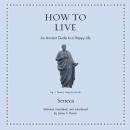
How to Live: An Ancient Guide to the Happy Life
"A vivid new translation in which the Stoic philosopher argues that virtue is the only path to contentment Why are so many people unhappy when happiness can be attained by anyone who simply lives virtuously? That question prompted Seneca, the great Stoic philosopher of the early Roman Empire, to write On the Happy Life, and he continued to seek answers in his Moral Epistles. In How to Live, Seneca biographer and translator James Romm presents vivid new versions of passages from both works, distilling Seneca’s passionate and inspiring argument for a path to perfect contentment, no matter what befalls us. As a Stoic, Seneca believed that only ethical virtue leads to happiness; all other goals, including wealth and success, are neutral in their effects—or, if they torment us with what we haven’t achieved, sources of unhappiness. For role models, Seneca looks to Socrates, who embodied virtue and reason, and to a hypothetical sage who is always in tune with the divine mind that governs the cosmos. Extolling these paragons with nearly messianic fervor, Seneca urges us to imitate their example. Featuring an inviting introduction and the original Latin on facing pages, How to Live captures the persuasive power of Seneca’s argument that the universe wants us to be virtuous—and happy."
Seneca (Author), Mack Sanderson (Narrator)
Audiobook
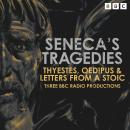
Seneca’s Tragedies: Thyestes & Oedipus: Two Full-Cast BBC Radio Dramatisations & Seneca’s Letters
"Full-cast productions of Seneca’s most famous tragedies, plus letters from the Roman philosopher read by Paul Scofield Stoic philosopher and playwright Lucius Annaeus Seneca lived through the reigns of Caligula and Claudius, and was tutor and adviser to Nero, before his untimely suicide in AD65. His gory, outrageous tragedy Thyestes inspired Shakespeare’s Titus Andronicus, and is widely considered his masterpiece. It opens this collection, which also includes his classic Oedipus, a selection of his correspondence and two special documentary programmes exploring the man and his life. Thyestes – Brothers Atreus and Thyestes have fought a long and bitter civil war. After seducing Atreus’ wife and stealing the golden ram of kingship, Thyestes is defeated and banished. A pretend offer of friendship sees him returning home with his three sons, ostensibly to share the throne of Argos – but in reality, Atreus Is plotting a horrifying act of revenge. Denis Quilley and Richard Pasco star as Thyestes and Atreus, wih Anton Lesser as the Messenger. Oedipus – Cursed by the gods, Oedipus flees his native city of Corinth for Thebes. There, he solves the riddle of the Sphinx, is proclaimed King and marries Queen Jocasta. But when the city is struck by drought and a deadly plague, he is faced with a new riddle: and the answer spells his own doom… Seneca’s reworking of the Ancient Greek legend is adapted by onetime Poet Laureate Ted Hughes, and stars Martin Jarvis and Siân Phillips. Seneca’s Letters – Paul Scofield reads a selection of Seneca’s lively, humorous philosophical letters to his young friend Lucilius, in which he discurses on topics including the evils of crowds, the pleasures of old age, the perils of drunkenness, the folly of wanderlust and the part played by philosophy in advancing civilization. Is Seneca Possible? – In a personal reflection on the celebrated playwright, poet James Fenton attempts to put him into historical context. T S Eliot asserted that Seneca ‘created his own genre’, but with so few examples of Roman tragedy remaining, has our view been distorted by the drama we’ve lost? In Our Time: Seneca the Younger – Melvyn Bragg and guests Mary Beard, Catharine Edwards and Alessandro Schiesaro discuss Seneca, reflecting on his status as one of the first great writers born in the new Roman empire after the fall of the Republic. NB: Contains strong language Thyestes Thyestes – Denis Quilley Atreus – Richard Pasco The Messenger – Anton Lesser Fury – Hugh Dickson Ghost of Tantalus – David March Courtier – Anthony Newlands Tantalus, Thyestes’ son – Crawford Logan His brothers – Stuart Organ & Simon Hewitt Seneca – Peter Tuddenham Chorus – Hugh Dickson, David Gooderson, Simon Hewitt, Anton Lesser, Crawford Logan, Stuart Organ, Richard Pasco, Denis Quilley, Peter Tuddenham Oedipus Oedipus – Martin Jarvis Jocasta – Siân Phillips Creon – John Rowe Tiresias – Hugh Dickson Manto – Frances Jeater Corinthian Messenger – Nigel Graham Phorbas – Timothy Bateson Theban Slave – David Gooderson Chorus Leader – Stephen Thorne Chorus – James Bryce, Jill Lidstone, David Peart, Jean Trend, David Gooderson, Nigel Graham, Timothy Bateson Seneca’s Letters 1: Avoid the Crowds; Befriend Your Slaves 2: The Pleasures of Old Age 3: Worldly Noise and the Tranquil Mind 4: Thoughts in a Dark Tunnel 5: Philosophy v Daily Trivialities Is Seneca Possible? Presented by James Fenton In Our Time: Seneca the Younger Presented by Melvyn Bragg With Mary Beard, Catharine Edwards and Alessandro Schiesaro Produced by Simon Tillotson © 2026 BBC Studios Distribution Ltd. (P) 2026 BBC Studios Distribution Ltd"
Seneca (Author), Anton Lesser, Crawford Logan, Denis Quilley, Francis Jeater, Full Cast, Hugh Dickson, Martin Jarvis, Paul Schofield, Sian Phillips, Stephen Thorne, Timothy Bateson (Narrator)
Audiobook
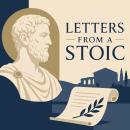
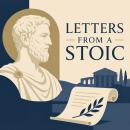
"Letters from a Stoic is one of the essential works of Roman Stoic philosophy, offering a series of moral reflections on virtue, discipline, friendship, time, grief, mortality, wealth, simplicity, and the art of living well. Written as letters addressed to Lucilius, these meditations combine practical advice with deep philosophical insight, showing how reason, self-command, and inner freedom can help a person face uncertainty, loss, desire, and fear. Seneca's voice is direct, personal, and timeless. Rather than presenting philosophy as an abstract system, he turns everyday experience into a guide for character, resilience, and ethical clarity. This audiobook invites listeners to reflect on what truly belongs to them, what must be endured, and how a life shaped by wisdom can remain steady even in difficult circumstances. A powerful classic for listeners interested in Stoicism, ancient philosophy, self-mastery, moral reflection, and the search for a meaningful life."
Seneca (Author), James Midwood (Narrator)
Audiobook
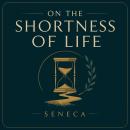
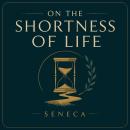
"On the Shortness of Life is one of Seneca's most powerful and practical reflections on time, mortality, distraction, ambition, and the art of living with purpose. In this classic Stoic essay, Seneca argues that life is not truly short; rather, people waste much of it on empty pursuits, anxiety, social pressure, greed, and the demands of others. The problem is not the limited number of years we are given, but the way we spend them. Direct, elegant, and deeply relevant, this work challenges listeners to examine how they use their days, what they give their attention to, and whether they are truly living or merely being carried along by habit and obligation. Seneca invites us to reclaim time as our most precious possession and to devote life to wisdom, reflection, virtue, and meaningful action. A timeless audiobook for listeners interested in Stoicism, ancient philosophy, time management, mortality, self-discipline, personal growth, and the search for a more deliberate life."
Seneca (Author), James Midwood (Narrator)
Audiobook
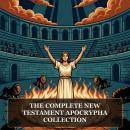
"What if the missing books around the Bible could be heard as one continuous sacred library? The Complete New Testament Apocrypha Collection brings together the wider biblical tradition: deuterocanonical books, Second Temple writings, patriarchal legends, wisdom literature, exile texts, martyr stories, rewritten scripture, and apocalyptic revelation. The arrangement is built for readers who want depth, continuity, and momentum rather than a disconnected anthology. What You'll Discover in This Modern Collection: – Wisdom and Prayer – devotional, poetic, and moral writings that expand the spiritual vocabulary around the Bible. – Patriarchs and Prophets – ancient expansions of Adam, Eve, Abraham, Moses, Baruch, Ezra, and the seers of Israel. – History and Martyrdom – stories of resistance, exile, courage, kingship, and faith under pressure. – Apocalyptic Revelation – visions of angels, judgment, heavenly books, cosmic order, and the destiny of nations. Whether you're looking for the Apocrypha, Pseudepigrapha, lost books of the Bible, or the broader sacred library behind Jewish and Christian scripture, this edition gives you a direct way to experience the collection as a coherent journey. Begin reading today and discover how these works illuminate one another when they are heard in the right order."
Andrew, John, Judas, Paul, Peter, Philip, Seneca, Thecla, Thomas (Author), James Mitchell (Narrator)
Audiobook
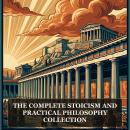
"What if the great question was not what to believe, but how to live, judge, endure, and think? The Complete Stoicism and Practical Philosophy Collection brings the philosophical classics into one reading path: dialogue, ethics, logic, politics, metaphysics, self-command, friendship, mortality, and the search for a life ruled by reason rather than impulse. The arrangement is built for readers who want depth, continuity, and momentum rather than a disconnected anthology. What You'll Discover in This Modern Collection: – Ethics and the Good Life – teachings on virtue, courage, justice, moderation, friendship, and the discipline of character. – Reason and Argument – dialogues, objections, definitions, and questions that train the mind to think more clearly. – Politics and Human Nature – reflections on the city, leadership, law, ambition, power, and civic life. – Practical Wisdom – ideas that can be carried into daily decisions, suffering, desire, and self-mastery. Whether you're drawn to Stoicism, Plato, Aristotle, Nietzsche, classical philosophy, or practical wisdom for daily life, this edition gives you a direct way to experience the collection as a coherent journey. Begin reading today and discover how these works illuminate one another when they are heard in the right order."
Epictetus, James Allen, Marcus Aurelius, Plato, Seneca (Author), James Mitchell (Narrator)
Audiobook
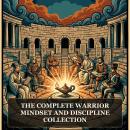
"What if the most useful lessons in power came from commanders, statesmen, and philosophers who had already seen empires rise and fail? The Complete Warrior Mindset and Discipline Collection collects the great works of command and statecraft: battlefield judgment, political realism, self-command, persuasion, law, discipline, ambition, and the hard choices that shape victory or collapse. The arrangement is built for readers who want depth, continuity, and momentum rather than a disconnected anthology. What You'll Discover in This Modern Collection: – Strategy and War – principles of timing, deception, terrain, morale, and decisive action. – Statecraft and Power – political counsel on authority, loyalty, public order, and the management of conflict. – Discipline and Self-Command – the inner habits required before anyone can command others well. – Historical Lessons – campaigns, failures, victories, and the pressure of real decisions under danger. Whether you're studying leadership, military history, negotiation, power, discipline, or the classics of strategic thought, this edition gives you a direct way to experience the collection as a coherent journey. Begin reading today and discover how these works illuminate one another when they are heard in the right order."
Epictetus, Frederick the Great, Marcus Aurelius, Niccolo Machiavelli, Seneca, Sun Tzu, Theron Q. Dumont (Author), James Mitchell (Narrator)
Audiobook
"This audiobook is narrated by an AI Voice. On the Shortness of Life is one of Seneca’s most powerful and practical reflections on time, mortality, distraction, ambition, and the art of living with purpose. In this classic Stoic essay, Seneca argues that life is not truly short; rather, people waste much of it on empty pursuits, anxiety, social pressure, greed, and the demands of others. The problem is not the limited number of years we are given, but the way we spend them. Direct, elegant, and deeply relevant, this work challenges listeners to examine how they use their days, what they give their attention to, and whether they are truly living or merely being carried along by habit and obligation. Seneca invites us to reclaim time as our most precious possession and to devote life to wisdom, reflection, virtue, and meaningful action. A timeless audiobook for listeners interested in Stoicism, ancient philosophy, time management, mortality, self-discipline, personal growth, and the search for a more deliberate life."
Seneca (Author), AI Voice James Midwood (Narrator)
Audiobook
"This audiobook is narrated by an AI Voice. Letters from a Stoic is one of the essential works of Roman Stoic philosophy, offering a series of moral reflections on virtue, discipline, friendship, time, grief, mortality, wealth, simplicity, and the art of living well. Written as letters addressed to Lucilius, these meditations combine practical advice with deep philosophical insight, showing how reason, self-command, and inner freedom can help a person face uncertainty, loss, desire, and fear. Seneca’s voice is direct, personal, and timeless. Rather than presenting philosophy as an abstract system, he turns everyday experience into a guide for character, resilience, and ethical clarity. This audiobook invites listeners to reflect on what truly belongs to them, what must be endured, and how a life shaped by wisdom can remain steady even in difficult circumstances. A powerful classic for listeners interested in Stoicism, ancient philosophy, self-mastery, moral reflection, and the search for a meaningful life."
Seneca (Author), AI Voice James Midwood (Narrator)
Audiobook
[German] - Briefe an Lucilius: Teil 2 - Buch VI-X - Briefe 53-84
"Teil 2 des Klassikers der stoischen Philosophie Nach der Lesung der ersten 52 Briefe des 1. Teils der vierteiligen Hörbuch-Reihe findet mit dem hier vorliegenden 2. Teil die Lesung der Briefe an Lucilius nun ihre Fortsetzung. Auch in den hier zu hörenden Briefen 53 bis 84 widmet sich Seneca der tiefsinnigen Einführung seines Freundes und Schülers Lucilius in die Philosophie der Stoa. Im Zentrum der Briefe steht dabei die Tugend als das einzig wirkliche anzustrebende Gut. Neben den dazu gehörigen ethischen Ausführungen greift Seneca auch weiter aus und beleuchtet aus stoischer Sicht zudem ontologische Fragen wie die von Sein und Werden, und Ursprung und Materie, womit er den an der Stoa Interessierten einen tieferen Einblick in eine Philosophie gewährt, die in ihren antiken Wurzeln weit mehr ist als nur moralischer Ratgeber für schlechte Zeiten. Dabei gelingt es Seneca, in stilistischer Brillanz und mit warmem Ton eine lebensweltliche Nähe herzustellen, die vergessen lässt, dass zwischen ihm und uns 2000 Jahre liegen. Wir finden ihn auf stürmischer See, sind mit ihm zu Gast in römischen Badeorten und fliehen mit ihm vor deren lauten Treiben in ruhigere Gefilde. Mit Seneca spricht ein Mensch zu uns, der zugibt, als Lehrer selbst noch Schüler auf dem Weg jener Philosophie zu sein, die dem, der ihr folgt, Gelassenheit und Unerschütterlichkeit verspricht. Folgen wir ihm, und lassen wir uns leiten. Senecas 'Briefe an Lucilius' gehören zu den wichtigsten und umfangreichsten Quellen zur Philosophie der Stoa. In 124 Briefen leitet der Philosoph seinen Freund und Schüler Lucilius in die Praxis stoischer Lebensführung ein, in der festen Überzeugung, dass nur die Philosophie ein glückliches Leben garantieren könne. Dieses Hörbuch vereint als 2.Teil der vierteiligen Hörbuchreihe 'Seneca – Briefe an Lucilius' in vollständiger Lesung die Briefe 53 bis 84. Eingelesen wurden sie von Volker Braumann, dessen Schwerpunkt auf dem Werk von Platon liegt."
Seneca (Author), Volker Braumann (Narrator)
Audiobook
"¿Y si la verdadera libertad no dependiera de nada externo? En un mundo saturado de ruido, prisa y ansiedad, Séneca vuelve a hablar con una claridad inquietantemente actual. Cartas a Lucilio no es solo un clásico de la filosofía: es un manual íntimo para aprender a vivir con dignidad, serenidad y libertad interior, incluso en medio del caos moderno. Esta edición —cuidadosamente elaborada por Katherine Hernández— presenta una nueva traducción filosófica del latín al español, fiel al texto original pero pensada para el lector contemporáneo: clara, profunda y viva. Una edición que no solo se lee: se piensa, se contempla y se practica Este Tomo I (Epístolas I–XLI) ofrece mucho más que una traducción: - Traducción controlada y literal del latín, con sensibilidad filosófica - Prólogo original que contextualiza a Séneca para el lector actual - Notas explicativas claras, sin academicismo innecesario - Comentarios filosóficos que revelan el sentido profundo de cada carta - Ideas clave para captar la esencia de cada epístola - Aplicaciones prácticas: cómo vivir hoy lo que Séneca enseñó hace dos mil años - Ilustraciones conceptuales que invitan a la contemplación y la reflexión - Material pedagógico diseñado para el estudio personal, grupos de lectura o formación interior Lo que este libro puede cambiar en ti - Aprender a no depender emocionalmente de lo que no controlas - Desarrollar una relación más sana con el tiempo, el éxito y la adversidad - Fortalecer la claridad mental y la autonomía interior - Convertir la filosofía en una práctica cotidiana, no en teoría abstracta"
Katherine Hernández, Seneca (Author), Sebastian Fernández (Narrator)
Audiobook
"Die Hörbuchbox 'Aufbruch ins Heute' aus der 'Bibliothek Europa' präsentiert Meisterwerke der Literatur und Philosophie in großer Vielfalt der Genres, Themen und Epochen, jeweils mit einer kurzen Erläuterung eingeleitet vom Herausgeber Sven Görtz . Charles Dickens ist ein Könner der Unterhaltung mit Tiefgang, Humor und kritischem Engagement, sein Roman 'Oliver Twist', vielfach verfilmt, bleibt ein Standardwerk der Moderne. Das gilt auch für das naturalistische Drama 'Fräulein Julie' von August Strindberg aus dem Jahr 1888, in dem der Schwede den Sprengstoff des Herzens und den Sprengstoff des Klassenkampfes auf der Bühne explodieren lässt. Friedrich Nietzsche lädt uns in die Welt seiner wahrheitserforschenden, menschliches Leben und tradiertes gesellschaftliches Gebaren zerpflückenden Aphorismen seiner 'Fröhlichen Wissenschaft' ein. Märchen aus der Ukraine erzählen von einer ursprünglichen tiefen Verbundenheit von Mensch und Natur. Dass Gedichte wie Hits sein können und dabei doch hoch intelligent, klangvoll und empfindsam wie zarteste Berührungen, beweist der tschechische Dichter deutscher Zunge Rainer Maria Rilke. Dass es in der Welt der durchorganisierten Gesellschaft zugeht wie in einem geordneten Irrenhaus, in dem die Momente des Zufalls, der Willkür und der belanglosen Gründlichkeit geheimen Gesetzen und Mustern folgen, die uns martern und entfremden, offenbart uns Franz Kafka mit seinem Roman 'Der Prozess'. Das Drama 'Hamlet' von William Shakespeare zeigt einen Menschen in tiefer Krise seiner Existenz und spart dabei weder an Gruseleffekten, Humor, Philosophie oder Liebestragik. Seneca, Denker und Politiker der römischen Antike, hat mit seinem Büchlein 'Von der Kürze des Lebens' einen Klassiker epochenübergreifender Einsichten und praktischer Wahrheiten geschaffen: Wer Zeit vergeudet, so Seneca, vergeudet sein Leben. Stefan Zweigs letztes Werk ist vielleicht dasjenige, was am meisten zu Herzen geht: 'Die Schachnovelle' von 1942 über einen Gestapohäftling, dem das Erlernen des Schachspiels das Leben rettet. Während zur Zeit des Spätmittelalters zahlreiche europäische Dichter süße Minnelieder klingen lassen, ergeht sich ein Franzose genüsslich in wilden lyrischen Ergüssen: Francois Villon in seinen Balladen und lasterhaften Liedern in deutscher Nachdichtung von Paul Zech. Wie ein Sohn seinen berühmten Vater literarisch übertrumpfen kann und dabei ein zeitloses Werk voller menschlicher Dramatik schafft, zeigt Alexandre Dumas, der Jüngere mit seinem Roman 'Die Kameliendame'. Im Stück 'König Ödipus' von Sophokles von 430 v. Chr. gibt es scheinbar nur einen einzigen Helden, der alles beherrscht, selbst Könige und alles Geschehen in Gang bringt: das Schicksal. Offray de la Metrie und sein philosophisches Pamphlet 'Der Mensch eine Maschine' ist ein Ausnahmewerk des aufgeklärten Materialismus, ironisch, unbestechlich, herausfordernd. Der Engländer William Blake war vieles in einer Person: Graphiker, Maler, Visionär, Dichter, erfolglos zu Lebzeiten verebben die Wellen seines Nachruhms nicht, seine 'Lieder der Unschuld' und Lieder der Erfahrung' zählen zu den Höhepunkten lyrischer Imagination. Ein Autor, der schreiben konnte wie Manet oder Cezanne malen – in feinsten Farben mit sanfter Seele – war der Däne Herman Bang, sein Roman 'Am Wege' erzählt von Segen und Fluch des einfachen Lebens ohne schrille grelle Töne, doch auf jeder Seite hochmodern und mit reichem Herzklang."
Alexandre Dumas, August Strindberg, Charles Dickens, Franz Kafka, François Villon, Friedrich Wilhelm Nietzsche, Herman Bang, Julien Offray de la Mettrie, Rainer Maria Rilke, Seneca, Sophokles, Stefan Zweig, Sven Görtz, William Blake, William Shakespeare (Author), Jürgen Fritsche, Sven Görtz (Narrator)
Audiobook
©PTC International Ltd T/A LoveReading is registered in England. Company number: 10193437. VAT number: 270 4538 09. Registered address: 157 Shooters Hill, London, SE18 3HP.
Terms & Conditions | Privacy Policy | Disclaimer
Join our community for the latest bookish news, reading recommendations, exclusive opening extracts, author events and competitions. It\'s all free. And enter a monthly draw to win a £50 Gift Card. See past winners here
Join Our Community