Browse audiobooks by John Locke, listen to samples and when you're ready head over to Audiobooks.com where you can get 3 FREE audiobooks on us
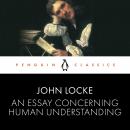
An Essay Concerning Human Understanding
"Brought to you by Penguin. This Penguin Classic is performed by Adetomiwa Edun, best known for his TV roles in Merlin and Bates Motel and his role in the football video games FIFA. He has also appeared in Lucifer, Legends, and Death in Paradise, Elementary and as Mr Brocks in the Doctor Who Christmas Special in 2016. In An Essay Concerning Human Understanding, first published in 1690, John Locke (1632-1704) provides a complete account of how we acquire everyday, mathematical, natural scientific, religious and ethical knowledge. Rejecting the theory that some knowledge is innate in us, Locke argues that it derives from sense perceptions and experience, as analysed and developed by reason. While defending these central claims with vigorous common sense, Locke offers many incidental - and highly influential - reflections on space and time, meaning, free will and personal identity. The result is a powerful, pioneering work, which, together with Descartes's works, largely set the agenda for modern philosophy."
John Locke (Author), Adetomiwa Edun (Narrator)
Audiobook
A Letter Concerning Toleration
"‘A Letter Concerning Toleration’ by John Locke was originally published in Latin in 1689. It was Locke's response to the problem of religion and government; he proposed religious toleration as the answer. For Locke, the only way a Church gains genuine converts is through persuasion, not violence. Arguing that the government should not involve itself in spiritual matters, he offers three main reasons: individuals cannot divest control over their souls to secular forces, as God does not appoint the magistrate; force cannot bring about the change necessary for salvation as it cannot change one's beliefs; and there is no reason to believe that magistrates are reliable judges of religious truth. As an empiricist, Locke also considered the practical, such as religious toleration on the peace of civil society."
John Locke (Author), Philip Ray (Narrator)
Audiobook
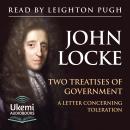
Two Treatises of Government and A Letter Concerning Toleration
"John Locke (1632-1704) was a product of his troubled times: he lived through the English Civil War, the Interregnum, the Restoration, Monmouth’s Rebellion, the Bloody Assizes and the Glorious Revolution. His empirical thinking was very much directed at finding rational solutions to the root causes of those troubles. Considered the founder of English empiricism and a precursor of the Enlightenment, his ideas on religious toleration, human rights and limitations on governmental power may seem so normal to us now as to be common sense, so well have they been assimilated by the social psyche; but this was far from being the case when Locke proposed them. The son of a Puritan family - his father fought as a captain of cavalry in the parliamentary army in the English Civil War - Locke was educated at Westminster school and then Oxford University, where he studied medicine and natural philosophy. He became the personal physician to the Earl of Shaftesbury, later the Lord Chancellor and founder of the Whig party. It was probably at Shaftesbury’s behest that he produced the Two Treatises Concerning Government. He began work on these in 1679, after travelling extensively in France. But in 1683 he fled to Holland following the failed Rye House Plot, in which he was suspected of having been involved by the authorities. The Two Treatises would not be published until 1689, after the Glorious Revolution. The first treatise is essentially an in-depth critique of Robert Filmer’s Patriarcha, a work which argued in favour of the divine right of kings and which was much referred to in the reign of Charles II, mainly by clerics preaching from the pulpit asserting the divine right in support of the monarch. Locke systematically dismantles and invalidates every one of Filmer’s assertions, dissecting his arguments one by one, invoking scriptural references in support of his counterarguments and disentangling and clarifying a host of ideas pertaining to the nature and origins of authority. In the second treatise, which is the better known, much more influential and important work, Locke suggests a different account for the origins and nature of government, referring back to the Hobbesian notion of the state of nature postulating three basic natural rights: the right to life, to liberty and to property. Section by section the philosopher examines his subject, lays out his thinking process and explains his conclusions, very different from Hobbes’ ideas, articulating a series of beliefs and concepts now germane to government by liberal democracy: the separation of church and state, and of the legislative and executive powers, the doctrine of checks and balances and the labour theory of value being among them. Locke’s contention that populations had the justifiable right to overthrow tyrannical governments clearly influenced Thomas Jefferson and played an important part in the American Revolution and the setting up of the Republic. A Letter Concerning Toleration, here translated by William Popple, was originally written in Latin and focuses on the problems of religion and government advocating a philosophy of tolerance among Christians as the solution, albeit with certain qualifications. These seminal Locke works are read with brio by Leighton Pugh."
John Locke (Author), Leighton Pugh (Narrator)
Audiobook
"The setting is the Tower of London, and Thomas More awaits his execution. Looking for distraction from his predicament, More rereads Utopia, and becomes obsessed with the Utopian system of government of which he was so skeptical two decades earlier. His friends, Giles and Hythloday visit More a few days before his appointment with the executioner, and confess that they too, have recently been musing about life in the island nation. More compels his friends to return to Utopia in order to gather more information. Then, by leveraging their relationships with influential humanist colleagues, Giles and Hythloday will introduce the alternative system of governance to the people of Europe. Thirty days later, as the light of a full moon glistens on the River Thames below the London Bridge, More’s daughter collects her father’s severed head from the King’s guard, and Hythloday’s ship Dolfijn glides toward the river’s mouth on its way back to the New World island of Utopia."
John Locke (Author), Debbie Locke (Narrator)
Audiobook
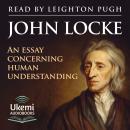
An Essay Concerning Human Understanding
"John Locke and his works - particularly An Essay Concerning Human Understanding - are regularly and rightly presented as foundations for the Age of Enlightenment. His primary epistemological message - that the mind at birth is a blank sheet waiting to be filled by the experiences of the senses - complemented his primary political message: that human beings are free and equal and have the right to envision, create and direct the governments that rule them and the societies within which they live. In these respects, one might think of Locke (1632-1704) as preparing the way for the 18th century, though An Essay Concerning Human Understanding dates from 1690. In the essay he remarks that he was ‘employed as an under-labourer in clearing the ground a little, and removing some of the rubbish that lies in the way to knowledge’. Everywhere, Locke’s 18th-century readers included learned philosophers, educators, historians and political thinkers but also local community and political leaders, students and many others eager to take advantage of the expanding world of print culture that was a central part of the Enlightenment. Today, Locke remains an accessible author whose essay can still be listened to with pleasure by an engaged public around the world. Some will listen to his work to know more about the beginnings of the modern era; others will seek arguments to be used in present-day debates. This recording presents An Essay unabridged. It is prefaced by an informative introduction (written for the Wordsworth Edition) by Mark G. Spencer, who explains: ‘The starting point for much of Locke’s philosophy was his keenness to explore how it was that humans arrived at their knowledge of the world. What do humans know? How do they know what they know?’ Or, as Locke himself puts it in his opening section, ‘Epistle to the Reader’, his purpose was to 'examine our own abilities, and see what objects our understandings were, or were not, fitted to deal with.’ And it remains an approachable text, for, as Spencer points out, Locke’s ‘intended reading audience was not one of scholars and philosophers shut up in their closets’ but the ordinary man.’ The essay is divided into four books: Part 1: Of Innate Notions, Of Ideas, Of Words; and Part 2: Of Knowledge and Probability. Leighton Pugh reads with clarity and vigour."
John Locke (Author), Leighton Pugh (Narrator)
Audiobook

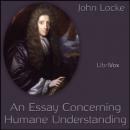
An Essay Concerning Humane Understanding
"John Locke's essays on human understanding answers the question "What gives rise to ideas in our minds?". In the first book Locke refutes the notion of innate ideas and argues against a number of propositions that rationalists offer as universally accepted truth. In the second book Locke elaborates the role played by sensation, reflection, perception and retention in giving rise to simple ideas. Then he elaborates on how different modes, substances and relations of simple ideas (of the same kind) give rise to complex ideas v.g. space, time, infinity etc. Finally he discusses complex ideas of mixed modes which arise from a combination of simple ideas of different kinds v.g. identity and diversity, cause and effect, etc. (Summary by bala)"
John Locke (Author), LibriVox Volunteers (Narrator)
Audiobook
Two Treatises of Civil Government
"The Two Treatises of Civil Government is a work of political philosophy published anonymously in 1689 by John Locke. The First Treatise is an extended attack on Sir Robert Filmer's Patriarcha, which argued for a divinely-ordained, hereditary, absolute monarchy. The more influential Second Treatise outlines a theory of civil society based on natural rights and contract theory. Locke begins by describing the "state of nature," and goes on to explain the hypothetical rise of property and civilization, asserting that the only legitimate governments are those which have the consent of the people. Locke's ideas heavily influenced both the American and French Revolutions. His notions of people's rights and the role of civil government provided strong support for the intellectual movements of both revolutions. (Summary adapted from Wikipedia)"
John Locke (Author), LibriVox Volunteers (Narrator)
Audiobook
A Letter Concerning Toleration
"Letter Concerning Toleration by John Locke was originally published in 1689. Its initial publication was in Latin, though it was immediately translated into other languages. In this "letter" addressed to an anonymous "Honored Sir" (actually Locke's close friend Philip von Limborch, who published it without Locke's knowledge) Locke argues for a new understanding of the relationship between religion and government. One of the founders of Empiricism, Locke develops a philosophy that is contrary to the one expressed by Thomas Hobbes in Leviathan, primarily because it supports toleration for various Christian denominations. Locke's work appeared amidst a fear that Catholicism might be taking over England, and responds to the problem of religion and government by proposing toleration as the answer. Unlike Hobbes, who saw uniformity of religion as the key to a well-functioning civil society, Locke argues that more religious groups actually prevent civil unrest. Locke argues that civil unrest results from confrontations caused by any magistrate's attempt to prevent different religions from being practiced, rather than tolerating their proliferation. Locke's primary goal is to "distinguish exactly the business of civil government from that of religion." He makes use of extensive argument from analogy to accomplish his goal, and relies on several key points. The thing that he wants to persuade the reader of is that government is instituted to promote external interests, relating to life, liberty, and the general welfare, while the church exists to promote internal interests, i.e., salvation. The two serve separate functions, and so, must be considered to be separate institutions. (Summary from Wikipedia)"
John Locke (Author), D.E. Wittkower (Narrator)
Audiobook
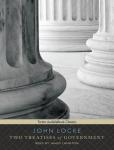
"Often considered the foundation of political liberalism, John Locke's Two Treatises of Government was first published anonymously in 1689, in the wake of England's Glorious Revolution. In The First Treatise of Government, Locke refutes the idea of divine monarchy, while The Second Treatise of Government articulates Locke's philosophy of government, which he based upon his theories of natural rights and the social contract. In Locke's view, governments' legitimacy is based upon their performance of their proper functions—preservation of the life, liberty, and property rights of their citizens, and protection from those who seek to violate these rights. A radical doctrine at the time of its publication, Locke's theories provided a philosophical basis for many of the principles behind the American Revolution. More than 300 years after the publication of the Two Treatises of Government, Locke's ideas continue to spark debate. A must-listen for anyone interested in the foundations of contemporary political ideology, Locke's hugely influential work will retain its relevance for generations to come."
John Locke (Author), James Langton (Narrator)
Audiobook
©PTC International Ltd T/A LoveReading is registered in England. Company number: 10193437. VAT number: 270 4538 09. Registered address: 157 Shooters Hill, London, SE18 3HP.
Terms & Conditions | Privacy Policy | Disclaimer
Join our community for the latest bookish news, reading recommendations, exclusive opening extracts, author events and competitions. It\'s all free. And enter a monthly draw to win a £50 Gift Card. See past winners here
Join Our Community