Browse audiobooks by Jerry Darson, listen to samples and when you're ready head over to Audiobooks.com where you can get 3 FREE audiobooks on us
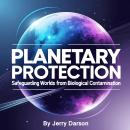
Planetary Protection: Safeguarding Worlds from Biological Contamination
"This audiobook is narrated by a digital voice. Planetary protection refers to the practice of preventing biological contamination between Earth and other celestial bodies during space exploration. As humanity continues to explore the solar system and beyond, the responsibility to safeguard both extraterrestrial environments and our own planet becomes increasingly important. This field is not just about science and technology—it’s a critical intersection of ethics, policy, and planetary stewardship. The concept of planetary protection originated during the early years of space exploration. With the launch of missions to the Moon, Mars, and other planets, scientists and international bodies quickly realized that biological contamination could compromise scientific investigations and possibly threaten native environments. For example, if Earth microbes were to contaminate Mars, it could confuse efforts to detect signs of Martian life, undermining years of research and billions of dollars in investment. Planetary protection is guided by the principle of avoiding harmful contamination, both forward and backward. Forward contamination is the transfer of Earth organisms to other worlds, while backward contamination involves potentially hazardous extraterrestrial materials being brought back to Earth. Addressing both requires meticulous planning, specialized technology, and strict procedural controls."
Jerry Darson (Author), Digital Voice Alistair G (Narrator)
Audiobook
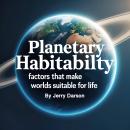
Planetary Habitability: Factors That Make Worlds Suitable for Life
"This audiobook is narrated by a digital voice. The concept of planetary habitability revolves around the potential of a celestial body to support life, particularly life as we understand it—carbon-based organisms that require water, energy, and stable environmental conditions. Habitability does not necessarily imply that life exists on a planet, but rather that the conditions are right for life to emerge and persist over time. Scientists assess various planetary characteristics to determine whether a world could be considered habitable, and this assessment has become a cornerstone in the search for life beyond Earth. Historically, the idea of habitability has evolved alongside our understanding of astronomy and biology. In ancient times, Earth was considered unique and central to the universe. However, as telescopes improved and our grasp of planetary science deepened, it became apparent that Earth might be one of many planets capable of supporting life. The discovery of exoplanets—planets orbiting stars outside our solar system—has dramatically expanded the scope of the habitability discussion. Today, thousands of exoplanets have been identified, and scientists continue to analyze their features to assess whether any of them resemble Earth in critical ways. At the core of defining habitability is a set of criteria based on what we know about life on Earth. These include the presence of liquid water, a stable source of energy, and a range of environmental factors such as temperature, atmospheric pressure, and chemical composition. While Earth serves as our primary model for habitability, researchers remain open to the possibility that life could exist under different conditions, perhaps even in environments previously deemed inhospitable."
Jerry Darson (Author), Digital Voice Archie G (Narrator)
Audiobook
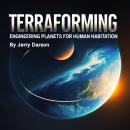
Terraforming: Engineering Planets for Human Habitation
"This audiobook is narrated by a digital voice. Terraforming, the process of transforming a planet or other celestial body into an environment suitable for human life, represents one of humanity’s most ambitious scientific and technological aspirations. It combines principles from planetary science, biology, climate engineering, and aerospace technology to envision how humans might one day inhabit worlds beyond Earth. Though it has long existed as a staple of science fiction, the concept of terraforming is gaining increasing attention as our capabilities in space exploration grow and the prospect of a future off-world becomes more tangible. The idea of terraforming is not new. It was first introduced in the early 20th century, but only began to take on a serious scientific tone in the latter half of the century as space agencies and researchers began to consider Mars as a realistic target for future colonization. From Carl Sagan's early suggestions of warming Mars by releasing greenhouse gases, to NASA's current studies on planetary environments, the trajectory of terraforming has been deeply rooted in both imagination and incremental scientific advancement. Ethical and philosophical questions surround the notion of terraforming. Should humans alter other worlds to suit their needs, especially when those worlds may harbor microbial life? What responsibilities come with modifying an entire planet’s ecosystem? Some argue that terraforming is an expression of human ingenuity and survival instinct, a natural progression for a species looking to expand beyond its cradle. Others view it as a potentially reckless endeavor that could damage pristine celestial environments or lead to unforeseen consequences. Balancing the drive to explore and inhabit with the need for planetary stewardship is an ongoing debate in both scientific and philosophical circles."
Jerry Darson (Author), Digital Voice Charlotte G (Narrator)
Audiobook
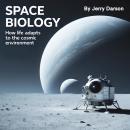
Space Biology: How Life Adapts to the Cosmic Environment
"This audiobook is narrated by a digital voice. Space biology is the study of how living organisms respond to the conditions of space, including microgravity, cosmic radiation, and confinement. This field has grown significantly since the dawn of the space age, playing a crucial role in understanding how life adapts beyond the boundaries of Earth. It combines principles from biology, physics, chemistry, and aerospace engineering to explore how organisms—from microbes to humans—can survive and thrive in extraterrestrial environments. The origins of space biology trace back to the early 20th century, when scientists first questioned how life might react to the harsh conditions of space. Initial experiments involved sending seeds, insects, and small animals on high-altitude balloons and later on suborbital flights. With the advent of the space race, space biology became more structured, especially with missions like the Soviet Sputnik and American Explorer series. Animals such as dogs, monkeys, and eventually humans were sent into space to test biological responses. These pioneering studies laid the foundation for understanding the effects of space travel on living systems and emphasized the need for rigorous biological research in space environments. Over time, key milestones have propelled the field forward. The launch of biosatellites, like NASA’s Biosatellite Program and Russia’s Bion series, allowed for longer and more complex biological experiments in orbit. The use of the International Space Station (ISS) has further expanded possibilities, offering a laboratory where scientists can conduct controlled experiments over extended periods. Through these missions, researchers have observed critical phenomena such as muscle atrophy, bone density loss, altered gene expression, and changes in microbial behavior. These findings are not only important for space exploration but also provide insights into human health and disease on Earth."
Jerry Darson (Author), Digital Voice Cole G (Narrator)
Audiobook
Prebiotic Chemistry: The Chemical Steps Toward Life's Beginning
"This audiobook is narrated by a digital voice. Prebiotic chemistry explores the chemical processes that preceded the emergence of life on Earth. It seeks to understand how simple molecules, under the right environmental conditions, could assemble into increasingly complex compounds—ultimately forming the building blocks necessary for life. This field operates at the intersection of chemistry, planetary science, and biology, providing crucial insights into the transition from non-living matter to living systems. The origins of chemical evolution are rooted in the idea that life did not suddenly appear but was the result of gradual molecular development. In the early Earth’s history, the planet was a dynamic environment shaped by volcanic activity, ultraviolet radiation, lightning, and meteorite impacts. These factors, along with the presence of water and atmospheric gases like methane, ammonia, and hydrogen, created a setting ripe for chemical transformations. It is within this volatile yet chemically fertile environment that the first organic molecules—such as amino acids, sugars, and nucleotides—could have formed. Organic molecules, though simple in structure, are the fundamental components of all living organisms. Understanding their prebiotic formation helps explain how life might have begun. These molecules are capable of self-organization and interaction, forming more complex assemblies under suitable conditions. For example, amino acids can link together into peptides, and nucleotides can polymerize into RNA or DNA strands. The formation of these complex macromolecules from simpler units is a key aspect of prebiotic chemistry, providing a bridge between inert matter and the dynamic systems that define life."
Jerry Darson (Author), Digital Voice Marcus G (Narrator)
Audiobook
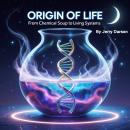
Origin of Life: From Chemical Soup to Living Systems
"This audiobook is narrated by a digital voice. To understand the origin of life, we must begin long before Earth itself existed—with the birth of the universe. The story starts nearly 13.8 billion years ago with the Big Bang, a cosmic event that marked the beginning of time and space. In its aftermath, the universe was a seething mass of energy and fundamental particles. As it expanded and cooled, these particles combined to form hydrogen and helium—the simplest elements and the primary building blocks for stars. Over hundreds of millions of years, gravity gathered these gases into massive clouds that collapsed under their own weight to form stars. Within these stellar furnaces, nuclear fusion gave rise to heavier elements like carbon, nitrogen, oxygen, and iron—the essential ingredients for life. When massive stars exhausted their fuel, they exploded as supernovae, scattering these life-enabling elements across the cosmos. These cosmic events seeded the interstellar medium with the raw materials from which new stars and planetary systems would emerge. Around 4.6 billion years ago, in a relatively quiet corner of the Milky Way, one such cloud of gas and dust began to collapse. From this swirling disk, our Sun was born at its center, while the remaining material coalesced into planets, moons, asteroids, and comets. Among these was Earth—a rocky planet positioned at just the right distance from the Sun to allow liquid water, a crucial component for life as we know it."
Jerry Darson (Author), Digital Voice Mason G (Narrator)
Audiobook
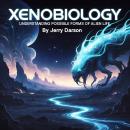
Xenobiology: Understanding Possible Forms of Alien Life
"This audiobook is narrated by a digital voice. Xenobiology, a branch of speculative biology, explores the potential forms and principles of life that could exist beyond Earth. It extends beyond traditional biology by considering life as it might be—not just as it is known on Earth. This field draws from a wide range of scientific disciplines including astrobiology, chemistry, physics, and evolutionary biology, making it a highly interdisciplinary science rooted in both empirical research and imaginative theorizing. While xenobiology often overlaps with science fiction, it is grounded in rigorous scientific principles and is increasingly relevant due to advances in space exploration and exoplanet discovery. The term “xenobiology” was first popularized in the mid-20th century as scientists began to seriously consider the possibility of extraterrestrial life. The early stages of the field were heavily influenced by astronomy and the speculative works of science fiction writers, who imagined life on other planets with unique adaptations and physiologies. However, as technology advanced, so did the ability to search for life in real extraterrestrial environments. Missions to Mars, observations of icy moons like Europa and Enceladus, and the detection of thousands of exoplanets have transformed xenobiology into a more structured and empirical field of study. One of the most critical aspects of xenobiology is its interdisciplinary nature. To explore the unknown possibilities of life, scientists must combine insights from various domains. Chemistry offers understanding into potential biochemical alternatives to Earth’s carbon-based life, such as silicon-based or ammonia-based organisms. Physics helps establish the environmental constraints on alien worlds, such as temperature, radiation, and atmospheric pressure."
Jerry Darson (Author), Digital Voice Michelle G (Narrator)
Audiobook
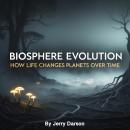
Biosphere Evolution: How Life Changes Planets Over Time
"This audiobook is narrated by a digital voice. The story of life on Earth begins over 4 billion years ago, during a period when the planet was vastly different from what we know today. The early Earth was a hostile and volatile environment, shaped by intense volcanic activity, frequent meteorite impacts, and a lack of atmospheric oxygen. Despite these harsh conditions, it provided the chemical and physical building blocks necessary for life to emerge. Scientists believe that simple organic molecules formed in Earth’s primordial soup, potentially aided by energy sources such as lightning or hydrothermal vents. These molecules eventually combined into more complex structures, leading to the first self-replicating systems and, ultimately, the first living organisms. The earliest known life forms were microscopic, single-celled organisms, likely similar to modern-day archaea and bacteria. Fossil evidence suggests that these microbial communities were thriving as early as 3.5 billion years ago. These organisms did not rely on oxygen but instead used anaerobic processes to generate energy. Some may have metabolized sulfur or iron, contributing to chemical changes in the oceans and atmosphere. Their interactions with their environment began the long process of transforming Earth from a lifeless rock into a living world. The early biosphere—composed of these primitive life forms—played a pivotal role in shaping planetary systems. As life grew more complex and abundant, it started to influence global processes such as the cycling of carbon and the formation of sediments. Microbial mats, for instance, trapped particles and created layered structures known as stromatolites, which are among the oldest evidence of life on Earth. These biological structures began to interact with the geosphere, setting the stage for future planetary changes."
Jerry Darson (Author), Digital Voice Ava G (Narrator)
Audiobook
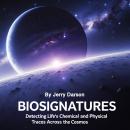
Biosignatures: Detecting Life's Chemical and Physical Traces Across the Cosmos
"This audiobook is narrated by a digital voice. Biosignatures are the chemical, physical, or biological indicators that suggest the presence of past or present life. These markers are crucial in the field of astrobiology, serving as the main evidence scientists seek when exploring environments beyond Earth. Whether through the detection of atmospheric gases, fossilized microstructures, or complex organic molecules, biosignatures provide potential proof that life may exist—or once existed—elsewhere in the universe. To begin understanding biosignatures, it is essential to grasp their diversity and the ways they can be classified. Biosignatures are generally divided into several categories: chemical, isotopic, morphological, and contextual. Chemical biosignatures include compounds such as methane or oxygen that, in certain concentrations and contexts, may suggest biological activity. Isotopic biosignatures arise from processes that fractionate isotopes in ways specific to living organisms. Morphological biosignatures refer to microfossils or structures resembling biological shapes. Contextual biosignatures involve environmental settings—such as sediment layers or mineral patterns—that support biological interpretation. The significance of biosignatures lies not only in their detection but also in their reliability. Distinguishing genuine biosignatures from abiotic (non-living) processes is a major challenge. For example, methane can be produced both biologically and geologically. Similarly, certain mineral patterns once thought to indicate ancient life can form through entirely physical means. Thus, the interpretation of biosignatures requires a holistic approach, combining geochemistry, planetary science, and biology. Multiple lines of evidence are usually needed before making a credible case for life."
Jerry Darson (Author), Digital Voice Charlotte G (Narrator)
Audiobook
Extremophile Habitats: Where Life Thrives in Impossible Conditions
"This audiobook is narrated by a digital voice. Extremophiles are living organisms that defy conventional expectations of where life can exist. Thriving in the most inhospitable environments on Earth, they have reshaped our understanding of biology, evolution, and even the potential for life beyond our planet. These organisms—primarily microbes such as archaea and bacteria—have adapted to conditions previously thought to be sterile: scalding temperatures, crushing pressures, high levels of radiation, extreme salinity, acidity, and even vacuum-like dryness. To grasp the significance of extremophiles, it's essential to first understand their place within the broader tree of life. While animals and plants often dominate our concept of biology, extremophiles are predominantly microscopic and belong to ancient domains of life: Bacteria and Archaea. These organisms represent some of the earliest life forms on Earth, with fossils suggesting they existed over 3.5 billion years ago. Their resilience suggests that life may have originated under far harsher conditions than those we consider habitable today. In many ways, extremophiles offer a living window into Earth’s primordial past. The discovery and classification of extremophiles have revolutionized microbiology and planetary science. For decades, scientists assumed that life required moderate conditions similar to those humans prefer. That belief was shattered in the late 20th century with the exploration of deep-sea hydrothermal vents, where entire ecosystems, supported not by sunlight but by chemical energy, were found flourishing in complete darkness and intense heat. From there, research expanded to other extreme environments: acidic hot springs, frozen polar deserts, hypersaline lakes, and radioactive zones."
Jerry Darson (Author), Digital Voice Mary G (Narrator)
Audiobook
Exobiology: The Science of Life Beyond Earth
"This audiobook is narrated by a digital voice. Exobiology, also known as astrobiology, is the scientific study of life beyond Earth. It is a multidisciplinary field that merges biology, chemistry, astronomy, planetary science, and geology to explore one of humanity’s most profound questions: are we alone in the universe? The origins of exobiology as a formal discipline can be traced back to the mid-20th century, although speculation about life on other planets stretches much further into human history. In ancient times, philosophers like Epicurus suggested the existence of multiple worlds and the possibility of life beyond Earth. However, it wasn't until the advent of modern science and space exploration that these ideas evolved from philosophical musing into a scientific inquiry. The 19th and early 20th centuries saw an increased interest in extraterrestrial life, especially with the discovery of canals on Mars by astronomers like Percival Lowell. Though these observations were later disproven, they sparked public imagination and scientific curiosity. The field truly began to take shape during the 1960s when NASA formally introduced the term “exobiology.” One of the leading pioneers of the discipline was Dr. Joshua Lederberg, a Nobel Prize-winning biologist who advocated for the study of life beyond Earth and the need for planetary protection. Lederberg’s influence, combined with growing interest in space travel and the possibility of life on planets like Mars, gave exobiology its initial momentum."
Jerry Darson (Author), Digital Voice Melissa G (Narrator)
Audiobook
Extraterrestrial Life: The Search for Biology Beyond Earth
"This audiobook is narrated by a digital voice. Understanding the origins of life on Earth provides the foundational framework for the search for life elsewhere in the universe. Scientists believe that life began approximately 3.5 to 4 billion years ago, during a time when the planet was vastly different from today. The early Earth was a volatile environment, with high temperatures, volcanic activity, and a primitive atmosphere composed mainly of water vapor, carbon dioxide, nitrogen, and trace gases. These harsh conditions may have actually set the stage for the chemical reactions that led to life. At the heart of this inquiry lies the study of the basic building blocks of life: organic molecules such as amino acids, nucleotides, and lipids. These compounds can form under a variety of conditions and have been created in laboratory experiments simulating early Earth’s environment, such as the famous Miller-Urey experiment in 1953. This experiment demonstrated that, with the right energy input, simple chemicals can produce more complex organic molecules. These early compounds may have accumulated in Earth’s primordial oceans, creating a “soup” of chemicals from which life gradually emerged. The next step in this process was the development of self-replicating molecules, most likely RNA, which is capable of both storing genetic information and catalyzing chemical reactions. This stage marked the beginning of biological evolution, where natural selection began to favor more efficient and stable forms of molecular organization. Over time, these molecules may have become enclosed within lipid membranes, forming primitive cells known as protocells. These protocells were likely the ancestors of all modern life."
Jerry Darson (Author), Digital Voice Melissa G (Narrator)
Audiobook
©PTC International Ltd T/A LoveReading is registered in England. Company number: 10193437. VAT number: 270 4538 09. Registered address: 157 Shooters Hill, London, SE18 3HP.
Terms & Conditions | Privacy Policy | Disclaimer
Join our community for the latest bookish news, reading recommendations, exclusive opening extracts, author events and competitions. It\'s all free. And enter a monthly draw to win a £50 Gift Card. See past winners here
Join Our Community