Browse audiobooks by Hector Davidson, listen to samples and when you're ready head over to Audiobooks.com where you can get 3 FREE audiobooks on us
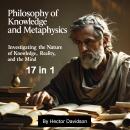
Philosophy of Knowledge and Metaphysics: Investigating the Nature of Knowledge, Reality, and the Min
"This book contains the following 17 titles: - Aesthetics - Analytic Philosophy - Epistemology - Hedonism - Idealism - Jean-Jacques Rousseau - Jean-Paul Sartre - John Rawls - John Stuart Mill - Liberalism - Metaphysics - Nihilism - Phenomenology - Pragmatism - René Descartes - Structuralism - Zeno Get this discounted bundle today!"
Hector Davidson (Author), Rosa Hallwar (Narrator)
Audiobook
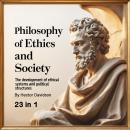
Philosophy of Ethics and Society: The Development of Ethical Systems and Political Structures (23 in
"This book consists of the following titles and topics: - Adam Smith - Ayn Rand - Baruch Spinoza - Bertrand Russell - Camus - Critical Theory - Cynicism - Epicurus - Feminist Philosophy - Humanism - Liberalism - Mary Wollstonecraft - Montesquieu - Moral Philosophy - Naturalism - Niccolo Machiavelli - Parmenides - Peter Singer - Political Philosophy - Simone Weil - Socrates - Transcendentalism - Utilitarianism "
Hector Davidson (Author), Rosa Hallwar (Narrator)
Audiobook
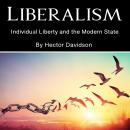
Liberalism: Individual Liberty and the Modern State
"Liberalism is a political and philosophical ideology rooted in the principles of individual liberty, equality, and limited government. At its core, liberalism emphasizes the autonomy of the individual, arguing that each person has the right to pursue their own life and happiness, free from unnecessary interference by the state or society. Emerging in the Enlightenment period, liberalism challenged the traditional structures of monarchies and feudal systems, advocating for the rights of the individual and the importance of reason, tolerance, and democratic participation. The roots of liberal thought can be traced back to the works of early modern philosophers such as John Locke, whose ideas on natural rights and government by consent laid the foundation for liberal political theory. Locke’s assertion that individuals possess inherent rights to life, liberty, and property formed the basis for much of liberal thought, influencing the development of constitutionalism and democratic governance. Over time, thinkers like Montesquieu, Rousseau, and later John Stuart Mill contributed to the evolution of liberalism, expanding its focus to issues of civil liberties, political freedoms, and social equality. A defining characteristic of liberalism is its emphasis on individual freedom. This includes both personal liberty—the freedom to make choices about one’s own life—and political liberty—the right to participate in the democratic process and have a say in the laws and policies that govern society. Classical liberals advocated for minimal government interference in the economy and individual affairs, emphasizing free markets, private property, and limited state power. The role of the state, in this view, is to protect the rights of individuals and maintain social order, but not to intervene in the private lives or economic transactions of citizens."
Hector Davidson (Author), Rosa Hallwar (Narrator)
Audiobook
Kierkegaard: Existentialism and the Leap of Faith
"Søren Kierkegaard, often regarded as the father of existentialism, was born on May 5, 1813, in Copenhagen, Denmark. His early life was marked by tragedy, as his mother died when he was just a child, and his father, a deeply religious man, instilled in him a sense of guilt and the weight of existential questioning. Kierkegaard’s relationship with his father deeply influenced his philosophical development, particularly in his exploration of faith, despair, and the individual's relationship with God. Kierkegaard’s intellectual journey began at the University of Copenhagen, where he studied theology and philosophy. He was deeply influenced by the works of philosophers such as Immanuel Kant and Friedrich Hegel, yet he sought to diverge from the systematic and rational approaches of these thinkers. Instead, he focused on the subjective aspects of human experience, emphasizing personal choice, individual responsibility, and the need for authentic existence. Kierkegaard believed that philosophy should not merely be an abstract pursuit but should directly address the real, lived experiences of individuals. One of Kierkegaard's most significant contributions to philosophy was his critique of the established norms of society and religion. He believed that individuals often live in a state of 'inauthenticity,' blindly following social conventions and doctrines without truly reflecting on their own beliefs. For Kierkegaard, true existence could only be achieved through the individual’s leap of faith—an existential act that transcends reason and embraces the paradoxical nature of human life."
Hector Davidson (Author), Rosa Hallwar (Narrator)
Audiobook
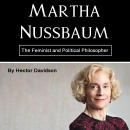
Martha Nussbaum: The Feminist and Political Philosopher
"Martha Nussbaum is one of the most influential philosophers of our time, particularly known for her contributions to feminist theory, political philosophy, and ethics. A professor at the University of Chicago, her work spans a wide array of topics including justice, human capabilities, human rights, and the role of emotions in moral decision-making. Nussbaum’s ideas have significantly impacted both academic philosophy and practical policy, with her innovative theories offering valuable insights into the intersection of ethics, politics, and human development. At the heart of Nussbaum’s intellectual journey is the development of the capabilities approach, a framework she co-created with economist Amartya Sen. This approach is centered on the idea that justice should be evaluated based on individuals’ abilities to function and achieve various important life goals, rather than simply on income or wealth. The capabilities approach emphasizes human dignity and focuses on the conditions that allow people to live lives they have reason to value. It challenges traditional views of social justice by broadening the scope of what constitutes a flourishing life beyond mere economic success. Nussbaum’s feminist philosophy is also pivotal in understanding her work. As an advocate for gender equality, she has critiqued traditional philosophical frameworks that have marginalized women’s voices and experiences. Her feminist perspective emphasizes the importance of recognizing the diverse and often undervalued roles that women play in society, and she works toward reshaping institutions to ensure that women’s capabilities are supported and nurtured. Nussbaum argues that feminism is not just about advocating for women’s rights but also about advancing a more inclusive and just society for all people, regardless of gender."
Hector Davidson (Author), Rosa Hallwar (Narrator)
Audiobook
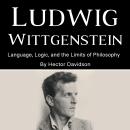
Ludwig Wittgenstein: Language, Logic, and the Limits of Philosophy
"Ludwig Wittgenstein, one of the most influential philosophers of the 20th century, profoundly shaped modern thought, particularly in the realms of language, logic, and the philosophy of mind. His philosophy spans two distinct periods, marked by an evolution in his views on the relationship between language, meaning, and reality. Wittgenstein’s work challenges the way we think about and use language, positing that philosophical problems often arise from misunderstandings of language and its limitations. Wittgenstein’s early philosophy, as presented in his landmark work Tractatus Logico-Philosophicus, was grounded in the belief that language could mirror the structure of reality. According to his 'picture theory of meaning,' words and sentences are pictures that represent facts in the world. He argued that the limits of language are also the limits of the world, and anything that could not be meaningfully expressed through language was simply beyond the scope of philosophy. This view led him to conclude that many traditional philosophical problems were nonsensical, arising from a misuse of language. However, Wittgenstein underwent a significant philosophical transformation after his work on the Tractatus, largely due to his dissatisfaction with the results of his early approach. By the time of his later work, particularly in Philosophical Investigations, Wittgenstein had rejected the picture theory of meaning and developed the concept of 'language games.' He argued that meaning is not inherent in words themselves but is derived from their use in various social contexts. Language, for Wittgenstein, is a tool embedded in human practices and activities. He claimed that understanding language requires understanding the ways it functions in specific contexts, challenging the idea of a fixed, underlying structure of meaning."
Hector Davidson (Author), Rosa Hallwar (Narrator)
Audiobook
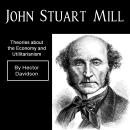
John Stuart Mill: Theories about the Economy and Utilitarianism
"John Stuart Mill, a British philosopher and political economist, remains one of the most influential thinkers of the 19th century. Born in 1806, Mill was exposed to rigorous intellectual training from an early age, particularly through his father, James Mill, a prominent utilitarian philosopher. This early exposure shaped Mill's understanding of the world, leading him to become a key figure in the development of utilitarianism, a moral theory that evaluates actions based on their ability to promote the greatest happiness for the greatest number of people. Mill’s contribution to utilitarianism was both a continuation and a refinement of the ideas originally proposed by Jeremy Bentham, his intellectual predecessor. While Bentham’s version of utilitarianism focused primarily on the quantity of pleasure or pain produced by an action, Mill introduced a more nuanced view by distinguishing between higher and lower pleasures. According to Mill, pleasures of the intellect, imagination, and moral feelings were superior to those of mere physical satisfaction. This distinction between qualitative pleasures was central to Mill’s revision of utilitarian thought, emphasizing that the quality of happiness mattered as much as, if not more than, its quantity. In this chapter, we explore the foundations of utilitarianism as laid out by Mill. He argued that the ultimate goal of human life is to achieve happiness, which can be defined as the presence of pleasure and the absence of pain. Mill believed that utilitarianism provided a clear and objective standard by which to judge actions, policies, and societal practices. The greatest happiness principle, which advocates for actions that maximize overall happiness, is a central tenet of Mill’s ethical framework. However, Mill also recognized the complexity of applying this principle in real-life situations, acknowledging the challenges of balancing individual rights with the greater good."
Hector Davidson (Author), Rosa Hallwar (Narrator)
Audiobook
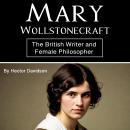
Mary Wollstonecraft: The British Writer and Female Philosopher
"Mary Wollstonecraft was a pioneering British writer and philosopher whose ideas on women’s rights and education laid the foundation for modern feminism. Born on April 27, 1759, in Spitalfields, London, she grew up in a time when society severely restricted women's opportunities. Despite these limitations, Wollstonecraft’s determination, intellect, and relentless pursuit of knowledge allowed her to challenge the status quo and advocate for gender equality. Her life was shaped by personal struggles, societal constraints, and an unwavering belief in the power of education. Wollstonecraft’s early years were marked by financial instability and familial hardships. Her father, Edward Wollstonecraft, mismanaged the family’s wealth, frequently moving the household in pursuit of failed business ventures. This instability forced Mary and her siblings into difficult circumstances, with her witnessing firsthand the consequences of economic insecurity. More troubling, her father was reportedly abusive, particularly towards her mother, which deeply affected Mary’s views on marriage and male authority. Unlike many girls of her time, who received little to no formal education, Mary sought knowledge independently. She read extensively, developed a strong moral compass, and displayed an early inclination toward questioning societal norms. One of the most influential figures in her formative years was Fanny Blood, a close friend whose intellect and independence inspired Mary. Their friendship was instrumental in shaping Wollstonecraft’s aspirations and her desire for a life beyond the domestic sphere. In pursuit of financial independence, she worked as a governess and later as a teacher, experiences that would inform her views on education."
Hector Davidson (Author), Rosa Hallwar (Narrator)
Audiobook
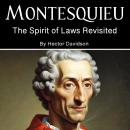
Montesquieu: The Spirit of Laws Revisited
"Montesquieu, a French philosopher of the Enlightenment, is best known for his seminal work The Spirit of Laws (De l’esprit des lois), published in 1748. His insights into the relationship between law, society, and government laid the foundations for modern political science and deeply influenced subsequent political thought, particularly in the development of constitutional design and theory. Montesquieu’s work was groundbreaking, challenging prevailing ideas about governance, liberty, and the rule of law, offering a complex framework that would shape political thought for centuries. Born in 1689, Montesquieu came from a noble family and was educated in law. His early career included service as a magistrate, which exposed him to the workings of the legal system and provided firsthand experience with the exercise of power. This practical knowledge informed his later philosophical work, as he sought to understand the connections between law and society, as well as the impact of political structures on individual liberty. In The Spirit of Laws, Montesquieu examined a wide variety of political systems, including republics, monarchies, and despotisms, and their corresponding legal frameworks. His most famous contribution to political thought was his theory of the separation of powers, in which he argued that to prevent tyranny, government power should be divided into distinct branches—executive, legislative, and judicial—each with separate functions and the ability to check the other branches. This framework has become a central tenet of modern democratic systems, including the U.S. Constitution."
Hector Davidson (Author), Rosa Hallwar (Narrator)
Audiobook
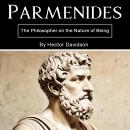
Parmenides: The Philosopher on the Nature of Being
"Parmenides of Elea stands as one of the most pivotal figures in the history of Western philosophy. His contributions, particularly in metaphysics and epistemology, challenged the prevailing philosophical ideas of his time and laid the groundwork for later philosophical inquiries. Born in the late sixth or early fifth century BCE, Parmenides is best known for his poem On Nature, in which he articulates a radical vision of reality that denies change, multiplicity, and the reliability of sensory perception. His assertion that “what is, is” and “what is not, is not” forms the core of his philosophical system, establishing the principle that true being must be eternal, unchanging, and indivisible. Prior to Parmenides, early Greek thinkers, particularly the Presocratics like Heraclitus and the Milesian philosophers, sought to explain the nature of reality through empirical observation and the identification of a fundamental substance or element underlying all things. Heraclitus, for example, famously posited that change and flux were the fundamental aspects of existence, encapsulated in the notion that “everything flows.” Parmenides, however, forcefully rejected this view, arguing that change and plurality were mere illusions. He insisted that the senses deceive us, leading to a mistaken belief in a world of becoming rather than a singular, unchanging being. His philosophical method, based on reason rather than empirical observation, introduced a new way of thinking that would profoundly influence later philosophical traditions. The significance of Parmenides lies not only in the content of his arguments but also in the impact he had on subsequent thinkers. Plato, for instance, engaged extensively with Parmenidean thought, particularly in dialogues such as the Parmenides and Sophist, where he sought to reconcile the Eleatic notion of an unchanging reality with the apparent diversity of the world."
Hector Davidson (Author), Rosa Hallwar (Narrator)
Audiobook
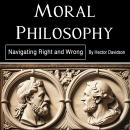
Moral Philosophy: Navigating Right and Wrong
"Moral philosophy, or ethics, is the branch of philosophy that examines concepts of right and wrong, virtue and vice, justice and injustice. It seeks to understand the foundations of moral principles, how they are applied in human life, and whether moral truths are objective or subjective. From ancient civilizations to modern societies, moral philosophy has played a crucial role in shaping human thought, behavior, and institutions. One of the fundamental questions in moral philosophy is whether morality is a product of reason, emotion, or social convention. Some philosophers argue that moral principles stem from rational deliberation, while others suggest that morality is deeply tied to human emotions, such as compassion and guilt. Social constructivists, on the other hand, emphasize that moral norms evolve through cultural traditions, religious beliefs, and historical contexts. The study of moral philosophy is often divided into three main branches. Meta-ethics explores the nature and meaning of moral language, questioning whether moral statements express objective truths or subjective opinions. Normative ethics examines different ethical theories that propose principles for moral conduct, such as consequentialism, deontology, and virtue ethics. Applied ethics focuses on practical moral issues, including debates on human rights, justice, medical ethics, and environmental concerns."
Hector Davidson (Author), Rosa Hallwar (Narrator)
Audiobook

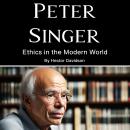
Peter Singer: Ethics in the Modern World
"Peter Singer is one of the most influential philosophers in contemporary ethics, known for his contributions to utilitarianism, animal rights, global poverty, bioethics, and environmental ethics. His ethical philosophy is grounded in the principle of utilitarianism, which holds that the right course of action is the one that produces the greatest overall happiness or well-being. Singer’s work is characterized by a practical, results-oriented approach, focusing on how ethical principles can be applied to real-world issues to alleviate suffering and promote well-being. His influential works, such as Animal Liberation and The Life You Can Save, challenge readers to consider the moral implications of their actions in a variety of contexts, from how they treat animals to how they engage with global poverty. At the core of Singer’s ethical framework is the idea that all sentient beings, regardless of their species, deserve equal consideration. This principle of equal consideration of interests leads to his advocacy for the rights of animals, arguing that their capacity to suffer should give them moral consideration equal to that of humans. Singer’s call for animal liberation challenges the traditional view of animals as resources for human consumption and urges society to rethink its treatment of non-human creatures. In addition to his work in animal ethics, Singer has profoundly impacted discussions on global poverty and humanitarian aid. Through his concept of effective altruism, he argues that individuals in affluent societies have a moral obligation to help those in extreme poverty. Using the famous “drowning child” analogy, Singer demonstrates that if we are morally obligated to save a child from drowning in a shallow pond, we should equally be compelled to help those suffering from poverty and preventable diseases, no matter the physical distance."
Hector Davidson (Author), Rosa Hallwar (Narrator)
Audiobook
©PTC International Ltd T/A LoveReading is registered in England. Company number: 10193437. VAT number: 270 4538 09. Registered address: 157 Shooters Hill, London, SE18 3HP.
Terms & Conditions | Privacy Policy | Disclaimer
Join our community for the latest bookish news, reading recommendations, exclusive opening extracts, author events and competitions. It\'s all free. And enter a monthly draw to win a £50 Gift Card. See past winners here
Join Our Community