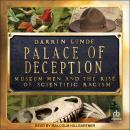
"From 1908 to 1933, the American Museum of Natural History launched more scientific field expeditions than at any other time in its existence. Sponsoring lavish trips to Africa and Central Asia, the museum filled its halls with artifacts and an aura of adventure, supported by some of New York City's most prominent men. All the while, the museum's then president, Henry Fairfield Osborn, attempted to use his adventurers' expeditions to fulfill a personal agenda: to propagate his belief in racial hierarchy.
Palace of Deception uncovers the complicated legacy of three iconic figures of the American Museum: the preeminent explorer Roy Chapman Andrews; Carl Akeley, the pioneering taxidermist; and Osborn, the museum's president. Darrin Lunde tells the story of the American's Museum foundational years. Lunde also shows how the achievements of the museum's adventurers were used to introduce residents of New York to a version of the natural world endorsed by the museum's leader.
Palace of Deception recreates some of the most celebrated, globe-trotting journeys from natural history's heyday. It also traces the larger, racially infused milieu that underwrote the golden age of exploration, uncovering the simmering anxieties about race behind the era's greatest adventures. It is a legacy that still haunts natural history institutions today."
"Winner of the inaugural Theodore Roosevelt Association Book Prize
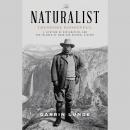
A captivating account of how Theodore Roosevelt's lifelong passion for the natural world set the stage for America's wildlife conservation movement and determined his legacy as a founding father of today's museum naturalism.
No U.S. president is more popularly associated with nature and wildlife than is Theodore Roosevelt-prodigious hunter, tireless adventurer, and ardent conservationist. We think of him as a larger-than-life original, yet in The Naturalist, Darrin Lunde has firmly situated Roosevelt's indomitable curiosity about the natural world in the tradition of museum naturalism.
As a child, Roosevelt actively modeled himself on the men (including John James Audubon and Spencer F. Baird) who pioneered this key branch of biology by developing a taxonomy of the natural world-basing their work on the experiential study of nature. The impact that these scientists and their trailblazing methods had on Roosevelt shaped not only his audacious personality but his entire career, informing his work as a statesman and ultimately affecting generations of Americans' relationship to this country's wilderness.
Drawing on Roosevelt's diaries and travel journals as well as Lunde's own role as a leading figure in museum naturalism today, The Naturalist reads Roosevelt through the lens of his love for nature. From his teenage collections of birds and small mammals to his time at Harvard and political rise, Roosevelt's fascination with wildlife and exploration culminated in his triumphant expedition to Africa, a trip which he himself considered to be the apex of his varied life.
With narrative verve, Lunde brings his singular experience to bear on our twenty-sixth president's life and constructs a perceptively researched and insightful history that tracks Roosevelt's maturation from exuberant boyhood hunter to vital champion of serious scientific inquiry."
Join our community for the latest bookish news, reading recommendations, exclusive opening extracts, author events and competitions. It\'s all free. And enter a monthly draw to win a £50 Gift Card. See past winners here