Browse audiobooks by Alexander Pope, listen to samples and when you're ready head over to Audiobooks.com where you can get 3 FREE audiobooks on us
The Iliad: Translated by Alexander Pope
"Embark on a journey through ancient heroism and epic battles with Homer's The Iliad, one of the most celebrated works of Greek literature. This timeless masterpiece explores the deep-seated rivalry between Achilles and Agamemnon and the fateful events during the waning weeks of the Trojan War. This legendary epic not only shapes the foundation of Greek culture but also offers universal themes of glory, honor, and the impact of divine intrigue in human conflicts. Its rich narrative blends the dramatic clashing of swords with the potent desires and emotions of iconic heroes such as Hector and Odysseus. Homer's intricate storytelling in The Iliad captures moments of profound tragedy and poignant humanity, woven together with the whims of gods and the bravery of mortals. With its vivid portrayal of ancient warfare and exploration of timeless ethical dilemmas, this poem stands as a monumental achievement in world literature. Dive into The Iliad by Homer—a compelling saga where the past breathes life into the present, teaching us about the fragility and the permanence of human nature. Whether you are a seasoned reader of classics or new to Homer’s works, The Iliad offers a profound narrative experience that resonates through the ages. Discover the allure of this epic today. This audiobook was narrated and produced by RAM Studios, where humans and artificial intelligence collaborate to create an excellent listening experience. (The reading is done primarily by AI)"
Alexander Pope, Homer (Author), Anna Isaksen (Narrator)
Audiobook
Born in England – Exploring English Poetry - London
"Poetry. A form of words that seems so elegantly simple in one verse and so cleverly complex in another. Each poet has a particular style, an individual and unique way with words and yet each of us seems to recognise the path and destination of where the verses lead, even if sometimes the full comprehension may be a little beyond us.Through the centuries every culture has produced verse to symbolize and to describe everything from everyday life, natural wonders, the human condition and even in its more hubristic moments, the crushing triumph of an enemy.In the volumes of this series, we take a look at poetry through the prism of individual regions of England, or sometimes more quaintly known as ‘Albion’, or ‘Blighty’, through the centuries of its gloried history.England, despite its perception of reserve and under-statement has, in reality, strode the global stage at various time in many things, both good and bad, from Empire to long distance running. Here our focus in on its literature. Famed for its fiction and dramas, it is equally admired for its plethora of gifted poets and the dazzling verse which has added so much to its artistic legacy. These classic poets are wonders of their age and of their art. Genius is written in their names.In this volume the instantly globally recognisable city of London has, for century after century, dominated the country. Its rich history of art, culture and commerce interweave with generation after generation of poets to produce a supremely rich tapestry of undimmed brilliance. Our poets include Alexander Pope, Amy Levy, Edmund Spenser, John Keats, G K Chesterton and a host of others. Genius has many names."
Alexander Pope, Algernon Charles Swinburne, Ben Jonson, Charlotte Mew, Charlotte Smith, Christina Rossetti, Daniel Defoe, Dante Gabriel Rossetti, Edmund Spenser, Edward Lear, Edward Thomas, Elizabeth Siddal, G K Chesterton, Geoffrey Chaucer, John Donne, John Keats, John Milton, John Ruskin, Lord Byron, Robert Browning, Thomas Gray, Thomas Hood, William Blake, William Morris (Author), David Shaw-Parker, Ghizela Rowe, Richard Mitchley (Narrator)
Audiobook
"In these more modern time perhaps our first thoughts of an Elegy or a Lament is for someone's passing. Wreathed in grief and death we think of a headstone on a silent grave and the memories that shelter within our hearts, slowly receding from one generation to the next, as an often lonely voice extols the virtues and traits of the one who has passed. But these two very early forms of poetry, dating back to at least Ovid and probably further, are also surprising in their lyrical touch. These are not just mournful and sad but also whimsical or rich with celebration and tribute as they journey through joy, laughter, love, tears and comfort. Our Classic Poets, who have specifically chosen to include the form in the title of their work, include the likes of Percy Bysshe Shelley, Thomas Chatterton, Aphra Behn, Rainer Maria Rilke, Radclyffe Hall and many others of equal measure are always surprising in their views, their analysis and their sharing of words and thoughts, offering feelings that mirror our own and provide a balm of many hues for our wounded and tender souls. 1 - Elegies and Laments - An Introduction 2 - Elegy Written in a Country Churchyard by Thomas Gray 3 - The Lament of Swordy Well by John Clare 4 - An Elegy on a Pile of Ruins by John Cunningham 5 - Lament by Rainer Maria Rilke 6 - Elegy - Supposed to Be Written in Barnet Churchyard by George Townsend 7 - Elegy by Thomas Chatterton 8 - A Lament by Radclyffe Hall 9 - An Elegy by Ben Jonson 10 - Laeta - A Lament by HP Lovecraft 11 - Angellica's Lament by Aphra Behn 12 - Amores - Book I Elegy V - Corinna in an Afternoon by Ovid 13 - Morning Lament by Johann Wolfgang von Goethe 14 - The Wind's Lament by John Morris-Jones 15 - Noon Day Elegiacs by T W Rolleston 16 - Midnight Lamentation by Harold Munro 17 - February. An Elegy by Thomas Chatterton 18 - Elegy in April and September by Wilfred Owen 19 - Elegy by Anna Seward 20 - Autumn Elegy by Leslie Norris 21 - Elegy on the Year 1788 by Robert Burns 22 - Elegy for an Enemy by Stephen Vincent Benet 23 - An Elegy on the Death of a Mad Dog by Oliver Goldsmith 24 - Pointless It Is To Lament by Narsinh Mehta 25 - To the Beloved Dead - A Lament by Alice Meynell 26 - The Slave's Lament by Benjamin Cutler Clark 27 - The Slaves Lament by Robert Burns 28 - A Lament by Katharine Tynan 29 - The Going of the Battery (Wives Lament November the 2nd 1899) by Thomas Hardy 30 - Lament in 1915 by Harold Munro 31 - An Elegy on the Death of Llywelyn ab Gruyffyd by Gruffydd ap Yr Ynad Coch 32 - Elegy to the Memory of an Unfortunate Lady by Alexander Pope 33 - Elegy on a Lady Whom Grief for the Death of Her Bethrothed Killed by Robert Seymour Bridges 34 - Lament by Edna St Vincent Millay 35 - The Mother's Lament For Her Infant by Lucretia Maria Davidson 36 - Elegy on the Death of Mr Phillips by Thomas Chatterton 37 - Lament for the Poets, 1916 by Francis Ledwidge 38 - Lament for Thomas McDonagh by Francis Ledwidge 39 - Elegy on the Earl of Rochester by Anne Wharton 40 - Elegy on William Shakespeare by William Basse 41 - Adonais - An Elegy on the Death of John Keats by Percy Bysshe Shelley"
Alexander Pope, Alice Meynell, Anne Wharton, Ben Jonson, Edna St Vincent Millay, Francis Ledwidge, H.P. Lovecraft, John Clare, Percy Bysshe Shelley, Radclyffe Hall, Robert Burns, Thomas Chatterton, Wilfred Owen (Author), Laurel Lefkow, Richard Mitchley, Sean Barrett (Narrator)
Audiobook
The Poets of the Eighteenth Century - Volume III
"For many in Europe the focus has shifted west to the Americas, both by settlement and by war against the indigenous tribes. And then between themselves.Democracy would be reborn by the American War of Independence. In the East India becomes the stage for further expansion. For our wordsmiths the world had become a wider page on which to write their thoughts. Coleridge, Pope, Southey, Wordsworth speak with lyrical eloquence on subjects both great and small. But always form the heart."
Alexander Pope, Robert Southey, William Wordsworth (Author), Ghizela Rowe, Gideon Wagner, Richard Mitchley (Narrator)
Audiobook

"Poetry is often cited as our greatest use of words. The English language has well over a million of them and poets down the ages seem, at times, to make use of every single one. But often they use them in simple ways to describe anything and everything from landscapes to all aspects of the human condition. Poems can evoke within us an individual response that takes us by surprise; that opens our ears and eyes to very personal feelings.Forget the idea of classic poetry being somehow dull and boring and best kept to children’s textbooks. It still has life, vibrancy and relevance to our lives today. Where to start? How to do that? Poetry can be difficult. We’ve put together some very eclectic Poetry Hours, with a broad range of poets and themes, to entice you and seduce you with all manner of temptations. In this hour we introduce poets of the quality and breadth of Alexander Pope as well as themes on January, Cavalier Poets, Night and more.All of them are from Portable Poetry, a dedicated poetry publisher. We believe that poetry should be a part of our everyday lives, uplifting the soul & reaching the parts that other arts can’t. Our range of audiobooks and ebooks cover volumes on some of our greatest poets to anthologies of seasons, months, places and a wide range of themes. Portable Poetry can found at iTunes, Audible, the digital music section on Amazon and most other digital stores. This audio book is also duplicated in print as an ebook. Same title. Same words. Perhaps a different experience. But with Amazon’s whispersync you can pick up and put down on any device – start on audio, continue in print and any which way after that. Portable poetry – Let us join you for the journey.The Poetry Hour – Volume 17Alexander Pope – An IntroductionSummer by Alexander PopeSolitude by Alexander PopeThe Dunicad. An Extract of Book I by Alexander PopeJanuary Sonnet LIX. Written at Ampton, Suffolk. January 1838 by Henry AlfordAt the Entering of the New Year by Thomas HardyThe First Snowfall by James Russell LowellIt is Winter by Daniel SheehanPray, to What Earth Does This Sweet Cold Belong by Henry David ThoreauJanuary 1795 by Mary Darby RobinsonThe Cavalier Poets – An IntroductionThe Given Heart by Abraham CowleyGo Lovely Rose by Edmund WallerEpigram LXV – To My Muse by Ben JonsonDefinition of Love by Andrew MarvellLove’s End by Lord Edward Herbert of CherburyLove Conquer’d by Richard LovelaceTo Sappho by Robert HerrickLips & Eyes by Thomas CarewI Prithee Send Me Back My Heart by Sir John SucklingThe Poetry of GK Chesterton - An IntroductionThe Englishman by GK ChestertonThe Rolling English Road by GK ChestertonThe Convert by GK ChestertonThe Last Hero by GK ChestertonAmericanisation by GK ChestertonWho Goes Home by GK ChestertonThe Poetry of Night - An IntroductionProlong the Night by Renee VivienI Weary Tonight, I Weary by Alexander AndersonSonnet LXVI – The Night Flood Rakes by Charlotte SmithA Prayer in Darkness by GK ChestertonThe Night by Alfred LichtensteinFrom The City of Dreadful Night by James ThomsonIn Drear Nighted December by John KeatsThe Slave’s Singing at Midnight by Henry Wadsworth LongfellowSleep on Thine Eyes by HafizJohn Keats – A Tribute in VerseJohn Keats by Dante Gabriel RossettiThe Poetry of Keats by George MeredithFor the Anniversary of John Keats Death by Sara TeasdaleThe Grave of Keats by Oscar Wilde"
Alexander Pope, G K Chesterton, John Keats (Author), Ghizela Rowe, Gideon Wagner, Richard Mitchley (Narrator)
Audiobook
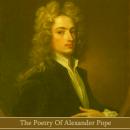
"Alexander Pope was born on May 21st, 1688 into a Catholic family in London. His education was affected by the then recent Test Acts, which upheld the status of the Church of England and banned Catholics from teaching. In effect this meant his formal education was over by the age of 12 but Pope was to immerse himself in classical literature and languages and too, in effect, educate himself. From this age too he also suffered from numerous health problems including PottÕs disease, a type of tuberculosis, which resulted in a stunted, deformed body. Only to grow to a height of 4Õ 6Ó, with a severe hunchback and complicated further by respiratory difficulties, high fevers, inflamed eyes and abdominal pain all of which served to further isolate him, initially, from society.However his talent was evident to all. Best known for his satirical verse, his translations of Homer and the use of the heroic couplet, he is the second-most frequently quoted writer in The Oxford Dictionary of Quotations, after Shakespeare.With the publication of Pastorals in 1709 followed by An Essay on Criticism in 1711 and his most famous work The Rape of the Lock in 1712, Pope became not only famous but wealthy.His translations of the Iliad and the Odyssey further enhanced both reputation and purse. His engagement to produce an opulent new edition of Shakespeare met with a mixed reception. Pope attempted to "regularise" Shakespeare's metre and rewrote some of his verse and cut 1500 lines, that Pope considered to be beneath the BardÕs standard, to mere footnotes.Alexander Pope died on May 30th, 1744 at his villa at Twickenham (where he created his famous grotto and gardens) and was buried in the nave of the nearby Church of England Church - St Mary the Virgin.Over the years and centuries since his death PopeÕs work has been in and out of favour but with this distance he is now truly recognised as one of EnglandÕs greatest poets. This volume comes to you from Portable Poetry, a specialized imprint from Deadtree Publishing. Our range is large and growing and covers single poets, themes, and many compilations."
Alexander Pope (Author), Ghizela Rowe, Gideon Wagner, Richard Mitchley (Narrator)
Audiobook
"At this time of the year as the nights close in and the temperature drops Winter seems like a season that nobody really enjoys and we look forward all the more to Spring. For many children however it is the bounty of Christmas that steals their attention and for others the renewal of the New Year. But for Nature it is pause for breath, to take stock of what has gone by in the year to date and ready herself for the energies and dramatic development to the landscape that Spring will bring. But Winter has its beauty too; the frost or snow covered ground, the grey swell of a winters sea and the bleak yet beautiful imagery of the landscape. Our collection of poems brings together the talents of many best loved poets such as Thomas Hardy, Robert Browning, Emily Dickinson, Daniel Sheehan, Ralph Waldo Emerson, Henry Wadsworth Longfellow, Robert Louis Stevenson and Emily Bronte are amongst many who catalogue and celebrate the season and its feelings in unique and telling ways. This collection is read for you by Ghizela Rowe And Gideon Wagner."
Alexander Pope, Christina Rossetti, John Keats, William Blake (Author), Ghizela Rowe, Gideon Wagner, Richard Mitchely (Narrator)
Audiobook
"July - the seventh month of the year in the Gregorian calendar and Summer is a rich harvest of colours and sights. Poets of the calibre of Shakespeare, Keats, Pope, Whitman and Tennyson describe and marshall their thoughts for our delight. Among our readers are Richard Mitchley and Ghizela Rowe. The tracks are; July - An Introduction; July 2nd 1863 By Tom Reynolds; America, From The National Ode July 4th 1876 By James Bayard Taylor; 4th July 1882, Malines, Midnight By James Kenneth Stephen; Fourth Of July By Julia A Moore; July 4th 1857 By Alfred Gibbs Campbell; Ode For July 4th 1917 By HP Lovecraft; Ode For The 4th Of July By James Monroe Whitfield; Sonnet LVII - Summit Of Skiddaw, July 7th 1838 By Henry Alford; July 9th 1872 By Abram Joseph Ryan; London In July By Amy Levy; St Martins Summer By Robert Louis Stevenson; Summer By Alexander Pope; L' Envoi (An Extract) By Rudyard Kipling; Broadway, New York, July 1916 By George Sterling; In This Summer By Daniel Sheehan; A July Afternoon By The Pond By Walt Whitman; On The Grasshopper And Cricket By John Keats; Shall I Compare Thee To A Summers Day (Sonnet 18) By William Shakespeare; On My Sons Return Out Of England July 17th 1661 By Anne Bradstreet; Sonnet July 18th 1787 By William Lisle Bowles; Verses Upon The Burning Of Our House July 18th 1666 By Anne Bradstreet; Sonnet At Dover Cliffs July 20th 1787 By William Lisle Bowles; Summer Sun By Robert Louis Stevenson; Sonnet At Ostend July 22nd 1787 By William Lisle Bowles; Between The Dusk Of Summer By William Ernest Henley; Summer Night By Alfred Lord Tennyson; The School Boy By William Blake; Answer July By Emily Dickinson; Written In July By Samuel Rogers; From My Diary July 1914 By Wilfred Owen."
Alexander Pope, Emily Dickinson, John Keats, Walt Whitman, William Shakespeare (Author), Ghizela Rowe, Richard Mitchley (Narrator)
Audiobook
"The Rape of the Lock is a mock-heroic narrative poem written by Alexander Pope, first published anonymously in Lintot's Miscellany in May 1712 in two cantos (334 lines), but then revised, expanded and reissued under Pope's name on March 2, 1714, in a much-expanded 5-canto version (794 lines). The final form was available in 1717 with the addition of Clarissa's speech on good humour. The poem satirizes a petty squabble by comparing it to the epic world of the gods. It was based on an incident recounted by Pope's friend, John Caryll. Arabella Fermor and her suitor, Lord Petre, were both from aristocratic recusant Catholic families at a period in England when under such laws as the Test Act, all denominations except Anglicanism suffered legal restrictions and penalties (for example Petre could not take up his place in the House of Lords as a Catholic). Petre, lusting after Arabella, had cut off a lock of her hair without permission, and the consequent argument had created a breach between the two families. Pope, also a Catholic, wrote the poem at the request of friends in an attempt to "comically merge the two." He utilized the character Belinda to represent Arabella and introduced an entire system of "sylphs," or guardian spirits of virgins, a parodied version of the gods and goddesses of conventional epic. (Summary by Wikipedia)"
Alexander Pope (Author), Rhonda Federman (Narrator)
Audiobook
"An Essay on Criticism was the first major poem written by the English writer Alexander Pope (1688-1744). However, despite the title, the poem is not as much an original analysis as it is a compilation of Pope's various literary opinions. A reading of the poem makes it clear that he is addressing not so much the ingenuous reader as the intending writer. It is written in a type of rhyming verse called heroic couplets. (Summary from Wikipedia)"
Alexander Pope (Author), Aringguth (Narrator)
Audiobook
An Essay on Criticism (Version 2)
"The title, An Essay on Criticism hardly indicates all that is included in the poem. It would have been impossible to give a full and exact idea of the art of poetical criticism without entering into the consideration of the art of poetry. Accordingly Pope has interwoven the precepts of both throughout the poem which might more properly have been styled an essay on the Art of Criticism and of Poetry. - Summary from the Gutenberg text"
Alexander Pope (Author), cwanki (Narrator)
Audiobook
"LibriVox volunteers bring you 17 different recordings of Solitude by Alexander Pope. This was the weekly poetry project for the week of February 17th, 2008."
Alexander Pope (Author), LibriVox Volunteers (Narrator)
Audiobook
©PTC International Ltd T/A LoveReading is registered in England. Company number: 10193437. VAT number: 270 4538 09. Registered address: 157 Shooters Hill, London, SE18 3HP.
Terms & Conditions | Privacy Policy | Disclaimer
Join our community for the latest bookish news, reading recommendations, exclusive opening extracts, author events and competitions. It\'s all free. And enter a monthly draw to win a £50 Gift Card. See past winners here
Join Our Community