

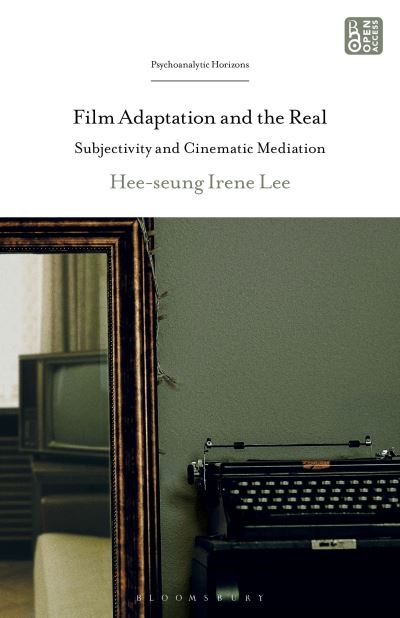
A psychoanalytic approach to screen adaptation that examines the role of deep-rooted desire evident in the persisting media practice of adaptation from literature to film.
The prevalence of adaptations in cinema - from literary texts - is striking. What does this lead us to think about adaptation? This open access book answers this question from a psychoanalytic perspective by exploring the psychic dynamics underlying screen adaptation as a practice, offering an intriguing window into the desire for adaptation beyond semiotic parameters and industrial factors.
Through a series of examples - from Hamlet and Hitchcock, to Kubrick's The Shining, and Jonze's Adaptation - the book theorizes film adaptations in relation to their originals. Drawing on the theories of Freud and Lacan, Hee-seung Irene Lee rigorously explains psychoanalytic concepts such as desire, the drive, the Oedipus complex, the uncanny, and anxiety, which are prevalent and remain useful in the vast field of cultural studies. As a result, readers can easily follow the book's case studies of canonical film adaptations with interest.
At the same time, the author attempts to challenge, expand, and renew the usual definition of film adaptation. This fosters interdisciplinary dialogue between philosophical and psychoanalytic speculations on subjectivity and frames adaptation not merely as a specific mode of filmmaking but a universal, primordial task of every speaking being.
The ebook editions of this book are available open access under a CC BY-NC-ND 4.0 licence on bloomsburycollections.com.
| ISBN: | 9798765138373 |
| Publication date: | 2nd October 2025 |
| Author: | Heeseung Irene Lee |
| Publisher: | Bloomsbury Academic an imprint of Bloomsbury Publishing (UK) |
| Format: | Paperback |
| Pagination: | 256 pages |
| Series: | Psychoanalytic Horizons |
| Genres: |
Literary theory Film history, theory or criticism Psychoanalytical and Freudian psychology Comparative literature |
A psychoanalytic approach to screen adaptation that examines the role of deep-rooted desire evident in the persisting media practice of adaptation from literature to film.
The prevalence of adaptations in cinema - from literary texts - is striking. What does this lead us to think about adaptation? This open access book answers this question from a psychoanalytic perspective by exploring the psychic dynamics underlying screen adaptation as a practice, offering an intriguing window into the desire for adaptation beyond semiotic parameters and industrial factors.
Through a series of examples - from Hamlet and Hitchcock, to Kubrick's The Shining, and Jonze's Adaptation - the book theorizes film adaptations in relation to their originals. Drawing on the theories of Freud and Lacan, Hee-seung Irene Lee rigorously explains psychoanalytic concepts such as desire, the drive, the Oedipus complex, the uncanny, and anxiety, which are prevalent and remain useful in the vast field of cultural studies. As a result, readers can easily follow the book's case studies of canonical film adaptations with interest.
At the same time, the author attempts to challenge, expand, and renew the usual definition of film adaptation. This fosters interdisciplinary dialogue between philosophical and psychoanalytic speculations on subjectivity and frames adaptation not merely as a specific mode of filmmaking but a universal, primordial task of every speaking being.
The ebook editions of this book are available open access under a CC BY-NC-ND 4.0 licence on bloomsburycollections.com.
Film Adaptation and the Real features in the following genres: Literary theory, Film history, theory or criticism, Psychoanalytical and Freudian psychology, Comparative literature
Film Adaptation and the Real is available in Paperback
Film Adaptation and the Real was written by Heeseung Irene Lee and published by Bloomsbury Academic an imprint of Bloomsbury Publishing (UK)
Film Adaptation and the Real has 256 pages
Yes it is part of Psychoanalytic Horizons series
£17.99