

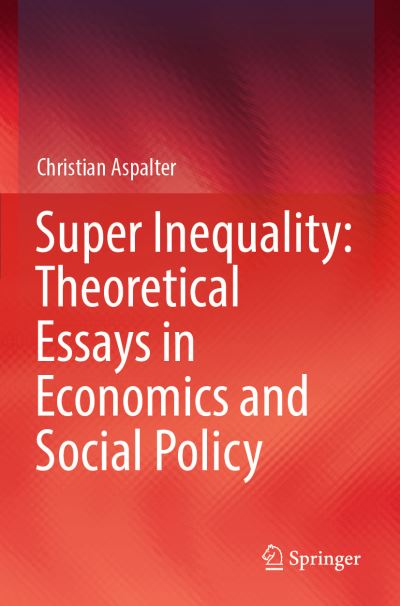
This book bridges the disciplines of micro-economics and social policy in general, and, in particular, behavioral/explanatory social policy and public choice theory, plus Leibenstein's X-efficiency theory. Being trained as an economist and social policy scientist, the author leaps out of the comfort zone of most social policy scientists and experts, right into the exciting world of micro-economic theory, and then extending and connecting those theories to explain major social, political and economic conundrums of our time.
In doing so, the book offers a new set of theoretical-and practical-explanations derived from the general proposition of micro-economic theory, of how government officers, policymakers, administrators and the people themselves alike are, by and large, motivated in their daily as well as strategic (long-term) decision-making. Using a meta-analytical approach (based on a number of grand theories), this book also explains systemic factors behind human behavior and the thereof resulting shortcomings in lifetime outcomes (health, wealth and happiness of a person) and at the same time societal, policy-making, and economic outcomes on societal level, and in global comparison.
The outcomes thereof can be measured exactly (and hence validated), especially through the method of empirical comparative social science/economic research. Here, the author also (but not only) introduces the new method of using Aspalter's Standardized Relative Performance (SRP) Index in measuring exactly complex, aggregate performances of multiple governments, and that at the same time also across the entire world.
| ISBN: | 9789819951710 |
| Publication date: | 5th October 2024 |
| Author: | Christian Aspalter |
| Publisher: | Springer an imprint of Springer Nature Singapore |
| Format: | Paperback |
| Pagination: | 158 pages |
| Genres: |
Social welfare and social services Regional, state and other local government Behavioural economics Civil service and public sector |
This book bridges the disciplines of micro-economics and social policy in general, and, in particular, behavioral/explanatory social policy and public choice theory, plus Leibenstein's X-efficiency theory. Being trained as an economist and social policy scientist, the author leaps out of the comfort zone of most social policy scientists and experts, right into the exciting world of micro-economic theory, and then extending and connecting those theories to explain major social, political and economic conundrums of our time.
In doing so, the book offers a new set of theoretical-and practical-explanations derived from the general proposition of micro-economic theory, of how government officers, policymakers, administrators and the people themselves alike are, by and large, motivated in their daily as well as strategic (long-term) decision-making. Using a meta-analytical approach (based on a number of grand theories), this book also explains systemic factors behind human behavior and the thereof resulting shortcomings in lifetime outcomes (health, wealth and happiness of a person) and at the same time societal, policy-making, and economic outcomes on societal level, and in global comparison.
The outcomes thereof can be measured exactly (and hence validated), especially through the method of empirical comparative social science/economic research. Here, the author also (but not only) introduces the new method of using Aspalter's Standardized Relative Performance (SRP) Index in measuring exactly complex, aggregate performances of multiple governments, and that at the same time also across the entire world.
Super Inequality features in the following genres: Social welfare and social services, Regional, state and other local government, Behavioural economics, Civil service and public sector
Super Inequality is available in Paperback
Super Inequality was written by Christian Aspalter and published by Springer an imprint of Springer Nature Singapore
Super Inequality has 158 pages
£89.99