

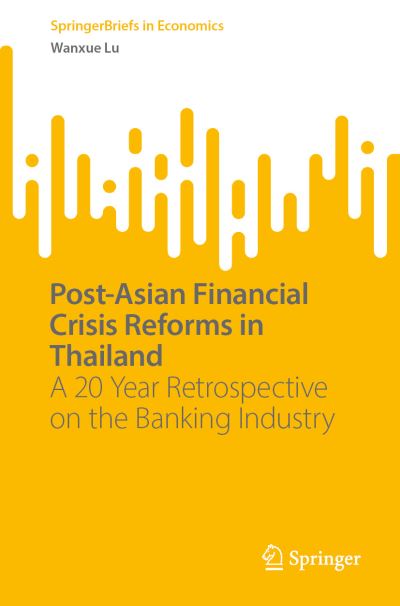
This book is distinguished for its longitudinal, evidence-based policy analysis concerning the impacts of financial regulatory reforms post-crisis, thereby enriching the comprehension of policy impact mechanisms at a micro-level. Distinguished from collections of past events; this monograph is a lens through which the intricate relationships between regulatory changes, market dynamics, and organizational behavior are explored and understood. The study is devoted to a thorough 20-year retrospective analysis of Thailand's financial regulatory reforms and their complex effects on the commercial banking sector. It uncovers how these reforms, particularly the increase in foreign participation, have paradoxically degraded market competition while also not fully achieving their intended goals in financial technology advancement. This nuanced understanding underscores the book's impact in rethinking policy effectiveness and market dynamics in a global context. Moreover, by offering a unique blend of macro- and micro-perspectives, the book delves into how these regulatory impacts materialize at the organizational level. Through an in-depth examination of business practices and governance in banking, it provides vital insights into how family-owned banks in Thailand have navigated economic crises, transitioning from ownership control to management control models.
| ISBN: | 9789819737703 |
| Publication date: | 26th June 2024 |
| Author: | Wanxue Lu |
| Publisher: | Springer an imprint of Springer Nature Singapore |
| Format: | Paperback |
| Pagination: | 160 pages |
| Series: | SpringerBriefs in Economics |
| Genres: |
Political economy Corporate finance Finance and the finance industry Economics |
This book is distinguished for its longitudinal, evidence-based policy analysis concerning the impacts of financial regulatory reforms post-crisis, thereby enriching the comprehension of policy impact mechanisms at a micro-level. Distinguished from collections of past events; this monograph is a lens through which the intricate relationships between regulatory changes, market dynamics, and organizational behavior are explored and understood. The study is devoted to a thorough 20-year retrospective analysis of Thailand's financial regulatory reforms and their complex effects on the commercial banking sector. It uncovers how these reforms, particularly the increase in foreign participation, have paradoxically degraded market competition while also not fully achieving their intended goals in financial technology advancement. This nuanced understanding underscores the book's impact in rethinking policy effectiveness and market dynamics in a global context. Moreover, by offering a unique blend of macro- and micro-perspectives, the book delves into how these regulatory impacts materialize at the organizational level. Through an in-depth examination of business practices and governance in banking, it provides vital insights into how family-owned banks in Thailand have navigated economic crises, transitioning from ownership control to management control models.
Post-Asian Financial Crisis Reforms in Thailand features in the following genres: Political economy, Corporate finance, Finance and the finance industry, Economics
Post-Asian Financial Crisis Reforms in Thailand is available in Paperback
Post-Asian Financial Crisis Reforms in Thailand was written by Wanxue Lu and published by Springer an imprint of Springer Nature Singapore
Post-Asian Financial Crisis Reforms in Thailand has 160 pages
Yes it is part of SpringerBriefs in Economics series
£44.99