

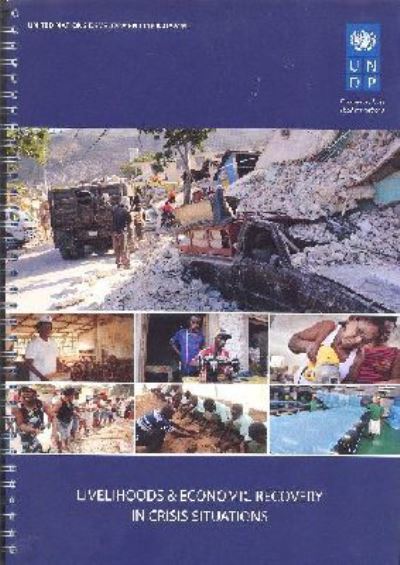
Disasters and violent conflicts continue to claim lives and destroy livelihoods of far too many people around the world and undermine development achievements. This can both heighten social and economic insecurity, and endanger those already vulnerable in societies, including women and young people. This focus on the restoration of economic strength in the aftermath of a conflict or disaster fosters long-term peace and stability, creates resilience to future crises and sets in motion an equitable and sustainable process of development.
The UNDP approach to early stabilisation and inclusive growth embraces nationally-owned, crisis and gender-sensitive interventions that are responsive to market conditions and aligned with security, recovery, conflict prevention and development programming of other partners. To highlight some achievements in 2011, UNDP worked with partners to create over 5.2 million workdays of emergency jobs; provided support to over 101,000 crisis affected people, including ex-combatants and internally displaced people (of whom 40% were women) to establish micro, small and medium enterprises; and rehabilitated socioeconomic infrastructure for development to occur in places as diverse as Afghanistan, Burundi, the Democratic Republic of the Congo, Haiti, Honduras, Indonesia, Kenya, Myanmar, Nigeria, Nepal, Pakistan, Somalia, Sri Lanka, Sudan, South Sudan, Tajikistan and Uganda, helping to sustain livelihoods and revitalise economies in these crisis and conflict-affected countries.
| ISBN: | 9789211263527 |
| Publication date: | 30th August 2013 |
| Author: | United Nations Development Programme |
| Publisher: | United Nations Publications |
| Format: | Paperback |
| Pagination: | 277 pages |
| Series: | Cat III - All Titles |
| Genres: |
Development economics and emerging economies |
Disasters and violent conflicts continue to claim lives and destroy livelihoods of far too many people around the world and undermine development achievements. This can both heighten social and economic insecurity, and endanger those already vulnerable in societies, including women and young people.
Livelihoods and Economic Recovery in Crisis Situations features in the following genres: Development economics and emerging economies
Paperback. Not Available.
Livelihoods and Economic Recovery in Crisis Situations was written by United Nations Development Programme and published by United Nations Publications
Livelihoods and Economic Recovery in Crisis Situations has 277 pages
Yes it is part of Cat III - All Titles series