

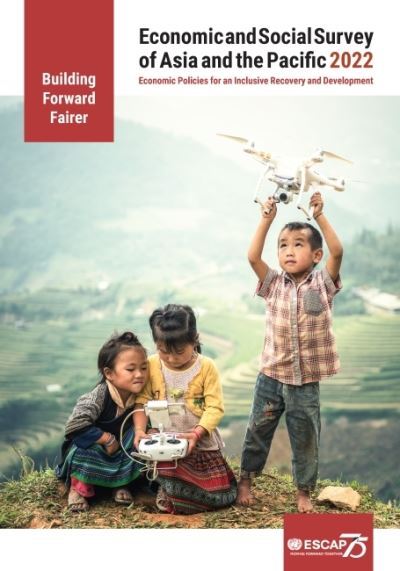
The Asia-Pacific region has been leading the global economic growth over the past few decades. However, rapid economic growth without sufficient inclusiveness is now constraining the region's future economic and broader development prospects. The COVID-19 pandemic has further revealed the vulnerability of the region due to lack of inclusiveness. The Survey 2021 estimated that 89 million people could have been pushed back into extreme poverty in the region due to COVID-19, contributing to an already increasing trend in income inequality in Asia and the Pacific. Going forward, concerns over a "K-shaped" economic recovery, both within and across countries, and the desire to ensure that the post-pandemic recovery is consistent with long-term inclusive development are broadly shared among policy makers and experts, as revealed during policy dialogues organized to disseminate the messages of Survey 2021. Additionally, international commitment to inclusive development, as manifested in the 2030 Agenda for Sustainable Development, is pushing distributional issues to the forefront of global policy agenda. With a focus on the role of economic policies in promoting inclusive development, the Economic and Social Survey of Asia and the Pacific 2022 will analyze the importance of effective government actions and the role of fiscal, monetary/financial and structural policies in enhancing inclusiveness, keeping in view the considerable impacts of COVID-19 on inclusiveness and inequality.
| ISBN: | 9789211208375 |
| Publication date: | 30th June 2022 |
| Author: | United Nations Economic and Social Commission for Asia and the Pacific |
| Publisher: | United Nations Publications |
| Format: | Paperback |
| Pagination: | 206 pages |
| Series: | Economic and Social Survey of Asia and the Pacific |
| Genres: |
International institutions Social research and statistics Social and ethical issues Development economics and emerging economies |
The Asia-Pacific region has been leading the global economic growth over the past few decades. However, rapid economic growth without sufficient inclusiveness is now constraining the region's future economic and broader development prospects. The COVID-19 pandemic has further revealed the vulnerability of the region due to lack of inclusiveness. The Survey 2021 estimated that 89 million people could have been pushed back into extreme poverty in the region due to COVID-19, contributing to an already increasing trend in income inequality in Asia and the Pacific. Going forward, concerns over a "K-shaped" economic recovery, both within and across countries, and the desire to ensure that the post-pandemic recovery is consistent with long-term inclusive development are broadly shared among policy makers and experts, as revealed during policy dialogues organized to disseminate the messages of Survey 2021. Additionally, international commitment to inclusive development, as manifested in the 2030 Agenda for Sustainable Development, is pushing distributional issues to the forefront of global policy agenda. With a focus on the role of economic policies in promoting inclusive development, the Economic and Social Survey of Asia and the Pacific 2022 will analyze the importance of effective government actions and the role of fiscal, monetary/financial and structural policies in enhancing inclusiveness, keeping in view the considerable impacts of COVID-19 on inclusiveness and inequality.
Economic and Social Survey of Asia and the Pacific 2022 features in the following genres: International institutions, Social research and statistics, Social and ethical issues, Development economics and emerging economies
Economic and Social Survey of Asia and the Pacific 2022 is available in Paperback
Economic and Social Survey of Asia and the Pacific 2022 was written by United Nations Economic and Social Commission for Asia and the Pacific and published by United Nations Publications
Economic and Social Survey of Asia and the Pacific 2022 has 206 pages
Yes it is part of Economic and Social Survey of Asia and the Pacific series