

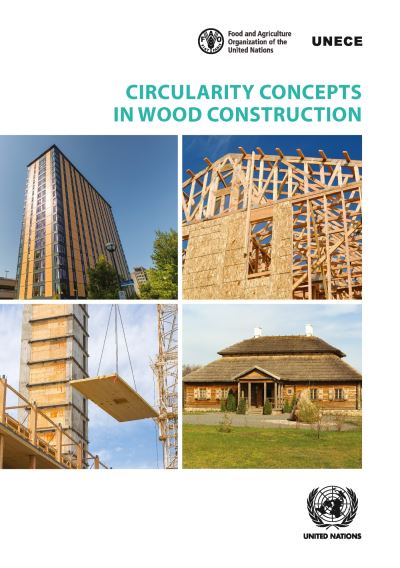
When it comes to sustainability and circularity, wood as a natural raw material has several advantages over other building materials. As a bio-based resource, it has considerable benefits concerning greenhouse gas emissions, carbon-storing, thermal insulation as well as human health and well-being compared to other construction materials. New types of wood products, being the result of extensive research, enable the extensive use of wood in tall buildings. At the same time, innovative wood products provide less manufacturing waste, low carbon-emission alternatives and store massive quantities of carbon while new technologies speed construction processes, promote energy efficiency and minimize waste. This study examines the benefits of wood as a construction material and discusses practices applied in the wood construction sector from the perspective of circularity, sustainability and climate change mitigation. It analyses how circularity concepts can be applied in the construction industry using different construction methods and at different stages of value chains. The study describes how different construction techniques and practices contribute to the renewal and sustainability of construction value chains. The analysis is supported by examples of good practice in UNECE member States.
| ISBN: | 9789211173284 |
| Publication date: | 31st August 2023 |
| Author: | United Nations Economic Commission for Europe |
| Publisher: | United Nations Publications |
| Format: | Paperback |
| Pagination: | 76 pages |
| Series: | Geneva Timber and Forest Study Papers |
| Genres: |
International institutions Environmental economics Agriculture, agribusiness and food production industries Conservation of the environment Sustainability Forestry and silviculture |
When it comes to sustainability and circularity, wood as a natural raw material has several advantages over other building materials. As a bio-based resource, it has considerable benefits concerning greenhouse gas emissions, carbon-storing, thermal insulation as well as human health and well-being compared to other construction materials. New types of wood products, being the result of extensive research, enable the extensive use of wood in tall buildings. At the same time, innovative wood products provide less manufacturing waste, low carbon-emission alternatives and store massive quantities of carbon while new technologies speed construction processes, promote energy efficiency and minimize waste. This study examines the benefits of wood as a construction material and discusses practices applied in the wood construction sector from the perspective of circularity, sustainability and climate change mitigation. It analyses how circularity concepts can be applied in the construction industry using different construction methods and at different stages of value chains. The study describes how different construction techniques and practices contribute to the renewal and sustainability of construction value chains. The analysis is supported by examples of good practice in UNECE member States.
Circularity Concepts in Wood Construction features in the following genres: International institutions, Environmental economics, Agriculture, agribusiness and food production industries, Conservation of the environment, Sustainability, Forestry and silviculture
Circularity Concepts in Wood Construction is available in Paperback
Circularity Concepts in Wood Construction was written by United Nations Economic Commission for Europe and published by United Nations Publications
Circularity Concepts in Wood Construction has 76 pages
Yes it is part of Geneva Timber and Forest Study Papers series