

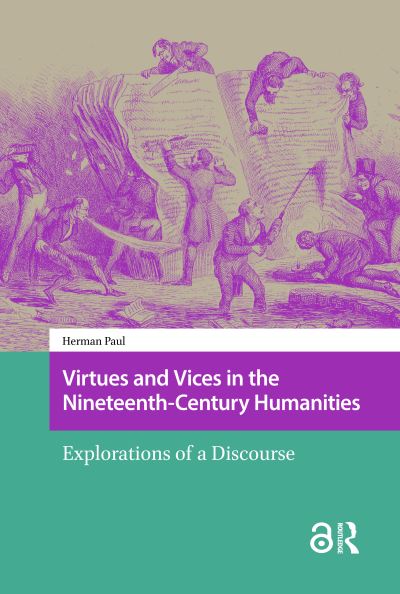
What do scholars do when they talk about virtues (impartiality, accuracy) or vices (dogmatism, prejudice)? Against the common view that such high-minded talk is largely irrelevant to actual scholarly practice, this volume proposes to treat it as a practice in its own right. Drawing on case studies from the nineteenth-century humanities (with occasional forays into physics, chemistry, and medicine), Paul shows that notions of virtue and vice were an evaluative discourse used across the academic spectrum. Paul argues that this evaluative idiom is best studied from a rhetorical point of view, with due attention to repertoires on which scholars drew, explicit or implicit appeals to authority, multi-layered meanings of virtue and vice terms, different uses to which these concepts were put, and societal contexts that lent plausibility to scholars' invocations of virtue and vice. Based on more than a decade of research, this volume will be a key reference for scholars interested in virtues, vices, and the history of the humanities.
| ISBN: | 9789048562985 |
| Publication date: | 19th May 2025 |
| Author: | Herman Paul |
| Publisher: | Routledge an imprint of Taylor & Francis |
| Format: | Hardback |
| Pagination: | 298 pages |
| Series: | Studies in the History of Knowledge |
| Genres: |
History: theory and methods Philosophy: epistemology and theory of knowledge |
What do scholars do when they talk about virtues (impartiality, accuracy) or vices (dogmatism, prejudice)? Against the common view that such high-minded talk is largely irrelevant to actual scholarly practice, this volume proposes to treat it as a practice in its own right. Drawing on case studies from the nineteenth-century humanities (with occasional forays into physics, chemistry, and medicine), Paul shows that notions of virtue and vice were an evaluative discourse used across the academic spectrum. Paul argues that this evaluative idiom is best studied from a rhetorical point of view, with due attention to repertoires on which scholars drew, explicit or implicit appeals to authority, multi-layered meanings of virtue and vice terms, different uses to which these concepts were put, and societal contexts that lent plausibility to scholars' invocations of virtue and vice. Based on more than a decade of research, this volume will be a key reference for scholars interested in virtues, vices, and the history of the humanities.
Virtues and Vices in the Nineteenth-Century Humanities features in the following genres: History: theory and methods, Philosophy: epistemology and theory of knowledge
Virtues and Vices in the Nineteenth-Century Humanities is available in Hardback
Virtues and Vices in the Nineteenth-Century Humanities was written by Herman Paul and published by Routledge an imprint of Taylor & Francis
Virtues and Vices in the Nineteenth-Century Humanities has 298 pages
Yes it is part of Studies in the History of Knowledge series
£121.50