

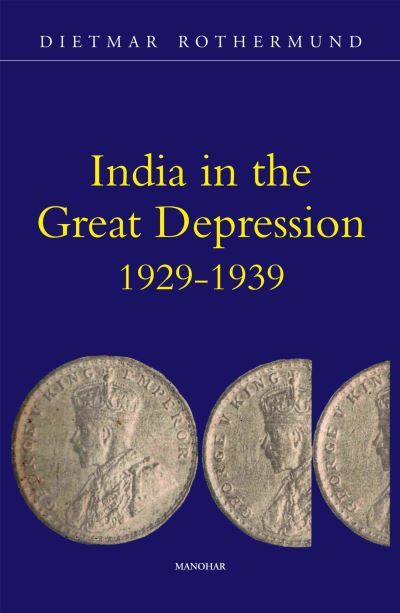
India was severely hit by the Great Depression. The income of the peasants was halved due to the fall in prices while rent and revenue demands as well as debt service remained at the same old level. The government followed a deflationary policy to support the exchange rate and thus intensified the impact of the Depression. A flow of distress gold poured out of the country, thus India faced no balance of payments crisis as most other countries did at that time. From a macro-economic point of view India appeared to be not affected by the Depression. Shifts in the internal terms of trade are of no concern from this point of view. Accordingly not much attention has been paid to the impact of the Depression on India. The present study breaks new ground?in?this?respect?and?blends?economic?and?political?history.
The book has four major parts: Financial Linkages, Rural India, Industrial India, and Political Consequences. The first part shows India in the context of global financial relations and monetary policies, it also provides an analysis of the Rupee ratio controversy and of the budgets which were balanced with a vengeance according to the principles of 'sound finance'. The influence of the Bank of England on Indian finance is traced in detail. The second part is devoted to the fate of the peasants and rural unrest. The legislative attempts at debt conciliation, the control of moneylenders, etc., are discussed with a view to the specific conditions of various Indian provinces. The third part portrays the development of the Indian cotton textile industry in the 1930s as well as that of other import substituting industries (sugar and steel), finally it deals with crisis management in the major export industries, jute and tea. The last part shows how the impact of the Depression was inextricably meshed with the course of the freedom movement, the advent of provincial autonomy and the widening of the franchise which inducted the substantial peasantry into the mainstream of Indian politics. The Indian National Congress became a party of the peasants in the 1930s and gained a much wider social base. These political consequences of the Depression were of great importance for the further course?of?Indian?history.
| ISBN: | 9788185425764 |
| Publication date: | 20th November 2024 |
| Author: | Dietmar Rothermund |
| Publisher: | Manohar an imprint of Manohar Books |
| Format: | Hardback |
| Pagination: | 308 pages |
| Genres: |
History of other geographical groupings and regions Economic history |
India was severely hit by the Great Depression. The income of the peasants was halved due to the fall in prices while rent and revenue demands as well as debt service remained at the same old level. The government followed a deflationary policy to support the exchange rate and thus intensified the impact of the Depression. A flow of distress gold poured out of the country, thus India faced no balance of payments crisis as most other countries did at that time. From a macro-economic point of view India appeared to be not affected by the Depression. Shifts in the internal terms of trade are of no concern from this point of view. Accordingly not much attention has been paid to the impact of the Depression on India. The present study breaks new ground?in?this?respect?and?blends?economic?and?political?history.
The book has four major parts: Financial Linkages, Rural India, Industrial India, and Political Consequences. The first part shows India in the context of global financial relations and monetary policies, it also provides an analysis of the Rupee ratio controversy and of the budgets which were balanced with a vengeance according to the principles of 'sound finance'. The influence of the Bank of England on Indian finance is traced in detail. The second part is devoted to the fate of the peasants and rural unrest. The legislative attempts at debt conciliation, the control of moneylenders, etc., are discussed with a view to the specific conditions of various Indian provinces. The third part portrays the development of the Indian cotton textile industry in the 1930s as well as that of other import substituting industries (sugar and steel), finally it deals with crisis management in the major export industries, jute and tea. The last part shows how the impact of the Depression was inextricably meshed with the course of the freedom movement, the advent of provincial autonomy and the widening of the franchise which inducted the substantial peasantry into the mainstream of Indian politics. The Indian National Congress became a party of the peasants in the 1930s and gained a much wider social base. These political consequences of the Depression were of great importance for the further course?of?Indian?history.
India in the Great Depression 1929-1939 features in the following genres: History of other geographical groupings and regions, Economic history
India in the Great Depression 1929-1939 is available in Hardback
India in the Great Depression 1929-1939 was written by Dietmar Rothermund and published by Manohar an imprint of Manohar Books
India in the Great Depression 1929-1939 has 308 pages