

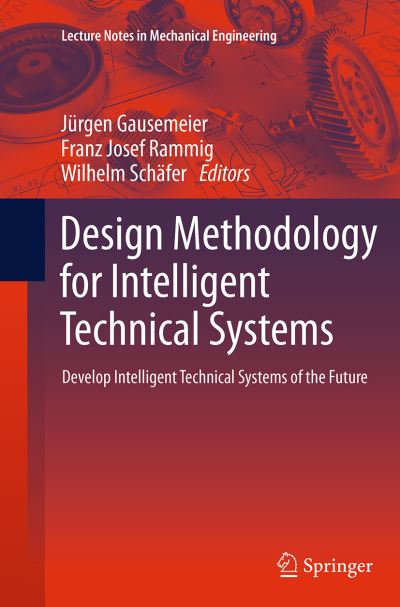
Intelligent technical systems, which combine mechanical, electrical and software engineering with control engineering and advanced mathematics, go far beyond the state of the art in mechatronics and open up fascinating perspectives. Among these systems are so-called self-optimizing systems, which are able to adapt their behavior autonomously and flexibly to changing operating conditions. Self-optimizing systems create high value for example in terms of energy and resource efficiency as well as reliability.
The Collaborative Research Center 614 "Self-optimizing Concepts and Structures in Mechanical Engineering" pursued the long-term aim to open up the active paradigm of self-optimization for mechanical engineering and to enable others to develop self-optimizing systems.
This book is directed to researchers and practitioners alike. It provides a design methodology for the development of self-optimizing systems consisting of a reference process, methods, and tools. The reference process is divided into two phases the domain-spanning conceptual design and the domain-specific design and development. For the conceptual design a holistic approach is provided. Domain-specific methods and tools developed especially for the design and development of self-optimizing systems are described and illustrated by application examples. This book will enable the reader to identify the potential for self-optimization and to develop self-optimizing systems independently.
| ISBN: | 9783662522967 |
| Publication date: | 27th August 2016 |
| Author: | Jürgen Gausemeier, Franz Josef Rammig, Wilhelm Schäfer |
| Publisher: | Springer an imprint of Springer Berlin Heidelberg |
| Format: | Paperback |
| Pagination: | 358 pages |
| Series: | Lecture Notes in Mechanical Engineering |
| Genres: |
Technical design Cybernetics and systems theory Maths for engineers Mechanical engineering Electronics engineering |
Intelligent technical systems, which combine mechanical, electrical and software engineering with control engineering and advanced mathematics, go far beyond the state of the art in mechatronics and open up fascinating perspectives. Among these systems are so-called self-optimizing systems, which are able to adapt their behavior autonomously and flexibly to changing operating conditions. Self-optimizing systems create high value for example in terms of energy and resource efficiency as well as reliability.
The Collaborative Research Center 614 "Self-optimizing Concepts and Structures in Mechanical Engineering" pursued the long-term aim to open up the active paradigm of self-optimization for mechanical engineering and to enable others to develop self-optimizing systems.
This book is directed to researchers and practitioners alike. It provides a design methodology for the development of self-optimizing systems consisting of a reference process, methods, and tools. The reference process is divided into two phases the domain-spanning conceptual design and the domain-specific design and development. For the conceptual design a holistic approach is provided. Domain-specific methods and tools developed especially for the design and development of self-optimizing systems are described and illustrated by application examples. This book will enable the reader to identify the potential for self-optimization and to develop self-optimizing systems independently.
Design Methodology for Intelligent Technical Systems features in the following genres: Technical design, Cybernetics and systems theory, Maths for engineers, Mechanical engineering, Electronics engineering
Design Methodology for Intelligent Technical Systems is available in Paperback
Design Methodology for Intelligent Technical Systems was written by Jürgen Gausemeier, Franz Josef Rammig, Wilhelm Schäfer and published by Springer an imprint of Springer Berlin Heidelberg
Design Methodology for Intelligent Technical Systems has 358 pages
Yes it is part of Lecture Notes in Mechanical Engineering series