

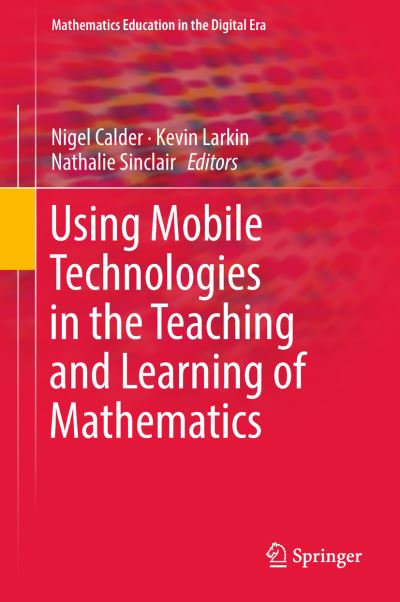
Mobile technologies influence the way that we interact with the world, the way that we live. We use them for communication, entertainment, information and research. In education settings, there has been substantial investment in mobile devices, often without a concomitant investment in developing pedagogy and practices. With mobile technologies evolving rapidly, and the number of educational apps growing, there is a need for research into how they facilitate mathematics learning. Such research is of particular importance regarding how such devices may be used to open up new ways of envisaging mathematics and mathematics education, and to help develop conceptual rather than procedural or declarative knowledge.
This volume draws upon international research and reports on a range of research projects that have incorporated mobile technologies for mathematics education. It presents research on the use of mobile technologies, such as iPads, iPods, iPhones, Androids,and Tablets, across a diverse range of cultures, year levels and contexts. It examines the ways in which mobile technologies, including apps, might influence students' engagement, cognition, collaboration and attitudes, through the reshaping of the learning experience. In addition, the book presents appropriate ways to integrate mobile technologies into teaching and learning programmes.
It is a significant reference book for those involved with teaching mathematics or using mobile technologies in education, while also offering insights and examples that are applicable to the use of digital technologies in education generally.
| ISBN: | 9783319901787 |
| Publication date: | 17th August 2018 |
| Author: | Nigel Calder, Kevin Larkin, Nathalie Sinclair |
| Publisher: | Springer an imprint of Springer International Publishing |
| Format: | Hardback |
| Pagination: | 323 pages |
| Series: | Mathematics Education in the Digital Era |
| Genres: |
Teaching of a specific subject Educational equipment and technology, computer-aided learning (CAL) Educational psychology Mathematics |
Mobile technologies influence the way that we interact with the world, the way that we live. We use them for communication, entertainment, information and research. In education settings, there has been substantial investment in mobile devices, often without a concomitant investment in developing pedagogy and practices. With mobile technologies evolving rapidly, and the number of educational apps growing, there is a need for research into how they facilitate mathematics learning. Such research is of particular importance regarding how such devices may be used to open up new ways of envisaging mathematics and mathematics education, and to help develop conceptual rather than procedural or declarative knowledge.
This volume draws upon international research and reports on a range of research projects that have incorporated mobile technologies for mathematics education. It presents research on the use of mobile technologies, such as iPads, iPods, iPhones, Androids,and Tablets, across a diverse range of cultures, year levels and contexts. It examines the ways in which mobile technologies, including apps, might influence students' engagement, cognition, collaboration and attitudes, through the reshaping of the learning experience. In addition, the book presents appropriate ways to integrate mobile technologies into teaching and learning programmes.
It is a significant reference book for those involved with teaching mathematics or using mobile technologies in education, while also offering insights and examples that are applicable to the use of digital technologies in education generally.
Using Mobile Technologies in the Teaching and Learning of Mathematics features in the following genres: Teaching of a specific subject, Educational equipment and technology, computer-aided learning (CAL), Educational psychology, Mathematics
Using Mobile Technologies in the Teaching and Learning of Mathematics is available in Hardback
Using Mobile Technologies in the Teaching and Learning of Mathematics was written by Nigel Calder, Kevin Larkin, Nathalie Sinclair and published by Springer an imprint of Springer International Publishing
Using Mobile Technologies in the Teaching and Learning of Mathematics has 323 pages
Yes it is part of Mathematics Education in the Digital Era series