

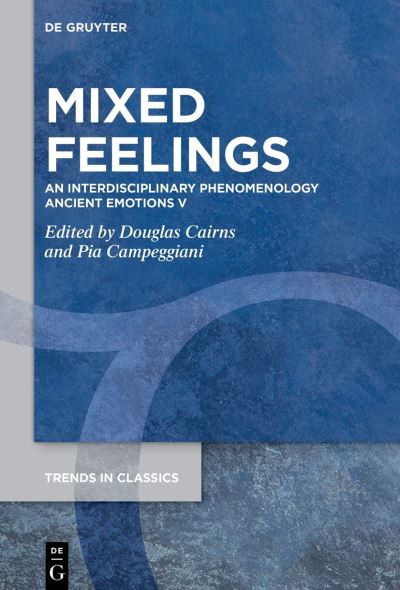
'Affective valence' typically refers to the way an affective state feels, i.e. the quality of the (dis)pleasure we subjectively experience: fear usually feels unpleasant, while joy feels good. Yet sometimes affective experience feels 'bittersweet', i.e. good and bad at the same time, as when we enjoy being scared on the roller coaster or being sad when reading a heart-rending novel. In these situations, mixed affect is experienced as a blended state in which positive and negative aspects cannot be prised apart in any meaningful way. But mixed affect can also arise from conflicting emotions (e.g when we desire something that we also wish to avoid), from ambivalence (e.g. when we are of two minds about something), and more. Taking a cross-cultural and multidisciplinary perspective, this volume aims to enrich our understanding of the phenomenology of mixed affective experiences. It explores narrative representations of mixed emotions in historical and literary works in both Western and Eastern traditions, as well as the theorization of such experiences in these traditions. It will be of interest to students and scholars of literature (especially classical Chinese, Greek, Indian, and Latin), history of emotions, and philosophy.
| ISBN: | 9783111390543 |
| Publication date: | 2nd June 2025 |
| Author: | Douglas L Cairns, Pia Campeggiani |
| Publisher: | De Gruyter |
| Format: | Hardback |
| Pagination: | 218 pages |
| Series: | Trends in Classics. Supplementary Volumes |
| Genres: |
Ancient Greek and Roman literature |
'Affective valence' typically refers to the way an affective state feels, i.e. the quality of the (dis)pleasure we subjectively experience: fear usually feels unpleasant, while joy feels good. Yet sometimes affective experience feels 'bittersweet', i.e. good and bad at the same time, as when we enjoy being scared on the roller coaster or being sad when reading a heart-rending novel. In these situations, mixed affect is experienced as a blended state in which positive and negative aspects cannot be prised apart in any meaningful way. But mixed affect can also arise from conflicting emotions (e.g when we desire something that we also wish to avoid), from ambivalence (e.g. when we are of two minds about something), and more. Taking a cross-cultural and multidisciplinary perspective, this volume aims to enrich our understanding of the phenomenology of mixed affective experiences. It explores narrative representations of mixed emotions in historical and literary works in both Western and Eastern traditions, as well as the theorization of such experiences in these traditions. It will be of interest to students and scholars of literature (especially classical Chinese, Greek, Indian, and Latin), history of emotions, and philosophy.
Mixed Feelings features in the following genres: Ancient Greek and Roman literature, Ancient Greek and Roman philosophy, East Asian and Indian philosophy, Comparative literature
Mixed Feelings is available in Hardback
Mixed Feelings was written by Douglas L Cairns, Pia Campeggiani and published by De Gruyter
Mixed Feelings has 218 pages
Yes it is part of Trends in Classics. Supplementary Volumes series
£105.75