

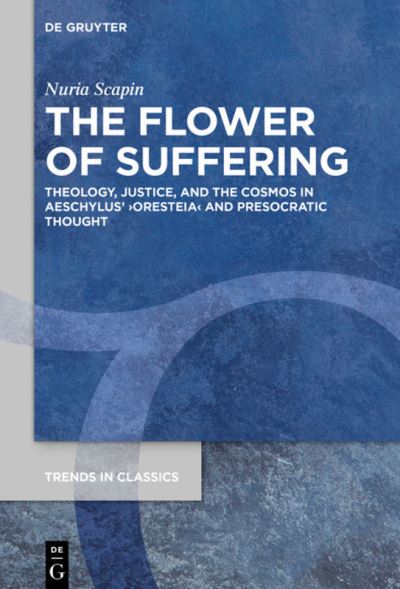
Greek tragedy occupies a prominent place in the development of early Greek thought. However, even within the partial renaissance of debates about tragedy's roots in the popular thought of archaic Greece, its potential connection to the early philosophical tradition remains, with few exceptions, at the periphery of current interest. This book aims to show that our understanding of Aeschylus' Oresteia is enhanced by seeing that the trilogy's treatment of Zeus and Justice (Dikê) shares certain concepts, assumptions, categories of thought, and forms of expression with the surviving fragments and doxography of certain Presocratic thinkers (especially Anaximander, Xenophanes, Heraclitus, and Parmenides). By examining several aspects of the tragic trilogy in relation to Presocratic debates about theology and cosmic justice, it shows how such scrutiny may affect our understanding of the theological 'tension' and metaphysical assumptions underpinning the Oresteia's dramatic narrative. Ultimately, it argues that Aeschylus bestows on the experience of human suffering, as it is given in the contradictory multiplicity of the world, the status of a profound form of knowledge: a meeting point between the human and divine spheres.
| ISBN: | 9783110685527 |
| Publication date: | 6th April 2020 |
| Author: | Nuria Scapin |
| Publisher: | De Gruyter |
| Format: | Hardback |
| Pagination: | 276 pages |
| Series: | Trends in Classics - Supplementary Volumes |
| Genres: |
Literary studies: ancient, classical and medieval Ancient Greek and Roman philosophy |
Greek tragedy occupies a prominent place in the development of early Greek thought. However, even within the partial renaissance of debates about tragedy's roots in the popular thought of archaic Greece, its potential connection to the early philosophical tradition remains, with few exceptions, at the periphery of current interest. This book aims to show that our understanding of Aeschylus' Oresteia is enhanced by seeing that the trilogy's treatment of Zeus and Justice (Dikê) shares certain concepts, assumptions, categories of thought, and forms of expression with the surviving fragments and doxography of certain Presocratic thinkers (especially Anaximander, Xenophanes, Heraclitus, and Parmenides). By examining several aspects of the tragic trilogy in relation to Presocratic debates about theology and cosmic justice, it shows how such scrutiny may affect our understanding of the theological 'tension' and metaphysical assumptions underpinning the Oresteia's dramatic narrative. Ultimately, it argues that Aeschylus bestows on the experience of human suffering, as it is given in the contradictory multiplicity of the world, the status of a profound form of knowledge: a meeting point between the human and divine spheres.
The Flower of Suffering features in the following genres: Literary studies: ancient, classical and medieval, Ancient Greek and Roman philosophy
The Flower of Suffering is available in Hardback
The Flower of Suffering was written by Nuria Scapin and published by De Gruyter
The Flower of Suffering has 276 pages
Yes it is part of Trends in Classics - Supplementary Volumes series