

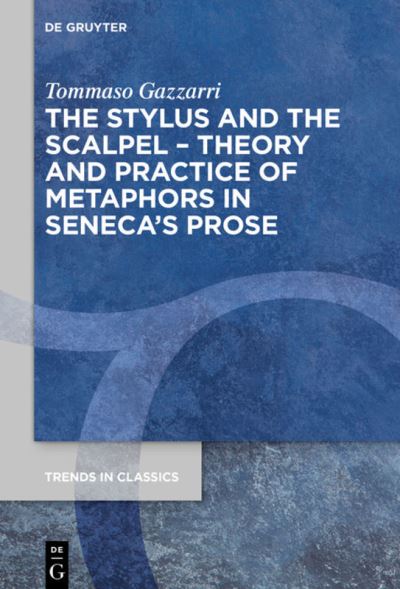
Seneca's developed metaphors draw on what is known to describe the unknown. They put hard ethical in highly accessible, and often quite entertaining, terms. The present book provides a functional description of Seneca's dialectical relation between metaphorical language and philosophy. It shows how Stoic philosophy finds a new means of expression in Seneca's highly elaborated rhetorical discourse, and how this relates to the social and cultural demands of Neronian culture. Metaphors are purposely utilized to work "collectively" rather than by category or type and that, therefore, the analysis of what metaphors do when Seneca chooses to combine them in clusters, demonstrates the existence of a "metanarrative of rhetoric". This approach is fundamentally innovative and has the advantage of gauging the functioning of Senecan style as a whole, rather than focusing on single features of its rhetorical functioning. The main target is to show how philosophical preaching materially contributes to the healing of human soul because it shapes the individual's cognitive faculty in a way that is physical and not simply figurative. The stylus and the scalpel blend in their functions. This kind of therapy is not just the simulacrum of a more "real" one, it is in itself medical in nature.
| ISBN: | 9783110673579 |
| Publication date: | 21st September 2020 |
| Author: | Tommaso Gazzarri |
| Publisher: | De Gruyter |
| Format: | Hardback |
| Pagination: | 283 pages |
| Series: | Trends in Classics - Supplementary Volumes |
| Genres: |
Ancient, classical and medieval texts Literary studies: ancient, classical and medieval Ancient history |
Seneca's developed metaphors draw on what is known to describe the unknown. They put hard ethical in highly accessible, and often quite entertaining, terms. The present book provides a functional description of Seneca's dialectical relation between metaphorical language and philosophy. It shows how Stoic philosophy finds a new means of expression in Seneca's highly elaborated rhetorical discourse, and how this relates to the social and cultural demands of Neronian culture. Metaphors are purposely utilized to work "collectively" rather than by category or type and that, therefore, the analysis of what metaphors do when Seneca chooses to combine them in clusters, demonstrates the existence of a "metanarrative of rhetoric". This approach is fundamentally innovative and has the advantage of gauging the functioning of Senecan style as a whole, rather than focusing on single features of its rhetorical functioning. The main target is to show how philosophical preaching materially contributes to the healing of human soul because it shapes the individual's cognitive faculty in a way that is physical and not simply figurative. The stylus and the scalpel blend in their functions. This kind of therapy is not just the simulacrum of a more "real" one, it is in itself medical in nature.
The Stylus and the Scalpel features in the following genres: Ancient, classical and medieval texts, Literary studies: ancient, classical and medieval, Ancient history
The Stylus and the Scalpel is available in Hardback
The Stylus and the Scalpel was written by Tommaso Gazzarri and published by De Gruyter
The Stylus and the Scalpel has 283 pages
Yes it is part of Trends in Classics - Supplementary Volumes series