

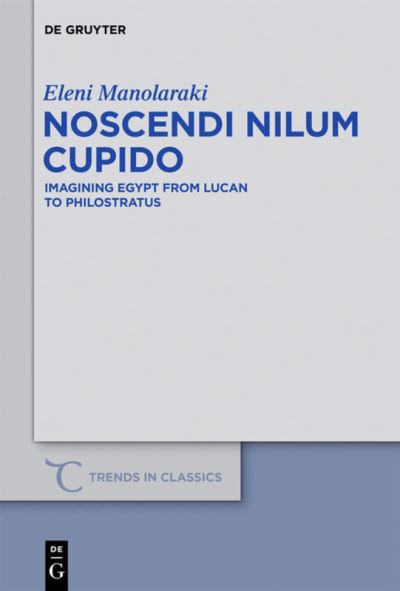
What significations did Egypt have for the Romans a century after Actium and afterwards? How did Greek imperial authors respond to the Roman fascination with the Nile? This book explores Egypt's aftermath beyond the hostility of Augustan rhetoric, and Greek and Roman topoi of Egyptian "barbarism." Set against history and material culture, Julio-Claudian, Flavian, Antonine, and Severan authors reveal a multivalent Egypt that defines Rome's increasingly diffuse identity while remaining a tertium quid between Roman Selfhood and foreign Otherness.
Vespasian's Alexandrian uprising, his recognition of Egypt as his power basis, and his patronage of Isis re-conceptualize Egypt past the ideology of Augustan conquest. The imperialistic exhilaration and moral angst attending Rome's Flavian cosmopolitanism find an expressive means in the geographically and semantically nebulous Nile. The rapprochement with Egypt continues in the second and early third centuries. The "Hellenic" Antonines and the African-Syrian Severans expand perceptions of geography and identity within an increasingly decentralized and diverse empire. In the political and cultural discourses of this period, the capacious symbolics of Egypt validate the empire's religious and ethnic pluralism.
| ISBN: | 9783110297676 |
| Publication date: | 15th November 2012 |
| Author: | Eleni Manolaraki |
| Publisher: | De Gruyter |
| Format: | Hardback |
| Pagination: | 390 pages |
| Series: | Trends in Classics. Supplementary Volumes |
| Genres: |
Social and cultural anthropology Ancient history Archaeology by period / region Regional / International studies |
What significations did Egypt have for the Romans a century after Actium and afterwards? How did Greek imperial authors respond to the Roman fascination with the Nile? This book explores Egypt's aftermath beyond the hostility of Augustan rhetoric, and Greek and Roman topoi of Egyptian "barbarism." Set against history and material culture, Julio-Claudian, Flavian, Antonine, and Severan authors reveal a multivalent Egypt that defines Rome's increasingly diffuse identity while remaining a tertium quid between Roman Selfhood and foreign Otherness.
Vespasian's Alexandrian uprising, his recognition of Egypt as his power basis, and his patronage of Isis re-conceptualize Egypt past the ideology of Augustan conquest. The imperialistic exhilaration and moral angst attending Rome's Flavian cosmopolitanism find an expressive means in the geographically and semantically nebulous Nile. The rapprochement with Egypt continues in the second and early third centuries. The "Hellenic" Antonines and the African-Syrian Severans expand perceptions of geography and identity within an increasingly decentralized and diverse empire. In the political and cultural discourses of this period, the capacious symbolics of Egypt validate the empire's religious and ethnic pluralism.
Noscendi Nilum Cupido features in the following genres: Social and cultural anthropology, Regional / International studies, Ancient history, Archaeology by period / region
Noscendi Nilum Cupido is available in Hardback
Noscendi Nilum Cupido was written by Eleni Manolaraki and published by De Gruyter
Noscendi Nilum Cupido has 390 pages
Yes it is part of Trends in Classics. Supplementary Volumes series
£140.85