

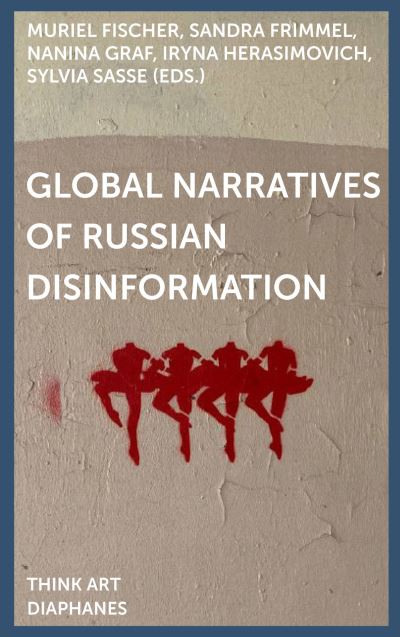
A study of the affects and effects of Russian narratives and their global dissemination.
Disinformation, conspiracy narratives, and propaganda are not only manipulative forms of communication with the intention to deceive, but also a field of global collective narratives. Russia is an important player in this field. From the Cold War to the present day, we can observe how (pro-)Russian narratives are regionally tailored, internationally disseminated, and appropriated by various political, economic, or cultural actors for their own purposes.
While some narratives might originate from literary fantasy, science fiction, or national myths, others draw on historical narratives and reproduce them. Russia often claims an anti-imperialist, anti-fascist, or postcolonial intention in order to conceal its own imperialism and fascism.
The contributions in this book document these narratives in their respective geographical and historical contexts. They examine narrative practices and their history, the interplay of global address, and local appropriation as well as affects and effects within political discourse.
| ISBN: | 9783035807868 |
| Publication date: | 26th June 2026 |
| Author: | Muriel Fischer, Sandra Frimmel, Nanina Graf, Iryna Herasimovich, Sylvia Sasse |
| Publisher: | Diaphanes |
| Format: | Paperback |
| Pagination: | 320 pages |
| Series: | Think Art |
| Genres: |
Media studies Politics and government |
A study of the affects and effects of Russian narratives and their global dissemination.
Disinformation, conspiracy narratives, and propaganda are not only manipulative forms of communication with the intention to deceive, but also a field of global collective narratives. Russia is an important player in this field. From the Cold War to the present day, we can observe how (pro-)Russian narratives are regionally tailored, internationally disseminated, and appropriated by various political, economic, or cultural actors for their own purposes.
While some narratives might originate from literary fantasy, science fiction, or national myths, others draw on historical narratives and reproduce them. Russia often claims an anti-imperialist, anti-fascist, or postcolonial intention in order to conceal its own imperialism and fascism.
The contributions in this book document these narratives in their respective geographical and historical contexts. They examine narrative practices and their history, the interplay of global address, and local appropriation as well as affects and effects within political discourse.
Global Narratives of Russian Disinformation features in the following genres: Media studies, Politics and government
Global Narratives of Russian Disinformation is available in Paperback
Global Narratives of Russian Disinformation was written by Muriel Fischer, Sandra Frimmel, Nanina Graf, Iryna Herasimovich, Sylvia Sasse and published by Diaphanes
Global Narratives of Russian Disinformation has 320 pages
Yes it is part of Think Art series
£32.40