

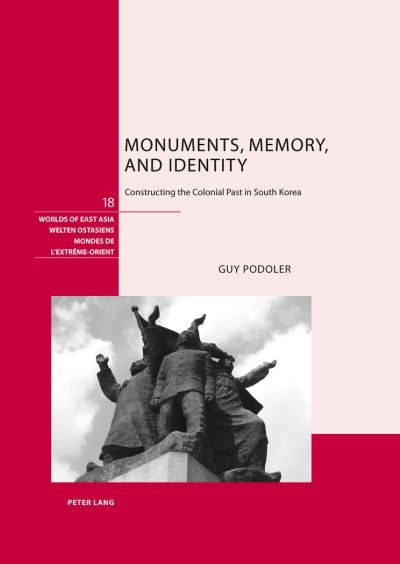
Between 1910 and 1945 Korea was subjected to Japanese colonial rule. Monuments, Memory, and Identity investigates ways how postcolonial South Korea commemorated this difficult past in light of changing political and social conditions, and against the background of the divided nation. By analyzing museums, memorial halls, parks and monuments, the author deciphers and maps the South Korean commemorative landscape.
He analyzes the layouts of the country's well-known &«sites of memory» and explores the on-site plaques, exhibits, and photos as well as the booklets and publications. This book underpins the shifts and trends in recollecting this important historical period by addressing the following questions: How has postcolonial South Korea been constructing and reconstructing its colonial past? Why were certain narratives and images chosen at different times?
What debates, controversies, and challenges were involved in this dynamic process? Furthermore, the author discusses the South Korean case within the broader context of the postcolonial discourse.
| ISBN: | 9783034306607 |
| Publication date: | 15th October 2011 |
| Author: | Guy Podoler |
| Publisher: | Peter Lang an imprint of Peter Lang AG, Internationaler Verlag der Wissenschaften |
| Format: | Hardback |
| Pagination: | 276 pages |
| Series: | Welten Ostasiens |
| Genres: |
Asian history National liberation and independence Regional / International studies Sociology Society and culture: general |
Between 1910 and 1945 Korea was subjected to Japanese colonial rule. Monuments, Memory, and Identity investigates ways how postcolonial South Korea commemorated this difficult past in light of changing political and social conditions, and against the background of the divided nation.
Monuments, Memory, and Identity features in the following genres: Asian history, National liberation and independence, Regional / International studies, Sociology, Society and culture: general
Hardback. Not Available.
Monuments, Memory, and Identity was written by Guy Podoler and published by Peter Lang an imprint of Peter Lang AG, Internationaler Verlag der Wissenschaften
Monuments, Memory, and Identity has 276 pages
Yes it is part of Welten Ostasiens series