

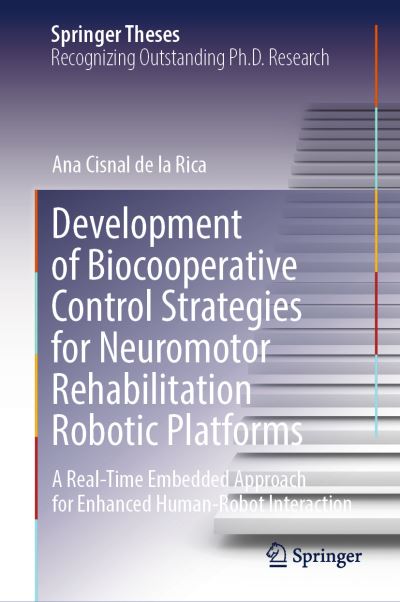
This book presents the development of a multimodal physiological signal acquisition system and cooperative control strategies for applications in upper-limb robotic rehabilitation. First, it introduces a non-pattern recognition EMG-based platform for hand rehabilitation, demonstrating its strong performance in both gesture recognition accuracy and responsiveness. It also discusses the role of EMG-based visual feedback, showing how real-time visualization of muscle activation enhances user performance during training. In turn, it reports on the validation of a low-cost multimodal acquisition solution using two different real-time biocooperative control strategies. The results demonstrate that the developed low-cost wearable platform, which integrates multiple sensors, wireless communication, and a high-efficiency real-time microcontroller, is highly versatile and configurable, and shows a good signal quality. By addressing two main aspects that limit the adoption of biocooperative systems in clinical rehabilitation settings - hardware affordability and system reliability - this outstanding Ph.D. thesis paves the way to the implementation of real-time biocooperative controls for future applications in robotic rehabilitation.
| ISBN: | 9783032024848 |
| Publication date: | 26th August 2025 |
| Author: | Ana Cisnal de la Rica |
| Publisher: | Springer an imprint of Springer Nature Switzerland |
| Format: | Hardback |
| Pagination: | 78 pages |
| Series: | Springer Theses |
| Genres: |
Biomedical engineering Robotics Human–computer interaction |
This book presents the development of a multimodal physiological signal acquisition system and cooperative control strategies for applications in upper-limb robotic rehabilitation. First, it introduces a non-pattern recognition EMG-based platform for hand rehabilitation, demonstrating its strong performance in both gesture recognition accuracy and responsiveness. It also discusses the role of EMG-based visual feedback, showing how real-time visualization of muscle activation enhances user performance during training. In turn, it reports on the validation of a low-cost multimodal acquisition solution using two different real-time biocooperative control strategies. The results demonstrate that the developed low-cost wearable platform, which integrates multiple sensors, wireless communication, and a high-efficiency real-time microcontroller, is highly versatile and configurable, and shows a good signal quality. By addressing two main aspects that limit the adoption of biocooperative systems in clinical rehabilitation settings - hardware affordability and system reliability - this outstanding Ph.D. thesis paves the way to the implementation of real-time biocooperative controls for future applications in robotic rehabilitation.
Development of Biocooperative Control Strategies for Neuromotor Rehabilitation Robotic Platforms features in the following genres: Biomedical engineering, Robotics, Human–computer interaction
Development of Biocooperative Control Strategies for Neuromotor Rehabilitation Robotic Platforms is available in Hardback
Development of Biocooperative Control Strategies for Neuromotor Rehabilitation Robotic Platforms was written by Ana Cisnal de la Rica and published by Springer an imprint of Springer Nature Switzerland
Development of Biocooperative Control Strategies for Neuromotor Rehabilitation Robotic Platforms has 78 pages
Yes it is part of Springer Theses series
£125.99