

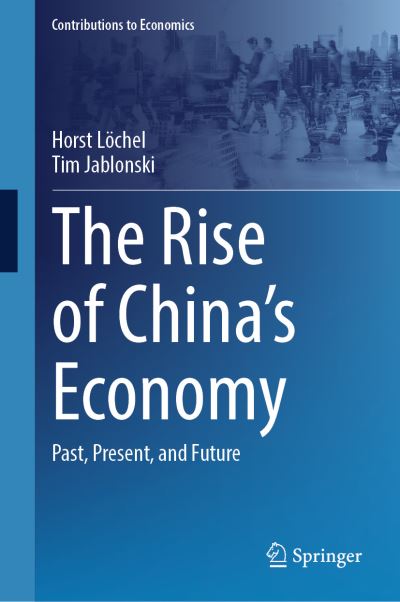
This book gives an in-depth and up-to-date insight into China's economy from a domestic as well an international perspective. The book covers the reform trajectory and performance of China's economy since Deng Xiaoping kicked-off the reform and opening-up policy in 1978 until the current challenges and economic policies under Xi Jinping including the integration in the world economy.
The analysis is based on empirical evidence and respective data. This enables the reader to take an unprejudiced look on China's political economy. The book applies fundamental economic concepts in a non-technical way to the case of China and processes the main relevant scientific and applied research to the topic. Readers gain an in-depth understanding of the second largest global economy that will shape the twenty-first century-its past, present, and future.
The book is structured into three concise chapters: the reform trajectory of China's economy since 1978, the domestic and international fundamentals of China's economy today, and the long-term challenges and respective economic policies for the future. One of the key insights of the book is that China's economy and its economic model are at a critical tipping point, after a long period of successful development from a low to a middle-income country. This includes the need for a new growth model and a renewed integration into the world economy. Both challenges pose systemic risks that could seriously impede the future development of China and its economy if not carefully managed.
| ISBN: | 9783031801495 |
| Publication date: | 2nd February 2025 |
| Author: | Horst Löchel, Tim Jablonski |
| Publisher: | Springer an imprint of Springer Nature Switzerland |
| Format: | Hardback |
| Pagination: | 172 pages |
| Series: | Contributions to Economics |
| Genres: |
Economics International economics Political economy Economic history |
This book gives an in-depth and up-to-date insight into China's economy from a domestic as well an international perspective. The book covers the reform trajectory and performance of China's economy since Deng Xiaoping kicked-off the reform and opening-up policy in 1978 until the current challenges and economic policies under Xi Jinping including the integration in the world economy.
The analysis is based on empirical evidence and respective data. This enables the reader to take an unprejudiced look on China's political economy. The book applies fundamental economic concepts in a non-technical way to the case of China and processes the main relevant scientific and applied research to the topic. Readers gain an in-depth understanding of the second largest global economy that will shape the twenty-first century-its past, present, and future.
The book is structured into three concise chapters: the reform trajectory of China's economy since 1978, the domestic and international fundamentals of China's economy today, and the long-term challenges and respective economic policies for the future. One of the key insights of the book is that China's economy and its economic model are at a critical tipping point, after a long period of successful development from a low to a middle-income country. This includes the need for a new growth model and a renewed integration into the world economy. Both challenges pose systemic risks that could seriously impede the future development of China and its economy if not carefully managed.
The Rise of China's Economy features in the following genres: Economics, International economics, Political economy, Economic history
The Rise of China's Economy is available in Hardback
The Rise of China's Economy was written by Horst Löchel, Tim Jablonski and published by Springer an imprint of Springer Nature Switzerland
The Rise of China's Economy has 172 pages
Yes it is part of Contributions to Economics series
£62.99