

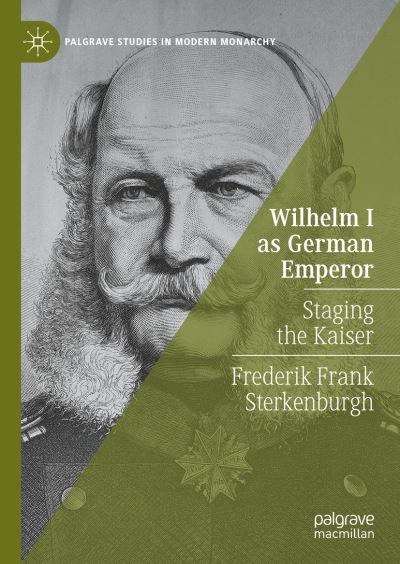
This book offers the first-ever scholarly study of Wilhelm I as Germany's first Kaiser. For decades, Wilhelm has been dismissed by historians as a political nullity and an unwilling imperial figurehead, who was perpetually overruled by chancellor Otto von Bismarck. As a result, scholars concluded that the imperial role did not reach maturity until the accession of Wilhelm II. This book challenges this assumption by analysing how Wilhelm used self-staging to effectuate his role as German emperor and set the precedent for his successors, Friedrich III and Wilhelm II. It explores how he oversaw and intervened in the political and military decision-making processes, his use of politics of history, his understanding and practicing of the imperial role towards other German states and dynasties, his self-presentation in the new German capital, and how his public persona was distorted in German cultural memory after his death in 1888. The book draws on a wealth of previously unexplored sources, including material from Wilhelm's personal archive, the archives of the Hohenzollern monarchy, the Prussian state, and local archives. It offers a much-needed reassessment of Wilhelm I and makes an important contribution to debates on the role of the Kaiser in German politics, the political system, and culture of the early German nation state, and how the Hohenzollern monarchy adapted to the demands of generating popular support for its new German imperial role.
| ISBN: | 9783031742040 |
| Publication date: | 18th January 2025 |
| Author: | Frederik Frank Sterkenburgh |
| Publisher: | Palgrave Macmillan an imprint of Springer Nature Switzerland |
| Format: | Hardback |
| Pagination: | 340 pages |
| Series: | Palgrave Studies in Modern Monarchy |
| Genres: |
European history Social and cultural history Colonialism and imperialism Military history History: specific events and topics Political science and theory |
This book offers the first-ever scholarly study of Wilhelm I as Germany's first Kaiser. For decades, Wilhelm has been dismissed by historians as a political nullity and an unwilling imperial figurehead, who was perpetually overruled by chancellor Otto von Bismarck. As a result, scholars concluded that the imperial role did not reach maturity until the accession of Wilhelm II. This book challenges this assumption by analysing how Wilhelm used self-staging to effectuate his role as German emperor and set the precedent for his successors, Friedrich III and Wilhelm II. It explores how he oversaw and intervened in the political and military decision-making processes, his use of politics of history, his understanding and practicing of the imperial role towards other German states and dynasties, his self-presentation in the new German capital, and how his public persona was distorted in German cultural memory after his death in 1888. The book draws on a wealth of previously unexplored sources, including material from Wilhelm's personal archive, the archives of the Hohenzollern monarchy, the Prussian state, and local archives. It offers a much-needed reassessment of Wilhelm I and makes an important contribution to debates on the role of the Kaiser in German politics, the political system, and culture of the early German nation state, and how the Hohenzollern monarchy adapted to the demands of generating popular support for its new German imperial role.
Wilhelm I as German Emperor features in the following genres: European history, Social and cultural history, Colonialism and imperialism, Military history, History: specific events and topics, Political science and theory
Wilhelm I as German Emperor is available in Hardback
Wilhelm I as German Emperor was written by Frederik Frank Sterkenburgh and published by Palgrave Macmillan an imprint of Springer Nature Switzerland
Wilhelm I as German Emperor has 340 pages
Yes it is part of Palgrave Studies in Modern Monarchy series
£116.99