

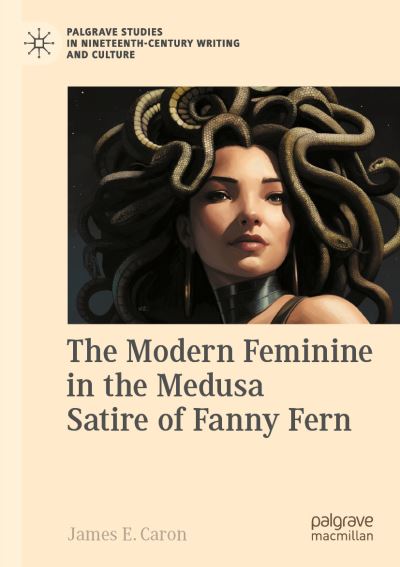
The Modern Feminine in the Medusa Satire of Fanny Fern argues that Sara Parton and her literary alter ego, Fanny Fern, occupy a star-power position within the antebellum literary marketplace dominated by women authors of sentimental fiction, writers Nathaniel Hawthorne (in)famously called "the damn mob of scribbling women." The Fanny Fern persona represents a nineteenth-century woman voicing the modern feminine within a laughter-provoking bourgeois carnival, a forerunner of Hélène Cixous's laughing Medusa figure and her theory about écriture féminine. By advancing an innovative theory about an Anglo-American aesthetic, comic belles lettres, Caron explains the comic nuances of Parton's persona, capable of both an amiable and a caustic satire. The book traces Parton's burgeoning celebrity, analyzes her satires on cultural expectations of gendered behavior, and provides a close look at her variegated comic style. The book then makes two first-order conclusions: Parton not only offers a unique profile for antebellum women comic writers, but her Fanny Fern persona also anchors a potential genealogy of women comic writers and activists, down to the present day, who could fit Kate Clinton's concept of fumerism, a feminist style of humor that fumes, that embraces the comic power of a Medusa satire.
| ISBN: | 9783031412783 |
| Publication date: | 21st January 2025 |
| Author: | James E Caron |
| Publisher: | Palgrave Macmillan an imprint of Springer International Publishing |
| Format: | Paperback |
| Pagination: | 217 pages |
| Series: | Palgrave Studies in Nineteenth-Century Writing and Culture |
| Genres: |
Literary studies: c 1800 to c 1900 Popular culture Comedy and stand-up Literature: history and criticism |
The Modern Feminine in the Medusa Satire of Fanny Fern argues that Sara Parton and her literary alter ego, Fanny Fern, occupy a star-power position within the antebellum literary marketplace dominated by women authors of sentimental fiction, writers Nathaniel Hawthorne (in)famously called "the damn mob of scribbling women." The Fanny Fern persona represents a nineteenth-century woman voicing the modern feminine within a laughter-provoking bourgeois carnival, a forerunner of Hélène Cixous's laughing Medusa figure and her theory about écriture féminine. By advancing an innovative theory about an Anglo-American aesthetic, comic belles lettres, Caron explains the comic nuances of Parton's persona, capable of both an amiable and a caustic satire. The book traces Parton's burgeoning celebrity, analyzes her satires on cultural expectations of gendered behavior, and provides a close look at her variegated comic style. The book then makes two first-order conclusions: Parton not only offers a unique profile for antebellum women comic writers, but her Fanny Fern persona also anchors a potential genealogy of women comic writers and activists, down to the present day, who could fit Kate Clinton's concept of fumerism, a feminist style of humor that fumes, that embraces the comic power of a Medusa satire.
The Modern Feminine in the Medusa Satire of Fanny Fern features in the following genres: Literary studies: c 1800 to c 1900, Popular culture, Comedy and stand-up, Literature: history and criticism
The Modern Feminine in the Medusa Satire of Fanny Fern is available in Paperback, Hardback
The Modern Feminine in the Medusa Satire of Fanny Fern was written by James E Caron and published by Palgrave Macmillan an imprint of Springer International Publishing
The Modern Feminine in the Medusa Satire of Fanny Fern has 217 pages
Yes it is part of Palgrave Studies in Nineteenth-Century Writing and Culture series
£89.99