

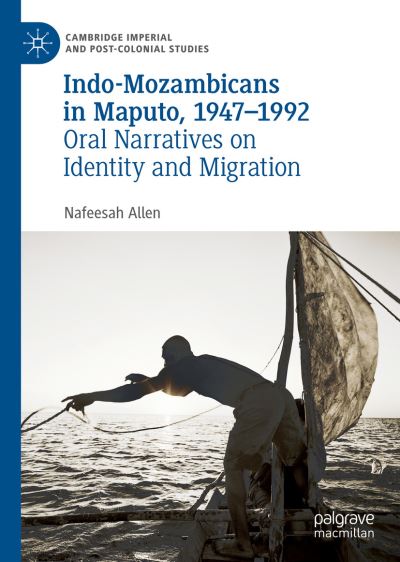
This book explores the experiences of 'Indo-Mozambicans,' citizens and residents of Mozambique who can trace their origins to the Indian subcontinent, a region affected by competing colonialisms during the twentieth century. Drawing from ethnographic interviews, the author illustrates why migration developed as both an identity marker and a survival tool for Indo-Mozambicans living in Maputo, in response to the series of independence movements and prolonged period of geo-political uncertainty that extended from 1947 to 1992. A unique examination of post-colonialism, the book argues that four pivotal moments in history forced migratory patterns and ethnic identity formations to emerge among Indo-Mozambicans, namely, the end of the British empire in India and the subsequent partition of India and Pakistan in 1947; the end of the Portuguese empire in India, with the annexation of Goa, Daman and Diu in 1961; the independence of Mozambique from Portugal in 1975; and the civil war of Mozambique from 1977 to 1992. Framing these historical markers as trigger points for shifts in migration and identity formation, this book demonstrates the layered experiences of people subject to Portuguese colonialism and highlights the important perspective of those 'left behind' in migration studies.
| ISBN: | 9783031088254 |
| Publication date: | 2nd November 2022 |
| Author: | Nafeesah Allen |
| Publisher: | Palgrave Macmillan an imprint of Springer International Publishing |
| Format: | Hardback |
| Pagination: | 288 pages |
| Series: | Cambridge Imperial and Post-Colonial Studies Series |
| Genres: |
Colonialism and imperialism Population and migration geography Migration, immigration and emigration Oral history Asian history African history |
This book explores the experiences of 'Indo-Mozambicans,' citizens and residents of Mozambique who can trace their origins to the Indian subcontinent, a region affected by competing colonialisms during the twentieth century. Drawing from ethnographic interviews, the author illustrates why migration developed as both an identity marker and a survival tool for Indo-Mozambicans living in Maputo, in response to the series of independence movements and prolonged period of geo-political uncertainty that extended from 1947 to 1992. A unique examination of post-colonialism, the book argues that four pivotal moments in history forced migratory patterns and ethnic identity formations to emerge among Indo-Mozambicans, namely, the end of the British empire in India and the subsequent partition of India and Pakistan in 1947; the end of the Portuguese empire in India, with the annexation of Goa, Daman and Diu in 1961; the independence of Mozambique from Portugal in 1975; and the civil war of Mozambique from 1977 to 1992. Framing these historical markers as trigger points for shifts in migration and identity formation, this book demonstrates the layered experiences of people subject to Portuguese colonialism and highlights the important perspective of those 'left behind' in migration studies.
Indo-Mozambicans in Maputo, 1947-1992 features in the following genres: Colonialism and imperialism, Population and migration geography, Migration, immigration and emigration, Oral history, Asian history, African history
Indo-Mozambicans in Maputo, 1947-1992 is available in Hardback, Ebook
Indo-Mozambicans in Maputo, 1947-1992 was written by Nafeesah Allen and published by Palgrave Macmillan an imprint of Springer International Publishing
Indo-Mozambicans in Maputo, 1947-1992 has 288 pages
Yes it is part of Cambridge Imperial and Post-Colonial Studies Series series