

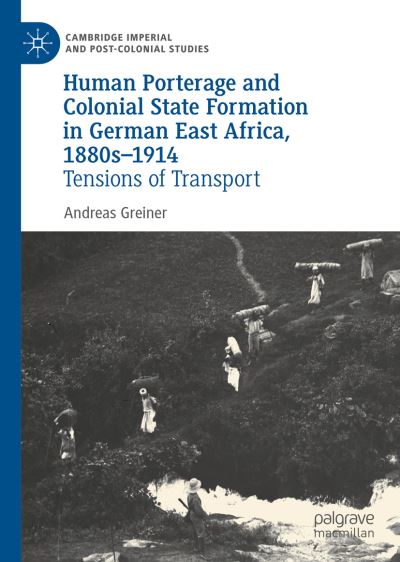
?This book explores the role of caravan transport and human porterage in the colony of German East Africa (present-day mainland Tanzania, Rwanda, and Burundi). With caravan mobility being of pivotal importance to colonial rule during the late nineteenth and early twentieth centuries, the exploration of vernacular transport and its governance during this period sheds new light on the trajectories of colonial statehood. The author addresses key questions such as the African resilience to colonial interventions, the issue of labor recruitment, and the volatility of colonial infrastructure. This book unveils a fundamental contradiction in the way that German administrators dealt with precolonial modes of transport in East Africa. While colonizers championed for the abolishment of caravan transport, they strongly depended on porters in the absence of pack animals or railways. To bring this contradiction to the fore, the author studies the shifting role of caravans in East Africa during the era of 'high imperialism.' Uncovering the extent to which porters and caravan entrepreneurs challenged and shaped colonial policymaking, this book provides an insightful read for historians studying German Empire and African history, as well as those interested in the history of transport and infrastructure.
| ISBN: | 9783030894696 |
| Publication date: | 8th November 2022 |
| Author: | Andreas Greiner |
| Publisher: | Palgrave Macmillan an imprint of Springer International Publishing |
| Format: | Hardback |
| Pagination: | 271 pages |
| Series: | Cambridge Imperial and Post-Colonial Studies Series |
| Genres: |
African history Social and cultural history Colonialism and imperialism European history |
?This book explores the role of caravan transport and human porterage in the colony of German East Africa (present-day mainland Tanzania, Rwanda, and Burundi). With caravan mobility being of pivotal importance to colonial rule during the late nineteenth and early twentieth centuries, the exploration of vernacular transport and its governance during this period sheds new light on the trajectories of colonial statehood. The author addresses key questions such as the African resilience to colonial interventions, the issue of labor recruitment, and the volatility of colonial infrastructure. This book unveils a fundamental contradiction in the way that German administrators dealt with precolonial modes of transport in East Africa. While colonizers championed for the abolishment of caravan transport, they strongly depended on porters in the absence of pack animals or railways. To bring this contradiction to the fore, the author studies the shifting role of caravans in East Africa during the era of 'high imperialism.' Uncovering the extent to which porters and caravan entrepreneurs challenged and shaped colonial policymaking, this book provides an insightful read for historians studying German Empire and African history, as well as those interested in the history of transport and infrastructure.
Human Porterage and Colonial State Formation in German East Africa, 1880S-1914 features in the following genres: African history, Social and cultural history, Colonialism and imperialism, European history
Human Porterage and Colonial State Formation in German East Africa, 1880S-1914 is available in Hardback
Human Porterage and Colonial State Formation in German East Africa, 1880S-1914 was written by Andreas Greiner and published by Palgrave Macmillan an imprint of Springer International Publishing
Human Porterage and Colonial State Formation in German East Africa, 1880S-1914 has 271 pages
Yes it is part of Cambridge Imperial and Post-Colonial Studies Series series
£116.99